
Revolutionizing AI: The Future of Neuromorphic Computing
ByAinvest
Saturday, Jul 19, 2025 11:59 am ET2min read
IBM--
According to a recent report, the Latin America, Middle East, and Africa (LAMEA) neuromorphic computing market is expected to witness significant growth, with a CAGR of 21.7% during the forecast period (2025-2032) [2]. Brazil is leading the market, with a projected value of $500.4 million by 2032. Key players in this market include Intel, IBM, and BrainChip Holdings, which are pioneering the development of brain-inspired processors.
Intel's Loihi 2 and IBM's TrueNorth are notable examples of modern chips that emulate synaptic plasticity and spiking neuron behavior, enabling new capabilities in pattern recognition and learning at the hardware level. These processors are not only faster and more adaptive than traditional CPUs or GPUs for certain AI tasks but also consume significantly less energy.
The market in LAMEA is poised for transformative growth, driven by a confluence of emerging technological trends and increasing regional interest in advanced computing paradigms. This computing, which emulates the neural structure of the human brain to enable highly efficient processing, is gaining traction in LAMEA due to the rising demand for low-power, high-performance AI solutions in sectors like defense, telecommunications, healthcare, and smart cities.
Countries within the Middle East, particularly the UAE and Saudi Arabia, are investing heavily in AI-driven smart infrastructure projects, creating a fertile ground for these computing technologies. Similarly, South Africa and Brazil are exploring neuromorphic approaches to bolster their defense and cybersecurity systems, leveraging local academic and industrial collaborations.
The report also highlights the importance of energy efficiency, real-time performance, scalability, and compatibility with spiking neural network (SNN) frameworks as key customer criteria for neuromorphic computing [5]. These factors are crucial for the widespread adoption of neuromorphic computing in various industries.
Innovations in neuromorphic computing are also being driven by advancements in hardware-aware architectural optimizations, low-precision quantization, and temporal coding schemes, as discussed in a comprehensive survey on spiking neural networks [1]. These techniques aim to enhance the efficiency and robustness of neuromorphic systems, making them more suitable for practical applications.
Moreover, the recent success of Thinking Machines Lab, founded by OpenAI's former CTO Mira Murati, with a record-breaking $2 billion in seed funding, underscores the growing interest and investment in neuromorphic computing technologies [3]. The startup, which is secretive about its operations, plans to launch its first product in the coming months, incorporating open-source components to empower researchers and startup companies in developing customized AI models.
In conclusion, the neuromorphic computing market in LAMEA is experiencing significant growth, driven by technological advancements, increasing regional interest, and strategic collaborations. The market's potential for energy efficiency, real-time performance, and scalability makes it an attractive area for investors and financial professionals. As the technology continues to evolve, it is poised to impact a wide range of intelligent systems in dynamic, resource-constrained environments.
References:
[1] Li, Junyu, Meiling Zhao, Chen Gao, and Heng Xue. "Energy-Efficient and Fault-Tolerant Spiking Neural Networks." SSRN, May 23, 2025. [SSRN](https://papers.ssrn.com/sol3/papers.cfm?abstract_id=5339085)
[2] "LAMEA Neuromorphic Computing Market Size, Share & Industry Analysis Report 2025-2032." ResearchAndMarkets.com, July 16, 2025. [ResearchAndMarkets](https://finance.yahoo.com/news/lamea-neuromorphic-computing-market-trends-081500054.html)
[3] "Silicon Valley Shaken: Mira Murati Raises $2 Billion for AI Startup." AInvest, July 25, 2025. [AInvest](https://www.ainvest.com/news/silicon-valley-shaken-mira-murati-raises-2-billion-secretive-ai-startup-2507/)
INTC--
MIRA--
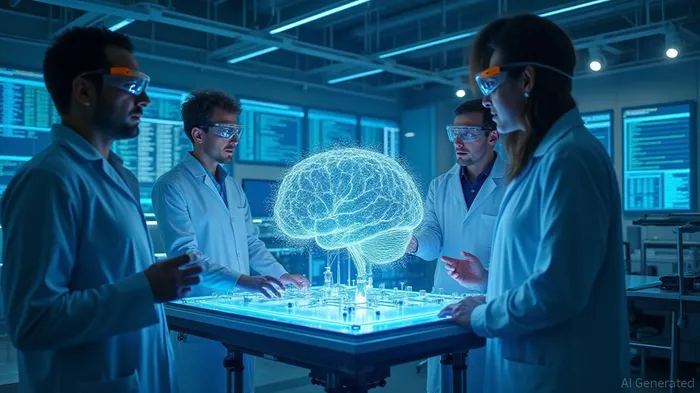
Neuromorphic computing, a brain-inspired approach to building computers, mimics the structure and function of biological neural networks. This architecture is well-suited for AI tasks like pattern recognition, real-time decision-making, and low-power inference at the edge. Neuromorphic chips have already demonstrated energy savings of up to 100x over traditional CPUs and GPUs for certain inference tasks, and have the potential to reshape the foundation of how machines learn, adapt, and think.
Neuromorphic computing, a brain-inspired approach to building computers, mimics the structure and function of biological neural networks. This architecture is well-suited for AI tasks like pattern recognition, real-time decision-making, and low-power inference at the edge. Neuromorphic chips have already demonstrated energy savings of up to 100x over traditional CPUs and GPUs for certain inference tasks, and have the potential to reshape the foundation of how machines learn, adapt, and think.According to a recent report, the Latin America, Middle East, and Africa (LAMEA) neuromorphic computing market is expected to witness significant growth, with a CAGR of 21.7% during the forecast period (2025-2032) [2]. Brazil is leading the market, with a projected value of $500.4 million by 2032. Key players in this market include Intel, IBM, and BrainChip Holdings, which are pioneering the development of brain-inspired processors.
Intel's Loihi 2 and IBM's TrueNorth are notable examples of modern chips that emulate synaptic plasticity and spiking neuron behavior, enabling new capabilities in pattern recognition and learning at the hardware level. These processors are not only faster and more adaptive than traditional CPUs or GPUs for certain AI tasks but also consume significantly less energy.
The market in LAMEA is poised for transformative growth, driven by a confluence of emerging technological trends and increasing regional interest in advanced computing paradigms. This computing, which emulates the neural structure of the human brain to enable highly efficient processing, is gaining traction in LAMEA due to the rising demand for low-power, high-performance AI solutions in sectors like defense, telecommunications, healthcare, and smart cities.
Countries within the Middle East, particularly the UAE and Saudi Arabia, are investing heavily in AI-driven smart infrastructure projects, creating a fertile ground for these computing technologies. Similarly, South Africa and Brazil are exploring neuromorphic approaches to bolster their defense and cybersecurity systems, leveraging local academic and industrial collaborations.
The report also highlights the importance of energy efficiency, real-time performance, scalability, and compatibility with spiking neural network (SNN) frameworks as key customer criteria for neuromorphic computing [5]. These factors are crucial for the widespread adoption of neuromorphic computing in various industries.
Innovations in neuromorphic computing are also being driven by advancements in hardware-aware architectural optimizations, low-precision quantization, and temporal coding schemes, as discussed in a comprehensive survey on spiking neural networks [1]. These techniques aim to enhance the efficiency and robustness of neuromorphic systems, making them more suitable for practical applications.
Moreover, the recent success of Thinking Machines Lab, founded by OpenAI's former CTO Mira Murati, with a record-breaking $2 billion in seed funding, underscores the growing interest and investment in neuromorphic computing technologies [3]. The startup, which is secretive about its operations, plans to launch its first product in the coming months, incorporating open-source components to empower researchers and startup companies in developing customized AI models.
In conclusion, the neuromorphic computing market in LAMEA is experiencing significant growth, driven by technological advancements, increasing regional interest, and strategic collaborations. The market's potential for energy efficiency, real-time performance, and scalability makes it an attractive area for investors and financial professionals. As the technology continues to evolve, it is poised to impact a wide range of intelligent systems in dynamic, resource-constrained environments.
References:
[1] Li, Junyu, Meiling Zhao, Chen Gao, and Heng Xue. "Energy-Efficient and Fault-Tolerant Spiking Neural Networks." SSRN, May 23, 2025. [SSRN](https://papers.ssrn.com/sol3/papers.cfm?abstract_id=5339085)
[2] "LAMEA Neuromorphic Computing Market Size, Share & Industry Analysis Report 2025-2032." ResearchAndMarkets.com, July 16, 2025. [ResearchAndMarkets](https://finance.yahoo.com/news/lamea-neuromorphic-computing-market-trends-081500054.html)
[3] "Silicon Valley Shaken: Mira Murati Raises $2 Billion for AI Startup." AInvest, July 25, 2025. [AInvest](https://www.ainvest.com/news/silicon-valley-shaken-mira-murati-raises-2-billion-secretive-ai-startup-2507/)
Stay ahead of the market.
Get curated U.S. market news, insights and key dates delivered to your inbox.
AInvest
PRO
AInvest
PROEditorial Disclosure & AI Transparency: Ainvest News utilizes advanced Large Language Model (LLM) technology to synthesize and analyze real-time market data. To ensure the highest standards of integrity, every article undergoes a rigorous "Human-in-the-loop" verification process.
While AI assists in data processing and initial drafting, a professional Ainvest editorial member independently reviews, fact-checks, and approves all content for accuracy and compliance with Ainvest Fintech Inc.’s editorial standards. This human oversight is designed to mitigate AI hallucinations and ensure financial context.
Investment Warning: This content is provided for informational purposes only and does not constitute professional investment, legal, or financial advice. Markets involve inherent risks. Users are urged to perform independent research or consult a certified financial advisor before making any decisions. Ainvest Fintech Inc. disclaims all liability for actions taken based on this information. Found an error?Report an Issue




Comments
No comments yet