
Revolutionary DNA Tape Storage: A Solution to the World's Data Crisis
ByAinvest
Thursday, Sep 11, 2025 1:54 pm ET1min read
ILMN--
The market is segmented by type, including synthetic DNA storage, enzymatic DNA storage, archival DNA storage, hybrid DNA-digital systems, and cloud-integrated DNA storage. Applications span long-term data archiving, government record preservation, scientific data storage, media and entertainment archives, and enterprise cold storage [1]. Companies like Microsoft, Illumina, and GenScript are among the major players in this market, leveraging their expertise to provide scalable, sustainable, and secure data storage solutions.
Several challenges remain, however, such as high costs and slow read/write speeds, which are major barriers to mainstream adoption. Limited awareness among enterprise customers and standardization issues also pose integration challenges [1]. To overcome these hurdles, strategic partnerships with cloud storage providers, the development of low-cost enzymatic synthesis methods, and targeted marketing towards scientific institutions are essential.
The market's growth is further fueled by advancements in DNA synthesis and sequencing technologies, reducing costs and improving feasibility. The exponential growth of global data is creating a need for ultra-dense, long-term storage solutions, making DNA an attractive option for archival purposes [1]. The integration of DNA storage with existing IT infrastructure and cloud platforms is also gaining traction, with hybrid DNA-digital storage models emerging to bridge this gap.
Geographically, North America and Europe are leading the market, with significant growth potential in Asia and Oceania. The market's competitive landscape is characterized by both established players and emerging startups, each with unique value propositions and growth strategies [1].
In conclusion, the DNA Data Storage-as-a-Service market is a rapidly evolving sector with immense potential. While challenges remain, the combination of technological advancements, strategic partnerships, and targeted marketing efforts is paving the way for scalable and sustainable data storage solutions. Investors and financial professionals should closely monitor this market for future opportunities.
References:
[1]: HTF Market Intelligence. (2025). Global DNA Data Storage-as-a-Service Market Study. Retrieved from https://www.htfmarketintelligence.com/sample-report/global-dna-data-storage-as-a-service-market?utm_source=Nilesh_Newstrail&utm_id=Nilesh
MSFT--
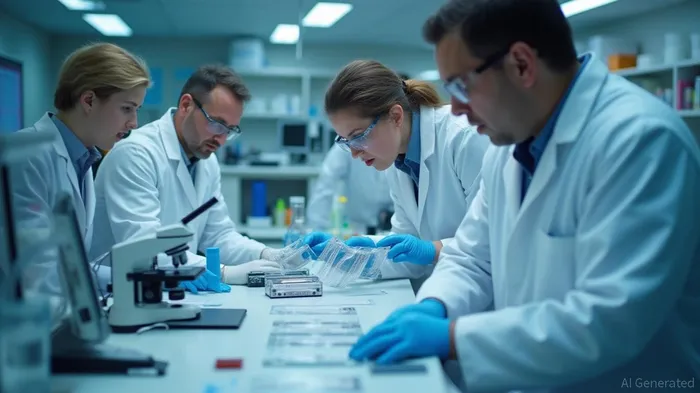
Scientists have developed a DNA cassette tape that can store data similar to cassette tapes from the 1980s. The DNA tape is made from polyester-nylon and has barcode patterns to separate the data into millions of tiny sections. This allows for easy access to the stored information. DNA is a compact, dense, and durable storage medium that can hold a significant amount of data in a small space. The team believes this could solve global data storage problems.
The DNA Data Storage-as-a-Service market is poised for significant growth, according to the latest market study by HTF Market Intelligence. The report projects a Compound Annual Growth Rate (CAGR) of 58.3% from 2025 to 2032, expanding from USD 45 Million in 2025 to USD 2.1 Billion by 2032 [1]. This rapid expansion is driven by the increasing demand for ultra-dense, long-term storage solutions, with DNA's high durability and capacity being key drivers.The market is segmented by type, including synthetic DNA storage, enzymatic DNA storage, archival DNA storage, hybrid DNA-digital systems, and cloud-integrated DNA storage. Applications span long-term data archiving, government record preservation, scientific data storage, media and entertainment archives, and enterprise cold storage [1]. Companies like Microsoft, Illumina, and GenScript are among the major players in this market, leveraging their expertise to provide scalable, sustainable, and secure data storage solutions.
Several challenges remain, however, such as high costs and slow read/write speeds, which are major barriers to mainstream adoption. Limited awareness among enterprise customers and standardization issues also pose integration challenges [1]. To overcome these hurdles, strategic partnerships with cloud storage providers, the development of low-cost enzymatic synthesis methods, and targeted marketing towards scientific institutions are essential.
The market's growth is further fueled by advancements in DNA synthesis and sequencing technologies, reducing costs and improving feasibility. The exponential growth of global data is creating a need for ultra-dense, long-term storage solutions, making DNA an attractive option for archival purposes [1]. The integration of DNA storage with existing IT infrastructure and cloud platforms is also gaining traction, with hybrid DNA-digital storage models emerging to bridge this gap.
Geographically, North America and Europe are leading the market, with significant growth potential in Asia and Oceania. The market's competitive landscape is characterized by both established players and emerging startups, each with unique value propositions and growth strategies [1].
In conclusion, the DNA Data Storage-as-a-Service market is a rapidly evolving sector with immense potential. While challenges remain, the combination of technological advancements, strategic partnerships, and targeted marketing efforts is paving the way for scalable and sustainable data storage solutions. Investors and financial professionals should closely monitor this market for future opportunities.
References:
[1]: HTF Market Intelligence. (2025). Global DNA Data Storage-as-a-Service Market Study. Retrieved from https://www.htfmarketintelligence.com/sample-report/global-dna-data-storage-as-a-service-market?utm_source=Nilesh_Newstrail&utm_id=Nilesh
Stay ahead of the market.
Get curated U.S. market news, insights and key dates delivered to your inbox.
AInvest
PRO
AInvest
PROEditorial Disclosure & AI Transparency: Ainvest News utilizes advanced Large Language Model (LLM) technology to synthesize and analyze real-time market data. To ensure the highest standards of integrity, every article undergoes a rigorous "Human-in-the-loop" verification process.
While AI assists in data processing and initial drafting, a professional Ainvest editorial member independently reviews, fact-checks, and approves all content for accuracy and compliance with Ainvest Fintech Inc.’s editorial standards. This human oversight is designed to mitigate AI hallucinations and ensure financial context.
Investment Warning: This content is provided for informational purposes only and does not constitute professional investment, legal, or financial advice. Markets involve inherent risks. Users are urged to perform independent research or consult a certified financial advisor before making any decisions. Ainvest Fintech Inc. disclaims all liability for actions taken based on this information. Found an error?Report an Issue




Comments
No comments yet