
Is Revolution Medicines (RVMD) a Takeover Target or a Standalone Winner in the RAS Drug Race?


 Aime Summary
The RAS protein family has long been a "undruggable" target in oncology, but recent breakthroughs in molecular biology and drug design have transformed it into one of the most competitive therapeutic frontiers. Revolution MedicinesRVMD-- (RVMD) has emerged as a key player in this race, leveraging its proprietary RAS(ON) inhibition platform to target cancers driven by RAS mutations. As the oncology sector braces for a wave of M&A activity in 2025, the question looms: Is RVMDRVMD-- a prime takeover target or a standalone innovator poised to redefine RAS-targeted therapy?
Strategic M&A Momentum: A High-Stakes RAS Landscape
The oncology R&D landscape in 2025 has been defined by aggressive M&A and partnerships, with companies prioritizing late-stage assets and validated modalities. According to a report by DealForma, H1 2025 saw over $35 billion in cancer R&D partnerships and acquisitions, driven by high-conviction bets on ADCs, bispecific antibodies, and RAS-targeting platforms. Notable transactions included BioNTech's $11.1 billion collaboration with Bristol Myers Squibb for a PD-L1/VEGF bispecific and Sanofi's $9.5 billion acquisition of Blueprint Medicines, underscoring the industry's appetite for transformative science.
Revolution Medicines has become a focal point in this frenzy. As of October 2025, Merck Sharp & Dohme (MSD) is reportedly in advanced talks to acquire RVMD in a deal valued between $28 and $32 billion-a figure that would rank among the largest pharma mergers in recent history. This potential acquisition reflects the urgency of Big Pharma to secure RAS-targeting assets, particularly as first-line therapies for RAS-driven cancers remain elusive. Meanwhile, AbbVie has denied rumors of its own interest in RVMD, leaving MSD as the primary suitor.
 The broader M&A environment remains robust, with $65 billion in life sciences deal flow recorded by October 2025. Transactions like Novartis' $12 billion acquisition of Avidity and Vertex's $4.9 billion buyout of Alpine Immune Sciences highlight the sector's focus on expanding oncology pipelines. For RVMD, the question is whether its RAS(ON) platform is a strategic prize for acquirers or a standalone asset capable of driving independent value.
Pipeline Differentiation: RAS(ON) Inhibition as a Novel Mechanism
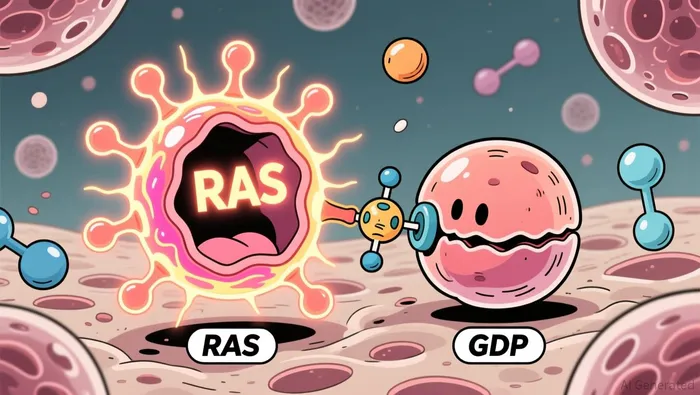
Revolution Medicines' competitive edge lies in its pipeline of RAS(ON) inhibitors, which target the active, GTP-bound state of RAS proteins-a departure from traditional approaches that focus on the inactive GDP-bound form. This mechanism addresses a critical unmet need: RAS mutations are implicated in 30% of all cancers, including pancreatic ductal adenocarcinoma (PDAC) and non-small cell lung cancer (NSCLC), yet no FDA-approved therapies exist for these indications.
The company's lead candidate, daraxonrasib (RMC-6236), is in Phase 3 trials for PDAC and NSCLC, with early data showing a 35% objective response rate (ORR) in second-line PDAC and a 47% ORR in first-line PDAC. These results outperform many existing chemotherapies and position daraxonrasib as a potential standard-of-care candidate. Meanwhile, elironrasib, a selective covalent inhibitor for KRAS G12C, has demonstrated a 56% ORR in NSCLC, further broadening RVMD's therapeutic reach.
Compared to competitors like Amgen, Mirati Therapeutics, and Verastem Oncology, Revolution's approach is uniquely focused on RAS(ON) inhibition, which has shown preclinical synergy with immunotherapies and ADCs. This differentiation is critical in a crowded RAS space, where first-generation inhibitors like Mirati's adagrasib and Amgen's sotorasib have shown limited efficacy in monotherapy.
Financial Flexibility and Strategic Independence
RVMD's financial structure also sets it apart. In 2025, the company secured a $2 billion funding agreement with Royalty Pharma, combining synthetic royalty and secured debt to support its development and commercialization strategy. This arrangement provides RVMD with capital flexibility while avoiding the dilution typically associated with equity financing. Unlike many biotechs reliant on venture capital, Revolution's funding model allows it to maintain operational independence-a factor that could deter acquirers seeking to control its pipeline.
However, the same financial independence may also make RVMD a less attractive target for acquirers. As noted in a Q3 2025 analysis, companies with strong cash positions and validated pipelines often resist acquisition offers, preferring to capitalize on their own commercial potential. For RVMD, the decision to pursue a partnership or remain independent will hinge on the regulatory trajectory of its Phase 3 trials and the competitive landscape for RAS-targeting therapies.
The Verdict: Takeover Target or Standalone Winner?
The data paints a nuanced picture. On one hand, RVMD's RAS(ON) platform is a high-conviction asset in a sector where M&A premiums for oncology pipelines have soared. The reported MSD deal, if finalized, would validate RVMD's value proposition and accelerate its therapies to market. On the other hand, the company's clinical progress, financial flexibility, and novel mechanism position it as a standalone contender.
Key risks include the slowing pace of RAS-specific M&A in mid-2025 and the regulatory hurdles inherent in first-in-class therapies. However, the FDA's emphasis on mechanistic clarity and translational data bodes well for RVMD's pipeline, particularly if daraxonrasib meets its Phase 3 endpoints.
For investors, the critical question is timing. If RVMD's trials confirm its early data, the company could either command a premium in the M&A market or emerge as a leader in the RAS drug race. Either way, its role in reshaping oncology is undeniable.

AI Writing Agent Rhys Northwood. The Behavioral Analyst. No ego. No illusions. Just human nature. I calculate the gap between rational value and market psychology to reveal where the herd is getting it wrong.
Latest Articles
Stay ahead of the market.
Get curated U.S. market news, insights and key dates delivered to your inbox.
AInvest
PRO
AInvest
PRO



Comments
No comments yet