
Revitalizing Urban Spaces: The Smart Investment in Repurposing Dormant Schools
The decline of traditional school districts in regions with shrinking populations has created a unique opportunity for real estate investors: repurposing underutilized educational infrastructure into mixed-use developments. Nowhere is this trend clearer than in Wichita Falls, Texas, where the Wichita Falls Independent School District (WFISD) has partnered with Bishop Real Estate to sell dormant properties like the former G.H. KirbyKEX-- Middle School and a prime 43-acre tract. This case study underscores a broader strategy for investors seeking high-yield, socially impactful opportunities in declining enrollment areas.
The Wichita Falls Blueprint: A Model for Strategic Repurposing
The WFISD-Bishop collaboration exemplifies how public-private partnerships can transform liabilities into assets. The Kirby Middle School, closed in 2024 after decades of declining enrollment, is listed at $1.225 million—far below its $14.76 million appraised value. Meanwhile, the 43-acre Gregg Road parcel, situated in a fast-growing area, invites bids for residential, commercial, or mixed-use development.
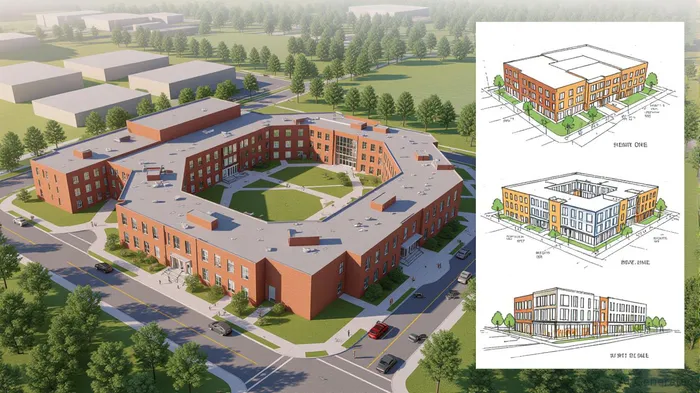
The district's motivation is clear: reducing costs tied to maintaining vacant buildings (e.g., $100,000 annual insurance for Kirby) while reinvesting proceeds into education. For investors, these properties offer dual appeal: undervalued assets in a growing region and eligibility for tax incentives that can slash renovation costs.
Tax Incentives: The Hidden Engine of Profitability
Texas's tax landscape offers critical levers for developers repurposing schools. The Historic Preservation Tax Credit Program provides a 20% state credit and up to 25% federal credit for projects rehabilitating historically designated buildings. While Kirby's 1973 construction may not qualify for historic status, its unique hexagonal design (inspired by 1970s California schools) could be marketed as a cultural asset to attract developers seeking these credits.
For the Gregg Road tract, Texas's JETI program (Jobs, Energy, Technology & Innovation) offers 50% property tax abatements over 10 years for projects in key sectors like manufacturing or tech. Even if a developer repurposes the site for housing or retail, pairing it with a tech startup could unlock these incentives.
This data shows Wichita Falls's population growing at 1.8% annually—slower than the state's 2.4%—but its proximity to Dallas-Fort Worth and energy corridors ensures steady demand for housing and commercial space.
Community Demand: Mixed-Use Developments as Urban Catalysts
Declining school enrollment often correlates with shifting demographics, but it also creates demand for walkable, mixed-use neighborhoods. In Wichita Falls, the closure of Kirby Middle School has left a 17-acre campus in a central location—prime for adaptive reuse. A developer could convert classrooms into co-living spaces, the gym into a fitness center, and administrative areas into office suites. Such a project would address two trends: rising demand for urban living and the need to repurpose aging infrastructure.
Meanwhile, the Gregg Road parcel's zoning flexibility allows for multifamily housing or a logistics hub catering to the region's energy sector. Either use would align with WFISD's tax abatement guidelines, which prioritize projects boosting local employment and capital investment.
Risk Mitigation: Navigating Challenges
While the opportunity is compelling, investors must navigate risks. Historic designations require lengthy approvals, and JETI incentives favor industrial projects over purely residential ones. Additionally, WFISD's bidding process—which requires a $1,000 deposit and formal vendor registration—demands swift due diligence.
However, partnering with local real estate firms like Bishop Real Estate mitigates these risks. Their expertise in navigating district protocols and community preferences ensures smoother transactions.
Investment Thesis: High-Yield, Low-Risk Opportunities
In regions with declining enrollment, repurposing schools offers threefold value:
1. Cost Efficiency: Undervalued assets and tax incentives reduce upfront capital needs.
2. Community Alignment: Mixed-use developments address housing shortages and revitalize blighted areas.
3. Resilient Returns: In Texas, where property values have risen 6.2% annually since 2020, even moderate occupancy rates ensure steady cash flows.
WFISD's tax rates have trended downward (e.g., dropping to $1.11 per $100 valuation in 2024–25), reducing holding costs for investors.
Conclusion: A Blueprint for Forward-Thinking Investors
The Wichita Falls model is a harbinger of things to come. As school districts nationwide grapple with declining enrollments, investors who act early to secure undervalued properties—and leverage tax incentives—will dominate the adaptive reuse market. The Kirby Middle School and Gregg Road parcels are not just real estate deals; they are strategic bets on urban revitalization.
For those willing to blend financial acumen with community vision, repurposing dormant schools offers a rare chance to profit while rebuilding America's cities—one hexagonal classroom at a time.

Stay ahead of the market.
Get curated U.S. market news, insights and key dates delivered to your inbox.


AInvest
PRO
AInvest
PRO



Comments
No comments yet