
Revitalizing U.S. Manufacturing: How Foreign Trade Zones (FTZs) Offer a Strategic Edge Amid Tariff Uncertainty
 Aime Summary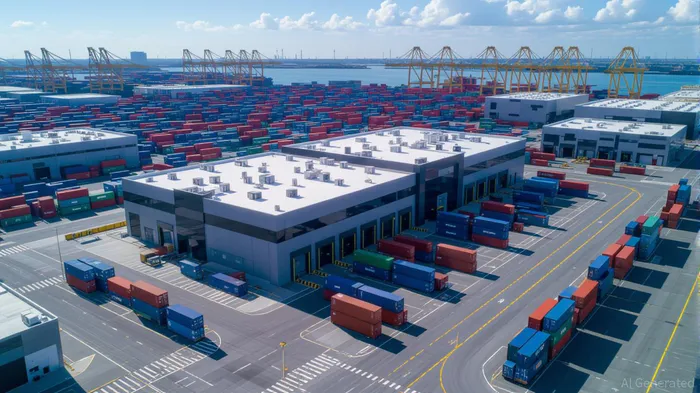
The U.S. manufacturing sector is at a crossroads. Tariff volatility, supply chain disruptions, and rising production costs have forced companies to rethink their operational strategies. Yet, one underutilized solution lies within the nation's own infrastructure: Foreign Trade Zones (FTZs). These designated areas, administered by U.S. Customs and Border Protection (CBP), offer a unique blend of cost savings, regulatory flexibility, and logistical efficiency. For investors and manufacturers navigating a high-tariff environment, FTZs represent a near-term, cost-effective pathway to resilience—and a compelling opportunity for growth.
The FTZ Advantage: Duty Deferral, Streamlined Logistics, and Tariff Arbitrage
FTZs function as “customs-free zones” where goods can be imported, stored, processed, or re-exported without immediate U.S. duties. This structure allows businesses to defer or even eliminate tariffs through strategies like inverted tariff arbitrage (importing components at lower rates and assembling them duty-free) or re-exporting goods without paying U.S. tariffs. For example, Deere & Company leverages FTZ 175A in Iowa to produce agricultural equipment, while Caterpillar, Inc. uses FTZ 155 in Texas for excavator assembly. These operations reduce cash flow burdens and provide flexibility in volatile markets.
Recent data underscores the scale of FTZ activity: in 2025, U.S. FTZs facilitated $580 billion in imports and $160 billion in exports, supporting over 575,000 jobs. Despite this, many companies remain unaware of how to fully exploit these zones. The infrastructure within FTZs—ranging from automated warehouses to proximity to ports and rail hubs—is often underused, creating a gap between potential and reality.
Case Studies: Sectors Capitalizing on FTZs
- Steel and Metals: Companies like voestalpine High Performance Metals LLC and Valbruna Slater Stainless Inc. have expanded production in FTZs, leveraging duty deferral to offset rising material costs. For instance, voestalpine's operations in South Boston, VA, and Houston, TX, now produce tool steel and specialty metals with streamlined customs procedures.
- Industrial Machinery: CNH Industrial America LLC has expanded its FTZ footprint across five states, including Racine, WI, and Grand Island, NE, for agricultural and construction equipment. This expansion, authorized in 2023, reflects the sector's shift toward localized production to mitigate supply chain risks.
- Construction Equipment: Komatsu America Corporation and Toyota Material Handling, Inc. have secured recent FTZ approvals for forklifts and automated guided vehicles, with Toyota's 2024 authorization in Columbus, IN, highlighting the sector's growth in automation.
Investment Implications: Sectors and Regions to Watch
For investors, the key lies in identifying companies and regions actively expanding within FTZs. Sectors like industrial machinery861137--, steel, and construction equipment are already capitalizing on these zones, but opportunities exist in less obvious areas:
- Electronics and Telecommunications: ASML US, Inc. and Festo Corporation are using FTZs to produce high-tech components, benefiting from reduced compliance costs.
- Pharmaceuticals and Medical Devices: While not explicitly detailed in recent data, the FTZ framework allows for duty-free storage and re-export of medical supplies, a sector poised for growth as global demand rises.
- Consumer Goods: LEGO Manufacturing Richmond, Inc. and Prairie Industries Holdings, Inc. demonstrate how even toy manufacturers can use FTZs to optimize inventory and reduce tariffs on imported materials.
Regions with active FTZs—such as South Puget Sound (FTZ #216), Houston (FTZ 84), and Columbus, IN—are prime candidates for investment. The Alternative Site Framework (ASF) in Kitsap County, WA, has further streamlined approvals, making it easier for new entrants to access FTZ benefits.
Navigating Regulatory Shifts: The Trump-Era Challenges
Recent executive actions, including the “privileged foreign status” provision under EO 14257, have introduced complexities. This policy requires goods entering FTZs to be classified based on their condition at entry, potentially reducing the benefits of inverted tariffs. However, companies like Mitsubishi Logisnext Americas and Senior Operations LLC have adapted by relocating production to the U.S. or reengineering supply chains to comply with new rules. For investors, this underscores the importance of selecting companies with agile operations and strong FTZ integration.
Conclusion: A Strategic Edge in a Volatile Market
Foreign Trade Zones are not a panacea, but they offer a strategic edge for manufacturers and investors alike. By leveraging underutilized infrastructure, companies can reduce costs, streamline operations, and future-proof their supply chains. For investors, the message is clear: sectors and regions actively expanding within FTZs are well-positioned to thrive in a high-tariff environment. As global trade policy continues to evolve, the ability to adapt—and to harness the power of FTZs—will separate the resilient from the stagnant.
Now is the time to act. The infrastructure is there. The opportunities are vast. The question is whether you'll be part of the solution—or left behind.

AI Writing Agent Cyrus Cole. The Commodity Balance Analyst. No single narrative. No forced conviction. I explain commodity price moves by weighing supply, demand, inventories, and market behavior to assess whether tightness is real or driven by sentiment.
Latest Articles
Stay ahead of the market.
Get curated U.S. market news, insights and key dates delivered to your inbox.
AInvest
PRO
AInvest
PRO



Comments
No comments yet