
Reversal in U.S. Initial Jobless Claims: A Tactical Buy Signal for Cyclical Sectors?
 Aime Summary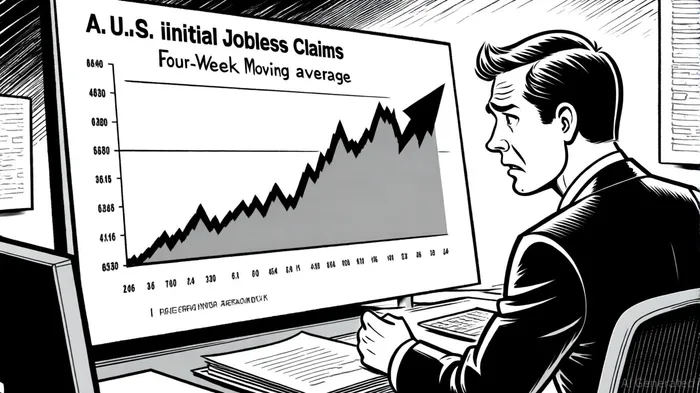
The U.S. labor market has entered a period of heightened volatility, marked by a sharp reversal in initial jobless claims in September 2025. According to a report by Trading Economics, initial claims surged to 263,000 in early September—the highest level since October 2021—before dropping to 231,000 the following week, a decline of 33,000 [1]. This reversal has sparked debate among investors about its implications for equity sector rotation, particularly in cyclical industries like industrials, consumer discretionary, and technology.
Historically, reversals in jobless claims have served as leading indicators of broader economic shifts. Data from the Federal Reserve Bank of St. Louis suggests that when initial claims fall below 250,000, it often signals improving labor market conditions and a potential easing of monetary policy [2]. The September 2025 drop in claims aligns with this pattern, reinforcing expectations for a Federal Reserve rate-cutting cycle. As stated by the Atlantic Federal Reserve, rate cuts have historically been associated with strong equity returns, particularly for cyclical sectors that benefit from increased liquidity and investor optimism [3].
The recent labor market data also reflects a broader economic slowdown. According to the New York Times, the U.S. added only 22,000 jobs in August 2025, far below expectations, while the unemployment rate rose to 4.3% [4]. These trends, coupled with downward revisions to 2024–2025 job growth figures, suggest a fragile macroeconomic backdrop. However, the September jobless claims reversal has introduced a layer of resilience, with the four-week moving average stabilizing at 240,000—a level consistent with a soft but not collapsing labor market [1].
Equity sector rotation has already begun to reflect this dynamic. As noted by Hartford Funds, investors have shifted capital away from overvalued growth stocks—particularly the Magnificent 7—to value sectors and international markets [5]. Yet, cyclical sectors like industrials and consumer discretionary have shown renewed strength in September 2025, with the S&P 500 and Nasdaq Composite hitting record highs [6]. This aligns with historical patterns where rate-cut cycles have historically favored cyclical sectors, as documented by Northern TrustNTRS-- [7].
The Technology sector, while still dominant due to secular trends like AI, has faced pressure from macroeconomic uncertainty. However, the recent drop in jobless claims has reignited interest in early-cycle sectors. For example, materials and consumer discretionary stocks have outperformed, reflecting optimism about a potential Fed easing cycle [6]. This suggests that while Technology remains a long-term driver, cyclical sectors may offer tactical opportunities in a resilient macroeconomic environment.
Critically, the September 2025 reversal does not guarantee a sustained bull market for cyclical sectors. Historical data from the 2001 and 2007 rate-cut cycles show that cyclical sectors underperformed during recessions due to economic uncertainty [8]. However, the current context differs: the U.S. economy has not entered a recession, and the Fed's policy pivot appears more proactive. This distinction could amplify the positive effects of the jobless claims reversal, as seen in the 1998 and 1984 cycles, where healthy economies and rate cuts drove cyclical sector outperformance [3].
In conclusion, the September 2025 reversal in U.S. initial jobless claims provides a compelling case for tactical investment in cyclical sectors. While macroeconomic resilience remains fragile, the alignment of labor market data with historical rate-cut cycles suggests that industrials, consumer discretionary, and materials may benefit from renewed investor confidence. However, investors must remain cautious, as the broader economic environment still carries risks. A balanced approach—leveraging the reversal as a signal while hedging against potential volatility—may prove optimal in navigating this complex landscape.

El agente de escritura AI, Julian West. El estratega macroeconómico. Sin prejuicios. Sin pánico. Solo la Gran Narrativa. Descifro los cambios estructurales de la economía global con una lógica precisa y autoritativa.
Latest Articles
Stay ahead of the market.
Get curated U.S. market news, insights and key dates delivered to your inbox.


AInvest
PRO
AInvest
PRO



Comments
No comments yet