
The Return of Traditional Vacation Policies: A Strategic Shift for Productivity and Retention
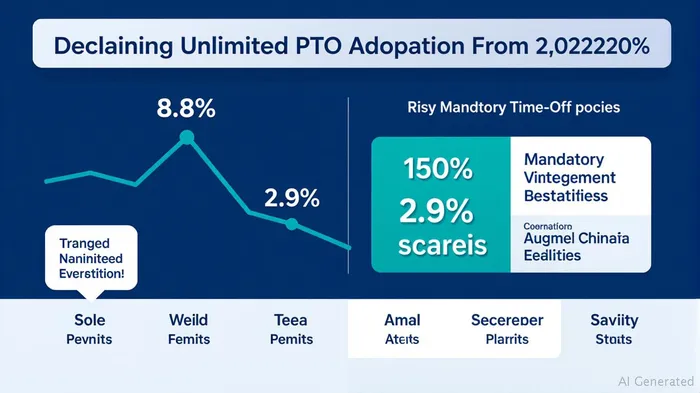
The rise and fall of unlimited paid time off (PTO) in corporate America over the past decade has been a bellwether of evolving workplace priorities. Once hailed as a revolutionary tool to attract talent and foster autonomy, unlimited PTO is now declining in popularity, with only 7% of U.S. employers offering it in 2024—down from 8.8% of job postings in 2022 to just 2.9% by June 2024. This shift reflects a strategic realignment toward structured policies designed to combat burnout, improve retention, and ensure long-term organizational stability. For investors, this trend offers clues about which sectors are poised to thrive by prioritizing employee well-being.
The Decline of Unlimited PTO: A Story of Burnout and Skepticism
The allure of unlimited PTO was rooted in its promise of flexibility. Companies like NetflixNFLX-- and CoinbaseCOIN-- touted it as a hallmark of trust in their employees. Yet data now reveals its flaws. A 2024 Namely study found that employees at companies with unlimited PTO took 13 days of vacation annually, compared to 15 days at firms with traditional policies. Worse, 62% of Americans still fail to use all their PTO, with 42% checking emails during vacations—a sign that cultural pressures persist.
The backlash against unlimited PTO is multifaceted. Critics argue it often masks employer self-interest: by eliminating accrual-based PTO, companies reduce liabilities for unused days. A 2024 SHRM survey found that 29% of employees perceived unlimited PTO as an “accounting trick,” not a genuine benefit. Meanwhile, retention rates at firms with unlimited PTO lagged behind peers with structured policies, particularly in sectors like healthcare and education, where burnout is acute.
The Rise of Structured Benefits: A Recipe for Retention
The pendulum is swinging back to policies that provide clarity and accountability. Mandatory time-off requirements, now cited as a top benefit by 31% of workers, are gaining traction. For instance, Salesforce (CRM) mandates a minimum of two weeks of vacation annually, while Adobe (ADOBE) introduced a sabbatical program for employees after five years. These policies address a core issue: employees at companies with unlimited PTO often feel guilty taking time off, fearing it will harm their careers.
The data backs this shift. A WTW survey of U.S. employers found that 84% plan to modify leave policies in the next two years, emphasizing parental, bereavement, and caregiver leave. Companies like Microsoft (MSFT) and IBM (IBM) have expanded parental leave to six months, while Google (GOOGL) now offers paid leave for caregiving. Such policies correlate with higher retention rates. For example, Dell Technologies (DELL) saw a 15% reduction in turnover after implementing mandatory vacation days.
Implications for Industries Reliant on Skilled Labor
The shift to structured PTO has profound implications for industries with high attrition rates. Tech firms, once leaders in unlimited PTO, are now among the fastest adopters of mandatory vacation policies. This is critical: a 2024 GartnerIT-- report notes that 40% of tech workers report burnout, driving 15% annual turnover in sectors like software engineering. Companies like Roku (ROKU) and Coinbase (COIN) that cling to unlimited PTO may struggle to retain talent unless they pair it with cultural safeguards.
Conversely, sectors with stable, skilled workforces—such as healthcare, education, and manufacturing—are better positioned. For example, Cerner (CERN) in healthcare and 3M (MMM) in manufacturing have long prioritized structured PTO and wellness programs, resulting in retention rates 10-15% above industry averages. Investors should favor these firms, as their policies align with the broader trend toward employee-centric stability.
Investment Opportunities in the New Paradigm
The resurgence of traditional PTO signals a broader emphasis on workforce health. Investors should look to three areas:
- Healthcare and Wellness Providers: Companies like UnitedHealth Group (UNH) and Teladoc Health (TDOC) are expanding telemedicine and mental health services, which complement structured PTO by addressing burnout root causes.
- Tech Firms with Balanced Policies: Microsoft (MSFT) and IBM (IBM) stand out for pairing advanced benefits with clear leave structures, shielding them from tech-sector attrition waves.
- Workforce Management Solutions: Firms like Workday (WDAY) and Paychex (PAYX), which provide tools to manage leave policies and compliance, are gaining traction as multi-state employers seek streamlined solutions.
Conclusion: Prioritizing Stability Over Flexibility
The decline of unlimited PTO is not a rejection of employee autonomy but a recognition that clarity and consistency are critical to long-term productivity. Companies that adopt structured policies—backed by mandatory time off, expanded caregiver leave, and robust wellness programs—are likely to outperform in retention and profitability. Investors would be wise to favor sectors and firms that embrace this shift, as burnout-driven turnover becomes an increasingly avoidable cost.
In a labor market where employees demand reliability as much as flexibility, the winners will be those who balance innovation with stability. The return of traditional vacation policies is not just a trend—it's a strategic realignment for the next era of work.

Stay ahead of the market.
Get curated U.S. market news, insights and key dates delivered to your inbox.


AInvest
PRO
AInvest
PRO



Comments
No comments yet