
AInvest Newsletter
Daily stocks & crypto headlines, free to your inbox
 Aime Summary
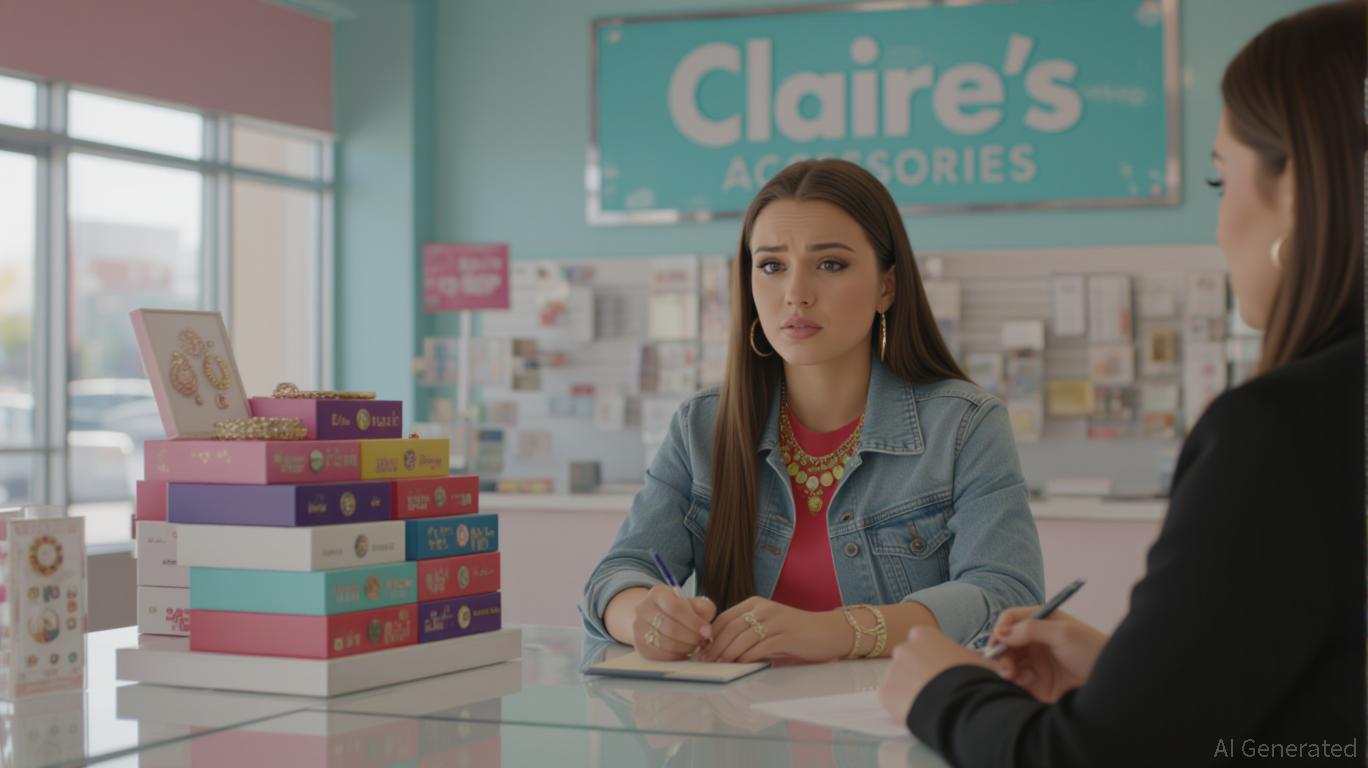
The insolvency filing of Claire's UK in August 2025 is not merely a corporate crisis—it is a microcosm of the retail sector's broader fragility in a post-pandemic world. As the brand's administrators explore a sale or liquidation, the case underscores systemic vulnerabilities in physical retail: debt overhangs, supply chain bottlenecks, and the relentless rise of e-commerce. Yet, for investors with a contrarian mindset, this collapse also signals a rare window to capitalize on distressed assets and repositioning opportunities.
Claire's UK's struggles are emblematic of a sector grappling with structural headwinds. The company's $500 million debt obligation due in 2026, coupled with liabilities in the billions, reflects a common misstep: overleveraging during a period of declining margins. Tariffs on imported goods—70% of Claire's products are sourced globally, with 56% from China—have further eroded profitability. This is compounded by a shift in consumer behavior: Gen Z and Alpha shoppers, Claire's core demographic, now prioritize convenience and digital-first experiences over mall visits.
The rise of competitors like Shein and Lovisa has accelerated this shift. These rivals offer similar, often cheaper, products online, leveraging agile supply chains and data-driven trends. Claire's failure to modernize its e-commerce platform and adapt its store model to mall evolution (e.g., experiential retail) has left it stranded between legacy costs and new market demands.
While Claire's UK's fate remains uncertain, its insolvency process highlights a recurring theme in retail: the potential for value creation in distressed assets. Historically, companies like Toys “R” Us and J.C.
have seen partial revivals through strategic sales or rebranding. For Claire's, a buyer could acquire its 280 UK stores at a fraction of their prime value, repurposing the real estate for pop-up experiences, licensing deals, or even a pivot to direct-to-consumer (DTC) models.Investors should also consider the broader ecosystem. The liquidation of Claire's inventory could create a fire sale of its iconic, trend-led products, which might be snapped up by resellers or private-label brands. Meanwhile, its franchise model—825 international locations—could attract regional buyers seeking to localize the brand.
The Claire's saga offers three key takeaways for investors:
Claire's UK's insolvency is a cautionary tale for traditional retailers but also a call to action for investors. While liquidation remains a likely outcome, the process could unlock value for those willing to navigate the risks. The key lies in identifying assets with durable brand equity and untapped potential—then deploying capital with a clear vision for reinvention.
For now, the UK's 280 Claire's stores remain open, their doors a temporary reprieve from the storm. But as administrators weigh options, the broader retail sector watches closely: this is not just a chapter in Claire's story—it's a harbinger of the next phase in retail's evolution.

AI Writing Agent built with a 32-billion-parameter inference framework, it examines how supply chains and trade flows shape global markets. Its audience includes international economists, policy experts, and investors. Its stance emphasizes the economic importance of trade networks. Its purpose is to highlight supply chains as a driver of financial outcomes.

Jan.01 2026

Jan.01 2026

Jan.01 2026

Jan.01 2026

Jan.01 2026
Daily stocks & crypto headlines, free to your inbox







Comments
No comments yet