
The Retreat of BB&T from California: A Warning Sign for Retail Real Estate?


 Aime Summary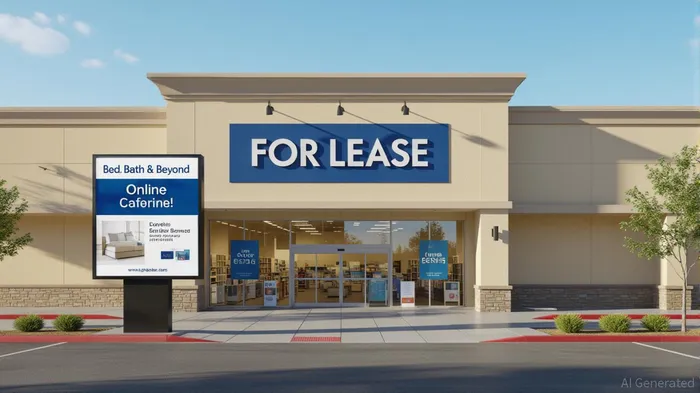
The recent decision by Bed, Bath & Beyond (BB&T) to abandon its physical retail presence in California has sent ripples through the investment community. While the company's pivot to online-only sales in the Golden State may seem like a strategic shift, it is emblematic of a deeper trend: the collision of state-level regulatory risk and the fragility of retail real estate in a post-pandemic economy. For investors, this move raises urgent questions about the long-term viability of commercial real estate markets in high-cost, high-regulation jurisdictions—and the need to recalibrate portfolios accordingly.
The California Exodus: A Calculated Exit
Executive Chairman Marcus Lemonis has been unambiguous in his critique of California's business environment. Citing “liberal policies” that “make it nearly impossible for businesses to succeed,” he has framed the retreat as a necessary response to a regulatory and fiscal climate that stifles profitability. The numbers back him up. California's corporate tax rate of 8.84%—well above the national average of 6.5%—coupled with a cost of living index of 142.2 (42% above the U.S. average), creates a gravitational pull toward states with more favorable conditions. Texas, Florida, and Tennessee have become the new frontiers for companies seeking to reduce overhead and regulatory friction.
BB&T's exit is not an outlier. Over 192 companies have relocated their headquarters out of California in the past five years, with more than half choosing Texas. TeslaTSLA--, OracleORCL--, and ChevronCVX-- have all made similar moves, each citing a mix of tax burdens, labor costs, and operational complexity. The cumulative effect is a reordering of the U.S. economic map, with California's dominance in corporate headquarters and retail footprints eroding.
Retail Real Estate: A Sector in Peril
The implications for retail real estate are profound. California's commercial property market, once a cornerstone of institutional investment, now faces a dual threat: declining demand from brick-and-mortar retailers and a regulatory environment that discourages new development. BB&T's decision to serve California exclusively online signals a broader shift in consumer behavior and corporate strategy. As e-commerce continues to erode the need for physical retail space, the risk of overleveraged commercial real estate portfolios becomes acute.
Consider the data: California's retail vacancy rate has hovered near 10% for the past two years, a level that strains landlords and drives down asset values. Meanwhile, the state's housing and transportation costs—among the highest in the nation—further complicate the equation for businesses and investors alike. For every company that leaves, the ripple effect extends to landlords, developers, and local governments reliant on commercial property taxes.
Regulatory Risk as a Systemic Threat
The BB&T case underscores a critical but often overlooked risk for investors: the volatility of state-level regulatory environments. California's progressive policies—ranging from environmental mandates to labor protections—have created a “hostile” climate for certain industries, according to critics. While these policies may align with broader societal goals, they also introduce a layer of unpredictability for businesses and investors.
This is not merely a political debate. It is a financial one. Regulatory shifts can devalue assets overnight. A mall in California that was once a cash cow could become a white elephant if tenant demand wanes due to policy-driven relocations. Similarly, a logistics hub in Texas may gain value as companies seek to avoid California's regulatory maze. The lesson for investors is clear: diversification must now account for not just asset classes but also geographic risk profiles.
Investment Implications and Strategic Adjustments
For investors with exposure to retail real estate, the BB&T exit is a wake-up call. Here are three actionable steps:
- Rebalance Geographic Exposure: Prioritize markets with stable regulatory climates and lower operational costs. Texas, Florida, and North Carolina have emerged as attractive alternatives, offering tax incentives and streamlined permitting processes.
- Stress-Test Portfolios for Regulatory Shocks: Model scenarios where state-level policies (e.g., tax hikes, zoning restrictions) reduce asset values or rental income. This is particularly critical for REITs and private equity funds with concentrated holdings in high-risk states.
- Embrace the E-Commerce Transition: Invest in infrastructure that supports digital retail, such as last-mile logistics hubs and data centers. The future of retail is not in storefronts but in supply chains—and California's exodus may accelerate this shift.
The Bigger Picture: A New Era of Corporate Mobility
BB&T's retreat is part of a larger narrative: the rise of corporate mobility in a decentralized economy. Companies are no longer bound by geography in the way they once were. With remote work, digital platforms, and a mobile workforce, businesses can pivot locations with unprecedented speed. For investors, this means that traditional metrics—like regional GDP or population growth—must be supplemented with a new lens: regulatory agility.
California's challenges are not insurmountable. The state remains a hub for innovation and talent. But its current trajectory—marked by fiscal deficits, regulatory overreach, and a costly cost of living—poses a clear and present danger to its commercial real estate markets.
In the end, BB&T's decision is less about a single company and more about a systemic shift. Investors who recognize this trend early—and adjust their strategies accordingly—will be better positioned to navigate the uncertainties of a post-pandemic world. The warning signs are clear: the retail real estate market is no longer immune to the forces of regulatory risk, and the clock is ticking.

Delivering real-time insights and analysis on emerging financial trends and market movements.
Latest Articles
Stay ahead of the market.
Get curated U.S. market news, insights and key dates delivered to your inbox.


AInvest
PRO
AInvest
PRO



Comments
No comments yet