
The Retirement Crisis Looming: How to Rethink Your Portfolio in Light of Social Security's Unstable Future
The alarm bells are ringing for American retirees. DaveDAVE-- Ramsey, the high-profile financial guru, has spent years warning of a perfect storm threatening the pillars of retirement security: Social Security's insolvency and the inadequacy of 401(k) plans. With the Social Security trust fund projected to run dry by 2035 and 42% of Americans not saving a dime for retirement, the time to act is now. For investors, this means reassessing portfolios not just for growth, but for resilience—a shift from chasing returns to building a safety net in uncertain times.
The Social Security Time Bomb: A Mathematical Certainty
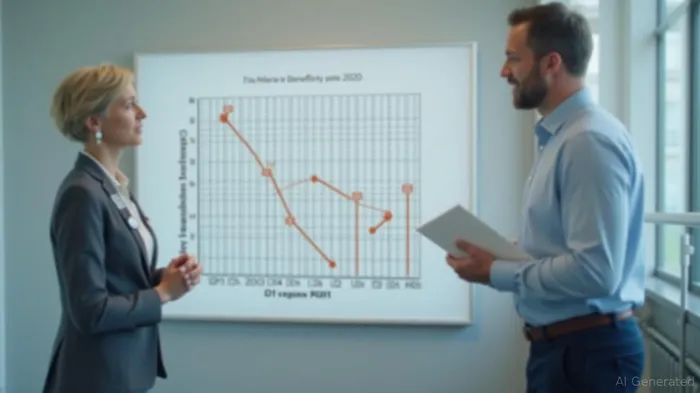
The numbers are stark. The worker-to-beneficiary ratio has dropped from 2.7 in 2023 to an expected 2.4 by 2035, as baby boomers retire and lifespans lengthen. shows the system's cash reserves hitting zero by 2035, with benefits potentially slashed by 20%. Even if Congress intervenes—a political quagmire—reforms like tax hikes or benefit cuts are inevitable.
Ramsey's message is clear: do not treat Social Security as a primary income source. The average monthly benefit of $1,976 ($23,712 annually) in 2025 is barely above the federal poverty line for a single person. Relying on it alone is a gamble with your financial stability.
The 401(k) Mirage: Why Passive Savings Won't Cut It
The 401(k) revolution, once hailed as the answer to retirement savings, is failing millions. Only 10% of workers save the recommended 15% of income, and even those who do face risks. Market volatility, poor withdrawal timing, and inadequate contributions mean many retirees could outlive their savings.
Consider this: reveal that even workers over 65 have median balances of just $120,000—far short of the estimated $1 million needed for a secure retirement. Ramsey's advice? Aggressively fund tax-advantaged accounts, prioritize Roth IRAs for tax-free withdrawals, and avoid lifestyle inflation that siphons savings.
Rethinking Your Portfolio: A 3-Pronged Strategy
The path forward requires a mix of caution and creativity. Here's how to adapt:
Build a Debt-Free Foundation
Ramsey's “zero-based budgeting” isn't just about frugality—it's about eliminating financial anchors. Pay off mortgages and high-interest debt before retirement. A paid-off home reduces fixed costs, allowing retirees to weather income shocks. For younger workers, prioritize debt repayment alongside savings.Diversify Beyond the Traditional
Don't rely solely on stocks and bonds. Explore alternatives like:- Rental real estate (via platforms like Arrived or Zillow's Rental Home program) for passive income.
- Annuities (indexed or variable) to lock in guaranteed income streams.
Health Savings Accounts (HSAs) for tax-free healthcare spending in retirement.
Adopt a “Plan B” Mindset
Stress-test your portfolio against worst-case scenarios. What if benefits are cut by 20%? Can you survive on $19,000 annually? Use tools like Vanguard's Retirement Income Calculator to model scenarios, and adjust contributions or spending accordingly.
The Bottom Line: Control What You Can
The systemic risks are undeniable—Congress's inaction, demographic shifts, and market whims. But investors can mitigate these by focusing on controllable factors:
- Save at least 15% of gross income, including employer matches.
- Diversify income streams to avoid overexposure to Social Security.
- Use to future-proof withdrawals.
Ramsey's warnings are a call to arms—not to panic, but to act. The retirees of 2035 will be judged not by their returns, but by their preparedness. Build a portfolio that prioritizes safety, flexibility, and multiple revenue streams. Your future self will thank you.
Andrew Ross Sorkin is a columnist for The New York Times and host of “DealBook.” This article reflects his analysis of financial risks and opportunities, not personalized investment advice.

Stay ahead of the market.
Get curated U.S. market news, insights and key dates delivered to your inbox.


AInvest
PRO
AInvest
PRO



Comments
No comments yet