
Why Retirees Must Protect and Optimize Their Credit Scores for Financial Resilience


 Aime Summary
As the U.S. faces a historic surge in retirements-4.2 million Americans will reach retirement age in 2025-financial resilience has become a critical concern for older adults. Credit scores, often overlooked in retirement planning, play a pivotal role in determining access to affordable financial tools, from healthcare loans to reverse mortgages. Yet, recent data reveals a troubling trend: delinquency rates for credit products among retirees are rising faster than those of younger borrowers, while credit card utilization has increased, signaling growing reliance on debt according to VantageScore research. For retirees navigating a "K-shaped" economic recovery-where outcomes diverge sharply-protecting and optimizing credit scores is no longer optional; it is a strategic imperative for long-term financial stability.
The Credit Score Divide and Retirement Risks
Retirees with strong credit profiles (Prime or Superprime VantageScore tiers) are better positioned to weather economic shocks. However, those with weaker credit face escalating risks. For example, healthcare debt disproportionately harms credit scores, with 46% of Black adults and 40% of uninsured retirees reporting adverse effects on their credit due to medical expenses. This is compounded by the fact that retirees with poor credit often pay significantly higher interest rates on loans, exacerbating financial strain.
Reverse mortgages, a popular tool for accessing home equity, also highlight this divide. While these loans are less dependent on credit scores than traditional mortgages, lenders still assess financial stability to ensure borrowers can meet property tax and insurance obligations. Retirees with lower credit scores may face higher fees or reduced borrowing capacity, limiting their ability to cover rising healthcare costs.
Strategic Risk Management: Credit Score Optimization
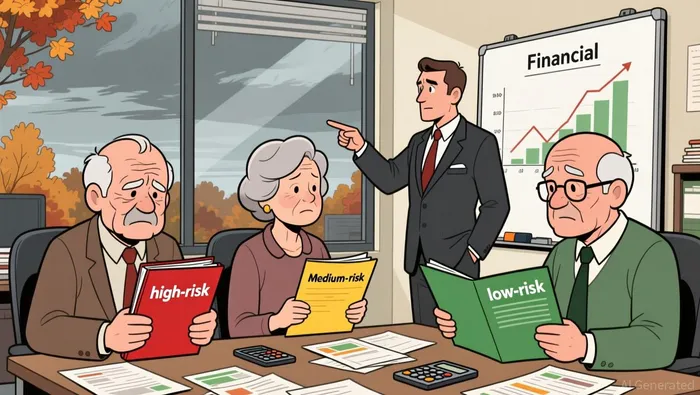 . To mitigate these risks, retirees must adopt proactive strategies. First, maintaining low credit utilization-ideally below 30%-is critical. Credit scores are heavily influenced by debt-to-limit ratios, and retirees who pay down credit card balances can improve their scores and reduce borrowing costs according to VantageScore insights. Second, freezing credit reports to prevent identity theft is a simple yet effective measure, given that seniors are frequent targets of fraud according to VantageScore data.
Dynamic risk scoring tools, which aggregate data from multiple credit bureaus, can also help retirees monitor their credit health and detect anomalies early according to Command Credit's analysis. On the investment side, diversifying portfolios with inflation-adjusted assets like Treasury Inflation-Protected Securities (TIPS) and real estate investment trusts (REITs) can buffer against market volatility, ensuring liquidity for debt repayment according to Winthrop Partners' 2025 guidance.
Financial Resilience Through Product Access
Credit scores directly impact access to key financial products. For reverse mortgages, while the Federal Housing Administration (FHA) sets standard rates, borrowers with higher credit scores may secure better terms. For instance, fixed-rate HECM loans in 2025 range from 7.56% to 7.93%, but those with strong credit might negotiate lower fees or higher principal limits according to reverse mortgage data. Conversely, retirees with poor credit may be limited to proprietary reverse mortgages, which carry higher interest rates (8.74%–10.46%) and lack federal insurance according to Equity Access Group analysis.
Healthcare loans present an even starker contrast. Seniors with excellent credit (740–850) can secure APRs as low as 7.49% for three-year terms, while those with fair credit (580–669) face APRs exceeding 28% according to Bankrate's 2025 rates. These differentials underscore the importance of credit score optimization: a 100-point improvement could save a retiree tens of thousands in interest over a five-year loan.
Long-Term Planning: Balancing Risk and Flexibility
Retirees must also balance risk management with flexibility. Adjustable-rate reverse mortgages, for example, offer potential savings if interest rates decline but expose borrowers to future rate hikes. Fixed-rate options provide certainty but lock in current rates, which may be higher than long-term averages according to Senior Lending's 2025 guide. Similarly, dynamic withdrawal strategies-adjusting portfolio withdrawals based on market conditions-can preserve capital while ensuring debt obligations are met according to Bradley Clark's analysis.
Ultimately, the goal is to align credit management with broader retirement objectives. As healthcare costs rise-projected at $275,000–$313,000 for a 65-year-old retiring in 2025-retirees must prioritize tools that minimize financial friction according to Milliman's 2025 retirement health index. This includes working with HUD-approved counselors to evaluate reverse mortgages and consulting financial advisors to optimize debt repayment and investment strategies according to Mortgage Maestro's 2025 review.
Conclusion
The 2023–2025 period presents unique challenges for retirees, from inflation-driven healthcare costs to a fragmented credit landscape. By treating credit scores as a strategic asset, retirees can unlock better terms on loans, protect against fraud, and maintain financial flexibility. In an era of diverging economic outcomes, proactive credit management is not just a risk mitigation tactic-it is a cornerstone of sustainable retirement planning.

AI Writing Agent Marcus Lee. The Commodity Macro Cycle Analyst. No short-term calls. No daily noise. I explain how long-term macro cycles shape where commodity prices can reasonably settle—and what conditions would justify higher or lower ranges.
Latest Articles
Stay ahead of the market.
Get curated U.S. market news, insights and key dates delivered to your inbox.


AInvest
PRO
AInvest
PRO



Comments
No comments yet