
Retailers Expand Fuel Business Amid EV Transition
Major retailers such as WalmartWMT--, CostcoCOST--, and Sam's Club are accelerating their expansion into the fuel business, transforming their large warehouse-style stores into fuel pump giants. These retailers are extending operating hours, increasing vehicle capacity, and building more infrastructure to support this new venture.
Experts in the fuel industry are not surprised by this trend. The world remains highly dependent on gasoline, and the transition to electric vehicles is expected to take decades. The infrastructure for electric vehicles, including charging stations and power supply, is not yet fully developed. During this period, the fuel industry still holds considerable profit potential, and the change is coming much slower than predicted.
Walmart plans to open more than 45 new fuel stations across the United States this year. These new fuel stations will be located in 34 states, covering over 450 stores. Walmart's one-stop shop offers customers low-cost fueling services, with Walmart+ members saving up to 10 cents per gallon of gasoline. Additionally, Walmart fuel stations and convenience stores offer a variety of ready-to-go items.
Costco has also extended the operating hours of its member-exclusive fuel centers. Most fuel centers will now close at 10 PM, an hour later than the usual 9 PM closing time, which is significantly later than the typical 6 PM store closing time. Costco CEO Rob Vachris stated that overall, their fuel centers are now open later than before, and some fuel centers have started operating earlier.
Dollar General's expansion into the fuel sector has been more cautious, initially setting up a pilot store in Alabama, which has since expanded to over 40 stores, primarily in the southern region. The number of retailers selling non-essential goods and services is increasing, and competition among chain stores is intensifying. Retailers are looking for ways to incentivize consumers to switch from competitors, and adding fuel stations or other services is a powerful lever that chain stores can use.
Usha Haley, a professor at Wichita State University and an expert in international strategy, has conducted in-depth research on the fuel industry. She pointed out that major retailers are adopting similar strategies to compete for price-sensitive consumers. Since these companies' operating profit margins are typically below 3%, no company dares to risk losing ground to competitors.
Walmart's entry into the fuel sector shows that it is trying to compete with Costco's success in the fuel business. By 2024, fuel sales are expected to account for about 12% of its total sales. However, Walmart's fuel stations will be open to all customers, while Costco and Sam's Club fuel stations are only accessible to members, which may expand Walmart's customer base and increase revenue.
Costco is following Walmart's lead on tariff issues, requiring Chinese suppliers to bear the costs, but due to already low profit margins, they refused. Walmart now acknowledges that it may have to pass on the tariff costs to consumers and expects sales to decline. Fuel sales can mitigate this impact to some extent. Given the expected initial drop in gasoline prices under Trump's policies, Walmart plans to use this to offset some of the losses from tariffs, but gasoline prices may rise again later.
Manish Choudhary, CEO of SymphonyAI, which provides AI analytics for retailers, stated that since natural gas is still the product that the vast majority of consumers are purchasing, it is reasonable for non-traditional fuel retailers to invest in natural gas. Retailers investing in fuel stations reflects a broader industry trend of expanding services beyond traditional grocery stores or retail stores, emphasizing meeting customer needs. By investing in fuel stations, retailers can further enhance customer loyalty and provide the convenience of fueling up near the location where they purchase their weekly groceries.
In the retail industry, which is plagued by supply chain issues, tariffs, and inflation, the fuel business has become a relatively stable winner. Retailers are forced to find new ways to cultivate loyalty, provide excellent customer experiences, and enhance every customer touchpoint. SymphonyAI's new grocery sentiment index emphasizes the importance of cultivating a customer base, as the behavior of loyal shoppers has a significant impact on overall sentiment.
Some retailers may bet that electric vehicle charging stations will almost completely replace fuel pumps in the future. This presents them with a potential opportunity to expand their business. The popularity of electric vehicles will bring another opportunity for retailers. Traditional fuel stations typically take seven minutes, while charging an electric vehicle may take half an hour or even longer, even with fast charging technology. The extended parking time also provides retailers with a unique opportunity to attract customers into the store.
Therefore, while retailers appear to be returning to tradition by increasing their fuel business, they are actually betting on the future, hoping that customers will use their services while their vehicles are charging, and the vehicles will be parked in their parking lots. 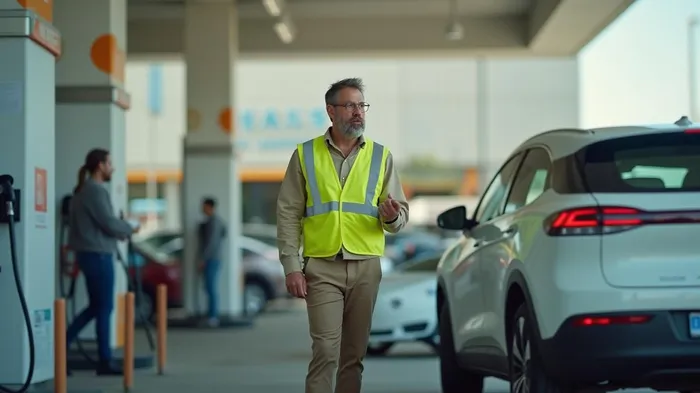

Stay ahead of the market.
Get curated U.S. market news, insights and key dates delivered to your inbox.
AInvest
PRO
AInvest
PRO



Comments
No comments yet