
Retail Traders Are Rewriting Wall Street’s Volatility Playbook
 Aime Summary
Retail participation has evolved from sporadic trades to systematic strategies. Over the year the average daily retail orders across 13 brokers rose 18.5% to ~32 million, transforming liquidity and price discovery. For volatility funds and multi-strategy shops, this depth means tighter spreads and the ability to move in and out of sizeable positions without bank intermediation, an institutional edge powered by retail flow.
0DTE Goes Systematic—And Smarter Than You Think
Zero-day-to-expiry (0DTE) options—contracts that expire the same day are no longer a novelty. Retail now accounts for roughly 50–60% of 0DTE volume, and a growing share is rules-driven (think: repeatable intraday algorithms rather than one-off punts). The old “retail = dumb money” trope doesn’t hold in index options: execution tools, automation, and pattern-based tactics have compressed the gap between retail and institutional playbooks especially in liquid underlyings like SPX.
Why it matters: 0DTE flows can amplify intraday moves and “pin” markets around key strikes into the close, while frequent premium selling can damp realized volatility—until shocks hit.
Covered-Call ETFs: Retail as a Volatility Supplier
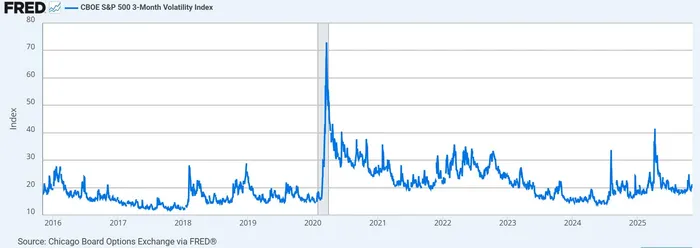
The boom in covered-call and other options-overlay ETFs has effectively increased the supply of index volatility (more call writers = more vol offered). On the Nasdaq-100, call-writing activity has accelerated, a likely contributor to stubbornly low index vol outside stress windows. For income-seekers, these products trade upside for yield; for volatility desks, they create predictable supply that can be harvested again, institutional edge meets retail demand.
Know the trade-off: Covered-call ETFs shine in sideways-to-slightly-up markets. They lag in sharp rallies (capped upside) and don’t provide true crash protection.
The Mirage of “Free Hedges”
Popular overlays—call overwriting, zero-cost collars, put-spread collars—often underperform buy-and-hold or a classic 60/40 over full cycles. The “zero-cost” pitch is seductive: finance downside with upside sales. The reality:
Put-spread collars cap gains via short calls yet leave tail risk if a crash slices below the lower put.
“Hedged equity” labels can obscure that you’re short the tail—the exact scenario you’d hoped to insure.
Over time, fees, slippage, and forgone upside compound into a drag that many investors underestimate.
Bottom line: Complexity ≠ free lunch. If a hedge is cheap, you’re probably paying with future upside.
What’s Structurally New—and What Isn’t
New: Retail flow is bigger, faster, and more systematic, interacting directly with market-making and vol-arbitrage ecosystems. Options-ETF wrappers democratize overlays once reserved for SMAs and institutions.
Not new: Market physics. Selling optionality harvests carry until a regime shift (gap risk, volatility expansion). Hedging that truly protects tails costs money—consistently.
The Bottom Line
Retail trading has permanently altered the volatility ecosystem, blurring the line between institutional and individual strategies. The newfound liquidity and sophistication offer upside for traders who understand the tools—but also new risks for those drawn in by the promise of “smart” hedges or income ETFs.
For investors, the message is twofold: innovation creates opportunity, but complexity demands caution. The next phase of this retail revolution will likely test how well these systems—and their participants—perform when the market’s calm finally breaks.

Market Radar delivers concise, daily trading ideas by tracking everything from options activity and market sentiment to high-profile political trades.
Latest Articles
Stay ahead of the market.
Get curated U.S. market news, insights and key dates delivered to your inbox.


AInvest
PRO
AInvest
PRO



Comments
No comments yet