
Retail'stdown: How the Store Closure Tsunami is Creating a Real Estate Opportunity
The U.S. retail sector is in freefall. Over 15,000 stores have shuttered in 2025 alone, with giants like Joann and Party City collapsing entirely. But beneath the chaos lies a golden opportunity: a flood of undervalued commercial real estate assets. From prime downtown locations to郊外 strip malls, the retail meltdown is creating a once-in-a-generation chance to acquire distressed properties at discounts.
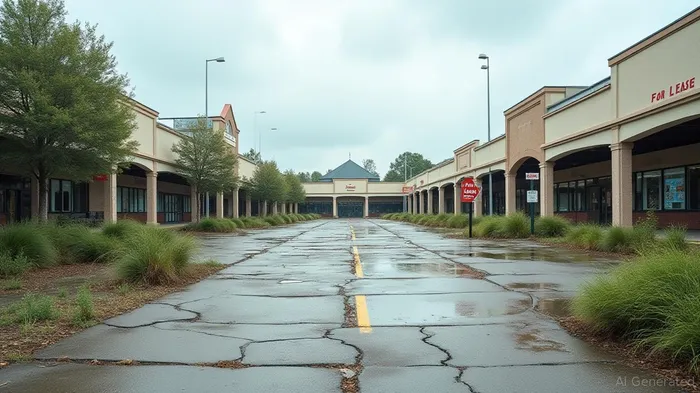
The retail apocalypse has created a stark divide between winners and losers. E-commerce giants and discount retailers thrive while legacy brandsLCUT-- falter. This shift has left behind a trail of vacant stores now trading at 30-50% below their pre-pandemic valuations. The key question for investors: how to identify the most promising opportunities in this distressed landscape?
The Anatomy of Retail Real Estate Value Collapse
Let's start with the mathMATH--. Consider Joann Fabric & Craft Stores, which filed for bankruptcy in January 2025 and liquidated its 800-store portfolio. Its shares have plummeted 85% since 2020:
This collapse reflects not just declining sales, but also the overvaluation of their real estate holdings. Many retailers carried inflated property valuations on their books, assuming perpetual occupancy. Now that reality has intervened, these assets are available at distressed pricing.
The same pattern plays out across sectors:
- Department Stores: Macy'sM-- (M) is closing 66 stores this year, with its stock down 70% since 2019
- Drugstores: Walgreens (WBA) plans 1,200 closures over three years, its shares down 60% since 2020
- Discount Retail: Dollar General (DG) closed 96 stores but remains resilient, highlighting the importance of业态 differentiation
Where to Look for Value
Prime Urban Locations
Despite the retail exodus, high-traffic urban sites remain desirable. A former Macy's flagship in a downtown core could be repositioned as a mixed-use development or luxury rental complex. These locations often have long-term leases expiring, creating opportunities to renegotiate terms.Strip Malls in Growing Suburbs
Suburban shopping centers near population growth corridors can be rebranded as “community hubs” with healthcare clinics, gyms, and service-based businesses. CVS's (CVS) strategy of shifting focus to healthcare services shows how these spaces can adapt.Industrial Adjacent Properties
Warehouses and distribution centers tied to struggling retailers may offer bargains for logistics firms. The shift to e-commerce means proximity to fulfillment hubs is now critical.
The Data Behind the Deals
Analyzing distressed property pipelines reveals compelling trends:
- Lease Rate Discounts: Vacant mall spaces are renting at 30-40% below 2020 rates
- Cap Rate Spreads: Office-to-retail conversions now offer 6-8% cap rates vs. 4% pre-pandemic
- Bank Loan Defaults: Over $15 billion in retail-related commercial mortgages are in distress
Investors should target properties with:
- Anchor Tenants: Even in distressed malls, having a Safeway or Target can stabilize valuations
- Location Density: Properties near transit hubs or 7-Elevens often retain foot traffic
- Lease Expirations: Focus on sites with leases ending in next 18-24 months
The Risks to Consider
- Zoning Restrictions: Many retail properties are locked into commercial-only zoning
- Environmental Liabilities: Older buildings may have asbestos or other hazards
- Bankruptcy Priorities: Secured lenders often get first claim on assets
Investment Strategies for 2025
Distressed Debt Funds: Consider vehicles like Blackstone Tactical Opportunities or Fortress Credit that acquire debt at 50-70 cents on the dollar
REIT Plays: Prologis (PLD) and CubeSmart (CUBE) are well-positioned to acquire logistics and storage assets
Direct Acquisitions: Use platforms like Auction.com or RealtyTrac to bid on government-backed distressed properties
Equity Plays: Companies like Simon Property Group (SPG) are buying up malls at discounts to redevelop them
The retail collapse isn't just an end—it's a new beginning. For investors willing to navigate the rubble, the combination of cheap real estate and shifting consumer patterns creates a rare opportunity to build assets that will thrive in the post-retail economy. The key is to focus on location, adaptability, and the ability to reimagine space for tomorrow's economy—not yesterday's stores.

Stay ahead of the market.
Get curated U.S. market news, insights and key dates delivered to your inbox.




Comments
No comments yet