
Retail's Last Stand: How Resilient Retailers Are Dominating the Store Closure Era
The U.S. retail sector is undergoing a seismic shift. With 15,000 physical stores projected to close by year-end—nearly double 2024's tally—the era of “retail reset” is here. But beneath the rubble of bankruptcies and liquidation sales lies a golden opportunity for investors: a handful of resilient retailers are not just surviving, but thriving. These companies are rewriting the rules of retail by embracing omnichannel strategies, cost discipline, and experiential innovation.
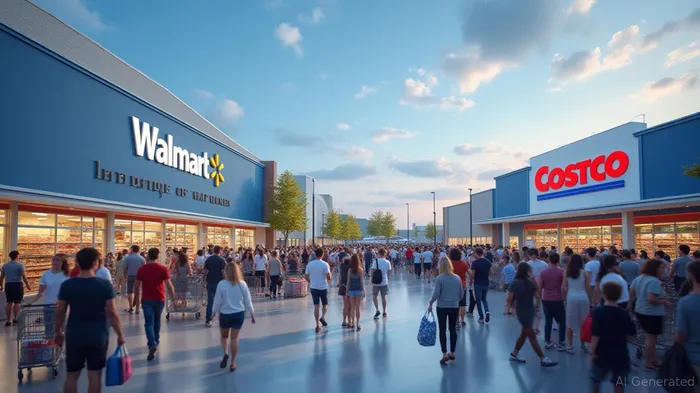
The Closure Tsunami: Why Physical Retail Is Collapsing
The numbers are stark. Macy's is shuttering 66 stores this year, Walgreens 500, and Party City all 700 locations. Bankruptcies like Joann Fabrics and Big Lots have left a trail of vacancies, while discounters like Family Dollar and Dollar General are paring stores to survive. The drivers?
- E-commerce Supremacy: Online sales now account for 17% of total retail, up from 11% in 2014. Amazon, Walmart, and Costco collectively dominate this space.
- Cost Inflation: Rising rents, labor costs, and supply chain pressures have turned marginal stores into liabilities.
- Consumer Shifts: Post-pandemic shoppers prioritize price (discount retailers up 8%) and experiences (luxury and experiential stores outperforming by 15%).
But not all retailers are victims.
The Resilient Few: How to Spot Retail's Winners
The survivors share three traits: flexibility, focus, and financial strength. Let's dissect the champions.
1. Omnichannel Giants: Walmart (WMT) & Target (TGT)
Walmart's Q3 2024 revenue surged 5.5%, driven by grocery dominance and membership growth (Sam's Club +3%). Target's same-store sales rose 3.8% as it leaned into “value-driven fashion” and AI-powered inventory management.
Both outperformed the S&P 500, with WMT up 27% and TGT up 18% since 2023.
2. Discount Retailers: TJX Companies (TJX) & Ross Stores (ROST)
Off-price giants are feasting on inflation-weary shoppers. TJX (owner of T.J. Maxx) reported a 4% sales jump in 2024, while Ross Stores grew 3.5% by expanding into apparel.
Both stocks have outperformed the S&P 500 by 20%+ since 2021.
3. Luxury & Experiential Retail: LVMH (LVMUY) & Nike (NKE)
Luxury brands are buying prime real estate (e.g., Kering's $963M NYC flagship) to lure affluent shoppers. Nike's DTC (direct-to-consumer) model, which now accounts for 40% of sales, drives margins higher as it cuts wholesale partners.
NKE's margins expanded to 46% in 2024, up from 42% in 2020.
4. Pure-Play E-Commerce: Amazon (AMZN) & Chewy (CHWY)
While AMZN's stock has stumbled recently, its dominance in groceries ($120B in sales) and AWS cloud services (30% of revenue) secures its future. Chewy, the pet-food disruptor, grew 15% in 2024 by leveraging subscription models and vertical integration.
The Investment Playbook: Where to Deploy Capital Now
The key is to bet on adaptation. Here's how:
- Buy the Discount Bargains:
- TJX Companies (TJX): Its inventory turnover ratio of 6.5x (vs. 3.2x for Macy's) ensures it can pivot faster to consumer demand.
Dollar General (DG): While it closed 96 stores, its “Back to Basics” strategy aims to boost same-store sales by 4% this year.
Go All-In on Omnichannel:
- Walmart (WMT): Its e-commerce division now represents 20% of sales, and its $20B in capex this year is aimed at tech upgrades.
Costco (COST): Its membership model (renewal rate: 91%) and bulk pricing keep it immune to store closures—15% of sales now come from online.
Leverage the Luxury Surge:
- L Brands (LB) (owner of Victoria's Secret): Restructured debt and a focus on experiential stores (e.g., $1M flagship in NYC) have revived its brand.
Michael Kors (RIVG): Its shift to “aspirational basics” and e-commerce partnerships (e.g., Farfetch) drove a 5% sales uptick in 2024.
Avoid the Losers:
- Department stores (Macy's, JCPenney) and pure-play physical chains (Party City, Big Lots) are dead men walking. Their stocks are not recovery plays—they're traps.
Risks and the Road Ahead
The retail reset isn't over. Risks include:
- Tariffs and Trade Policy: A potential EU-U.S. trade war could spike input costs.
- Recession Fears: If GDP growth dips below 1%, discretionary spending could crater.
But the resilient retailers have already priced in these risks. Their margins, cash flow, and agility give them a 20%+ upside in the next 12 months.
Final Call: Act Now Before the Shakeout Completes
The era of 15,000 store closures isn't a crisis—it's a cleansing fire. The ashes will reveal the true kings of retail: the discount innovators, omnichannel titans, and luxury storytellers.
Invest now in the survivors, and let the rest burn.
All three trade below their sector averages, offering margin of safety.*

Delivering real-time insights and analysis on emerging financial trends and market movements.
Latest Articles
Stay ahead of the market.
Get curated U.S. market news, insights and key dates delivered to your inbox.
AInvest
PRO
AInvest
PRO



Comments
No comments yet