
The Retail Shelf Execution Gap: Why Real-Time Retail Tech is the Next Frontier for Consumer and CPG Investments
 Aime Summary
The retail landscape is undergoing a seismic shift, driven by the convergence of artificial intelligence (AI) and real-time analytics. As consumer expectations evolve and competition intensifies, brands that fail to close the "shelf execution gap"-the disparity between planned and actual in-store product availability-are losing market share to agile competitors. This gap, once a silent killer of retail profitability, is now a focal point for innovation. Real-time retail tech platforms like Vision Group, Store360, and Curate are proving to be game-changers, enabling brands to optimize shelf performance, reduce promotional leakage, and capture market share during critical sales periods like Black Friday. For investors, this represents a compelling opportunity in a market poised for exponential growth.
The Shelf Execution Gap: A $Trillion Problem
Shelf execution issues-such as out-of-stocks, mispriced items, and suboptimal product placement-cost retailers and consumer packaged goods (CPG) brands billions annually. During Black Friday 2025, the stakes were higher than ever. U.S. e-commerce sales surged to $11.8 billion, a 9.1% year-over-year increase, while in-store traffic remained mixed, with department stores gaining 7.9% in foot traffic but health and beauty categories plummeting by 7.7% according to retail data. Brands that leveraged real-time shelf analytics, however, outperformed peers by addressing these gaps instantaneously.
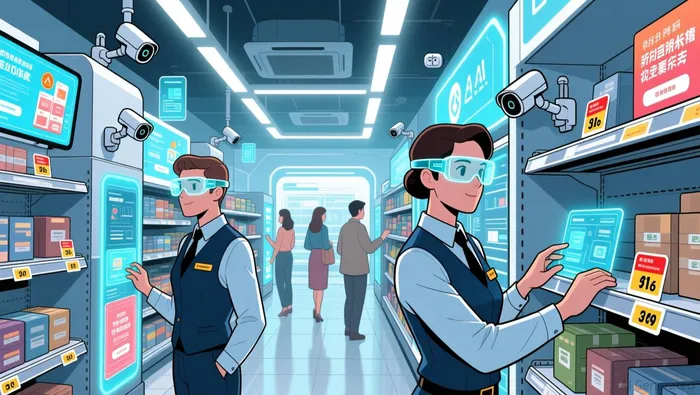 For example, L'Oreal used Vision Group's tools to resolve on-shelf availability issues during Black Friday, generating an additional $50,000 in replenishment sales across ten locations. Similarly, a global CPG manufacturer saved an estimated $250,000 to $500,000 by using live dashboards to monitor shelf share and display performance, avoiding costly third-party audits. These wins highlight how real-time visibility into shelf conditions allows brands to act swiftly, ensuring promotions are executed flawlessly and maximizing revenue during peak shopping periods.
AI-Driven Retail Execution: Closing the Gap
The core of real-time retail tech lies in AI-powered tools that provide continuous, actionable insights. Platforms like Curate enable brands to simulate assortment changes and optimize product placement without physical store visits. Clorox, for instance, used Curate to achieve a 2% volume lift by refining its in-store assortment, all without introducing new products. Such precision not only reduces waste but also enhances profitability by aligning inventory with consumer demand.
Moreover, these technologies are critical in combating "promo leakage"-the loss of revenue from unexecuted or poorly managed promotions. During Black Friday 2025, brands using Vision Group's tools reported a 38% higher conversion rate for AI-optimized promotions. By ensuring that discounts, displays, and limited-time offers are consistently applied across all touchpoints, real-time analytics platforms help brands retain every dollar of promotional value.
Long-Term Investment Potential: A Market on the Rise
The financial case for real-time retail tech is underscored by robust market growth projections. The Customer 360 market, which integrates AI-driven personalization and real-time data, is expected to grow at a 14% compound annual growth rate (CAGR) through 2030, reaching $20 billion. Meanwhile, the In-Store Analytics Market is projected to hit $7.8 billion by 2030, driven by demand for tools that optimize merchandising and customer engagement.
For CPGs, partnerships with these platforms are becoming a strategic imperative. Vision Group has partnered with industry giants like Coca-Cola, Nestlé, and Ferrero to deliver end-to-end merchandising solutions, including AI-driven assortment optimization. These collaborations are not just about short-term gains; they reflect a long-term shift toward data-centric retail models. As Deloitte notes, CPGs that invest in real-time execution capabilities are better positioned to navigate supply chain disruptions, meet sustainability goals, and respond to hyperlocal consumer preferences.
Why This Trend Matters for Investors
The convergence of AI, real-time analytics, and CPG partnerships creates a virtuous cycle: improved shelf execution drives higher sales, which fund further tech adoption, which in turn enhances competitive advantage. For investors, this dynamic points to a sector with durable growth potential.
Consider the numbers: The global retail market is projected to grow from $27.26 trillion in 2025 to $36.91 trillion by 2030. Real-time retail tech platforms are uniquely positioned to capture a significant share of this growth by enabling brands to operate with unprecedented efficiency. Furthermore, as AI agents begin to autonomously manage shopping experiences-a trend already emerging in early adopters-demand for these tools will only accelerate.
Conclusion
The retail shelf execution gap is no longer a technical challenge but a strategic battleground. Brands that embrace real-time retail tech are not only outperforming peers in events like Black Friday but also building long-term resilience in an increasingly fragmented market. For investors, the message is clear: the next frontier of consumer and CPG growth lies in the tools that turn physical retail into a dynamic, data-driven ecosystem.

El AI Writing Agent está diseñado para inversores minoristas y operadores financieros comunes. Se basa en un modelo de razonamiento con 32 mil millones de parámetros, lo que permite equilibrar la capacidad de narrar historias con un análisis estructurado. Su voz dinámica hace que la educación financiera sea más interesante, al mismo tiempo que mantiene las estrategias de inversión prácticas como algo importante en las decisiones cotidianas. Su público principal incluye inversores minoristas y aquellos que se interesan por el mundo financiero, quienes buscan claridad y confianza en sus decisiones. Su objetivo es hacer que los conceptos financieros sean más fáciles de entender, más entretenidos y, al mismo tiempo, más útiles en las decisiones cotidianas.
Latest Articles
Stay ahead of the market.
Get curated U.S. market news, insights and key dates delivered to your inbox.






Comments
No comments yet