
The Retail Shakeout: At Home's Bankruptcy and the Path Forward for Home Goods Retailers
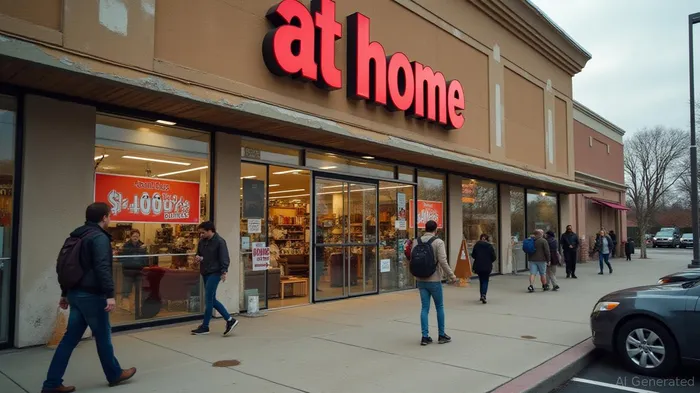
The bankruptcy filing of At Home, a Texas-based home goods retailer, marks a pivotal moment for an industry grappling with overexpansion, shifting consumer habits, and rising costs. With plans to close 26 stores by September 2025—primarily in states like California, Florida, and New York—the company's restructuring underscores broader challenges facing brick-and-mortar retailers in an era of economic volatility. For investors, this serves as a stark reminder of the need to reassess valuations and prioritize firms with agile omnichannel strategies and cost discipline.
The Downfall of At Home: A Cautionary Tale
At Home's Chapter 11 filing, announced on June 16, 2025, is rooted in a perfect storm of economic pressures. The retailer cited unsustainable tariffs on Chinese imports, rising interest rates, and inflation as key factors. Despite operating 260 stores across 40 states, its reliance on physical retail and 90% overseas sourcing left it vulnerable to supply chain shocks and shifting consumer preferences. Notably, no Texas stores are closing, highlighting the strategic importance of its home market.
The restructuring will eliminate nearly $2 billion in debt and secure $200 million in new financing, but the closures signal a harsh reality: physical stores alone are no longer sufficient to sustain profitability in a post-pandemic world.
Sector-Wide Challenges: Overexpansion, Digital Disruption, and Tariff Headwinds
At Home's struggles are part of a larger trend. Retailers like Joann and Party City have also filed for bankruptcy in recent years, reflecting systemic issues:
- Overexpansion: Many home goods chains expanded aggressively during the pandemic, only to face a post-pandemic slowdown in discretionary spending. At Home's 260-store footprint now appears excessive in a market demanding flexibility.
- Consumer Shifts: Online shopping continues to grow, with Wayfair reporting that 63.4% of orders come from mobile devices. Meanwhile, off-price retailers like TJX Companies thrive by catering to cost-conscious buyers.
- Tariff and Supply Chain Pressures: At Home's reliance on imports—90% of its inventory comes overseas—left it exposed to tariffs and logistics bottlenecks. Competitors like IKEA, which have diversified sourcing and invested in regional production, face fewer risks.
Competitors in the Crosshairs: Risks and Opportunities
The bankruptcy creates both risks and opportunities for rivals. Let's dissect their positions:
Wayfair (W): The Digital Pioneer Under Pressure
Wayfair's Q1 2025 results highlight its strengths and vulnerabilities. While U.S. revenue rose 1.6%, international sales slumped 10.9% due to weak demand in Europe. The company's focus on omnichannel (mobile orders dominate) and liquidity ($1.4 billion in cash) are positives, but its net loss of $113 million underscores margin pressures.
Investment Takeaway: Wayfair's balance sheet gives it room to pivot, but its reliance on volatile international markets and thin margins warrant caution. Historical backtesting further reveals that buying Wayfair shares on earnings announcement dates and holding for 20 days from 2020 to 2025 resulted in poor performance, underscoring the risks of timing investments around earnings releases.
TJX Companies (TJX): The Off-Price Champion
TJX's off-price model is a masterclass in resilience. Same-store sales rose 3% in its latest quarter, driven by efficient inventory management (inventory turnover of 4.69x) and its ability to attract value-driven shoppers. With plans to open 1,200+ new stores globally, TJX is expanding while others retrench.
Investment Takeaway: TJX's low-risk, high-margin strategy positions it as a defensive play in a volatile market. However, historical backtesting shows that buying TJX on earnings announcement dates and holding for 20 days over the same period also underperformed, suggesting investors should avoid over-reliance on earnings-driven entry points.
IKEA: Omnichannel Evolution and Sustainability
IKEA's FY2024 sales of $5.5 billion (with $1.9 billion in e-commerce) reflect its omnichannel pivot. New small-format stores, AR tools, and EV delivery fleets (374 chargers installed) are key to its growth. However, its reliance on physical stores—particularly in high-cost urban markets—remains a risk.
Investment Takeaway: IKEA's focus on sustainability and digital innovation aligns with long-term trends, but its slow stock in the U.S. (privately held) limits investor access.
Investment Implications: Where to Find Value
The At Home bankruptcy underscores a clear path forward for investors:
- Prioritize Omnichannel Strength: Firms with robust digital platforms (e.g., Wayfair's mobile dominance) and flexible inventory systems (TJX's turnover efficiency) are better positioned.
- Avoid Overexposure to Physical Stores: Retailers with excessive real estate footprints or reliance on imported goods face headwinds.
- Bet on Resilience: Off-price retailers like TJX and firms with diversified supply chains (IKEA) offer stability in uncertain times.
Conclusion
At Home's restructuring is a wake-up call for the home goods sector. Investors must favor companies that blend digital agility with operational efficiency. While Wayfair's liquidity buys time, TJX's off-price model and inventory prowess make it a safer bet. For now, the winners will be those who adapt—not just to today's challenges, but to the evolving demands of tomorrow's consumers.
In this shakeout, the smart money is on resilience—and the retailers who've built it into their DNA.

Stay ahead of the market.
Get curated U.S. market news, insights and key dates delivered to your inbox.


AInvest
PRO
AInvest
PRO



Comments
No comments yet