
U.S. Retail Sector Vulnerability Amid Tariff-Driven Supply Chain Strains Before the 2025 Holiday Season
 Aime Summary
The U.S. retail sector is entering a critical inflection pointIPCX-- as 2025 tariffs and supply chain disruptions threaten to amplify existing fragilities ahead of the holiday season. With inflationary pressures persisting and global logistics bottlenecks worsening, retailers face a perfect storm of rising costs, inventory imbalances, and shifting consumer expectations. For value investors, the coming months will test the resilience of companies navigating these challenges—and reveal which players are best positioned to survive and thrive.
Tariff Pressures: A Double-Edged Sword
The Trump-era tariffs on Chinese imports, now averaging 25% on key categories like apparel, electronics, and home goods, have forced retailers to recalibrate their sourcing strategies. While these tariffs were initially intended to protect domestic manufacturing, they've instead created a ripple effect of rising costs and operational complexity. According to the National Retail Federation, logistics costs for U.S. retailers have surged by 10–15% since 2023, with companies like WalmartWMT-- reporting a 5% spike in expenses due to nearshoring shifts to Vietnam and India.
The irony is that these tariffs, while reducing China's dominance, have not eliminated dependency on volatile global markets. Retailers are now grappling with the realities of reshoring: longer lead times, higher labor costs, and the logistical nightmare of vetting new suppliers. AppleAAPL--, for instance, has accelerated its shift to India and Vietnam but faces 10% longer lead times for some products. This fragility is compounded by geopolitical risks, such as the Red Sea shipping crisis, which has increased container costs by 300% on some routes and added 7–10 days to transit times.
Inventory Imbalances: The Hidden Cost of Uncertainty
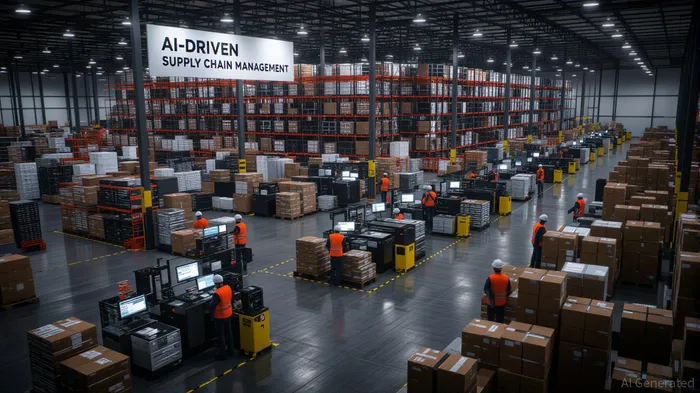
Retailers have responded to the tariff-driven chaos by overstocking inventory, a strategy that worked during the pandemic but is now backfiring. BDO's November 2024 survey found that only 22% of retail CFOs at larger companies consider their inventory positions “healthy.” Overstocking has led to markdowns, margin compression, and a mismatch between supply and demand. Meanwhile, smaller retailers are particularly vulnerable: 80% of mid-market firms in the product goods sector expect shortages and delays, while 65% anticipate higher costs from reconfiguring supply chains.
The result is a sector-wide struggle to balance risk. Retailers must decide whether to pre-stock for the holidays or wait for just-in-time deliveries, a gamble that could backfire if global disruptions persist. For value investors, this dynamic highlights the importance of analyzing a company's inventory turnover and cash conversion cycle. Retailers with agile inventory systems—such as those using AI-driven demand forecasting—will outperform peers relying on outdated models.
Strategic Resilience: Where the Winners Will Emerge
The companies that survive the 2025 holiday season will be those that have invested in supply chain resilience. Walmart, for example, has deployed digital twins and predictive analytics to simulate disruptions and optimize logistics. AmazonAMZN--, meanwhile, is leveraging AI-powered inventory management and expanding its North American fulfillment network to reduce dependency on overseas suppliers. Target's omnichannel strategy, which integrates real-time inventory tracking and mobile point-of-sale systems, has also proven effective in maintaining customer loyalty during disruptions.
These strategies are not just operational—they're financial. According to McKinsey, retailers that digitize their supply chains see 20% lower operating costs and 11% higher EBIT. For value investors, this underscores the importance of evaluating a company's IT spending and ROI on automation. Retailers that allocate capital to AI and real-time visibility tools are more likely to maintain margins and customer retention in a volatile environment.
Regulatory and Ethical Risks: The New Compliance Frontier
Regulatory scrutiny is another layer of risk. The Uyghur Forced Labor Prevention Act (UFLPA) and the German Supply Chain Due Diligence Act (LkSG) require retailers to ensure ethical sourcing, adding compliance costs and operational complexity. Companies failing to meet these standards risk reputational damage and legal penalties.
Leading retailers like H&M and Patagonia are adopting circular economy models—resale platforms, rental services, and repair programs—to mitigate these risks while tapping into the $82 billion secondhand market by 2026. For investors, this trend signals a shift toward sustainability-driven growth, with brands that align with consumer values gaining a competitive edge.
Investment Implications: Navigating the 2025 Holiday Season
As the 2025 holiday season approaches, value investors should focus on three key metrics:
1. Inventory Turnover: Retailers with efficient inventory systems (e.g., Amazon, Target) will avoid markdowns and cash flow issues.
2. IT Spending: Companies investing in AI and automation (e.g., Walmart, Amazon) will outperform peers in cost management.
3. Supplier Diversification: Firms with resilient sourcing strategies (e.g., Apple's India and Vietnam shift) are better positioned for long-term stability.
Retailers that fail to adapt to these trends—particularly smaller firms without the capital to invest in resilience—will face margin erosion and liquidity crises. Conversely, those that embrace innovation and agility will emerge stronger, offering compelling long-term value.
Conclusion: Resilience as a Competitive Advantage
The 2025 holiday season will be a litmus test for the U.S. retail sector's ability to withstand tariff-driven chaos. While the risks are significant, they also create opportunities for investors to identify companies that are redefining resilience through technology, ethical sourcing, and strategic agility. For value investors, the key is to separate the survivors from the casualties—and to position portfolios accordingly. In a world of uncertainty, resilience isn't just a virtue—it's a necessity.

Stay ahead of the market.
Get curated U.S. market news, insights and key dates delivered to your inbox.
AInvest
PRO
AInvest
PRO



Comments
No comments yet