
The Retail Sector's Tariff Trap: Navigating Vulnerabilities in a Softening Economy
The U.S. retail sector is teetering on a precipice, buffeted by tariff-driven economic uncertainty and a broader slowdown in consumer spending. Recent data paints a stark picture: retail sales fell 0.9% month-over-month in May 2025—the steepest decline since January—while manufacturing contracted for the third consecutive month, according to the ISM PMI. This twinTWIN-- downturn underscores a systemic vulnerability, with tariff impacts rippling through supply chains, pricing power, and consumer confidence. For investors, the writing is on the wall: defensive strategies are critical, and sector rotations are inevitable.
Retail Sales: A Mirror of Tariff-Induced Caution
The May retail sales report, adjusted for seasonality, reveals a deepening retrenchment. Auto sales plummeted 3.5%, a direct consequence of Trump-era 25% tariffs on imported vehicles, which triggered a pre-buy surge in March but left consumers hesitant to spend now. Even excluding autos, retail sales still fell 0.3%, with home improvement stores (-2.7%) and restaurants (-0.9%) joining the downdraft. 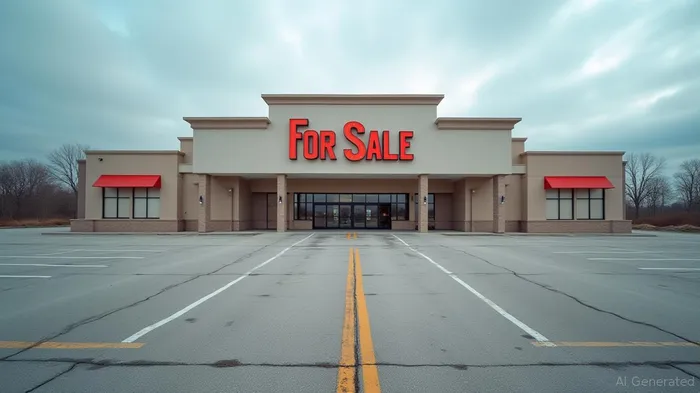 .
.
Yet not all sectors faltered. Online retailers surged 8.3%, and furniture stores gained 1.2%, highlighting a shift toward e-commerce and discretionary purchases insulated from tariffs. However, the "control group" measure—excluding volatile sectors like autos and gas—still rose only 0.4%, underscoring uneven resilience.
The pain is palpable at the micro level. Picnic Time, Inc., a manufacturer of picnic accessories, saw orders plunge 40% year-over-year, with tariffs adding 3 percentage points to prices. The company now faces a $1 million tariff bill in 2025—triple its 2024 cost—leading to hiring freezes. Walmart, Lululemon, and Deckers Outdoor have announced price hikes to offset tariff impacts, risking further demand erosion.
Manufacturing: A Canary in the Coal Mine
The retail slump is not isolated. The May ISM Manufacturing PMI fell to 48.5%, its third straight month of contraction, with new orders collapsing 3.7 points to 45.4%. Input costs rose to a 31-month high, driven by tariffs on steel and aluminum, while supplier delays worsened due to port bottlenecks and pre-tariff stockpiling. .
The data reveals a worrying feedback loop: tariffs are squeezing manufacturers' margins, forcing price hikes that dampen consumer spending, which in turn weakens demand for goods. Seven of the 18 manufacturing industries are now in contraction, including transportation equipment and chemicals—the lifeblood of industrial output.
Implications for Consumer Discretionary Stocks
The sector's struggles are reflected in equity markets. The SPDR Consumer Discretionary ETF (XLY) has underperformed the broader S&P 500 by 12% year-to-date, while defensive sectors like utilities and staples shine. .
Investors should brace for further weakness. Retailers exposed to tariffs—like automotive dealers, big-box stores, and apparel companies—face margin compression and inventory overhang. Conversely, e-commerce giants (e.g., Amazon) and niche players insulated from tariffs (e.g., furniture specialists) may outperform. However, the sector's cyclicality means even winners are vulnerable if the economy tips into recession.
Investment Strategy: Defend, Diversify, and Hedge
- Rotate to Defensive Sectors: Shift allocations to consumer staples (e.g., Procter & Gamble), utilities (e.g., NextEra Energy), and healthcare. These sectors historically outperform in low-growth environments.
- Short-Term Inflation Hedges: Consider inflation-protected bonds (TIP) or commodities like gold (GLD), which benefit from tariff-driven price pressures.
- Sector-Specific Shorts: Use inverse ETFs like the ProShares Short Consumer Discretionary (SCJ) to bet against the sector's decline.
- Quality Over Growth: Focus on high-margin, cash-rich firms (e.g., Apple, Microsoft) with pricing power to offset input costs.
Contrarian Plays—With Caution
A small allocation to beaten-down retailers like Target or Home Depot could pay off if tariffs ease or consumer confidence rebounds. However, this requires a clear catalyst, such as a trade deal or a reversal in the Federal Reserve's policy stance.
Conclusion
The retail sector's vulnerabilities are a microcosm of broader economic fragility. Tariffs have created a “demand cliff” as consumers and businesses cut back, while manufacturing's prolonged slump signals systemic strain. For investors, the path forward is clear: prioritize defensive strategies, hedge against volatility, and avoid overexposure to discretionary stocks until clarity emerges. As history shows, tariffs may protect jobs in the short term, but they exact a long-term toll on economic dynamism—and that's a risk no portfolio can afford to ignore.

Delivering real-time insights and analysis on emerging financial trends and market movements.
Latest Articles
Stay ahead of the market.
Get curated U.S. market news, insights and key dates delivered to your inbox.






Comments
No comments yet