
Retail Sector Resilience Amid Holiday Shopping Shifts: Operational Adaptations and Investment Opportunities


 Aime Summary
Walmart's Strategic Reconfiguration: From Store Closures to Employee-Centric Policies
Walmart's recent operational changes underscore its commitment to balancing cost efficiency with employee well-being and digital transformation. The company's decision to permanently close underperforming locations, such as the Federal Way, Washington, store, is part of a broader effort to reallocate resources toward high-growth areas like e-commerce and supply chain modernization according to retail analysis. While the closure affected 250 employees, Walmart has pledged to support internal transfers, signaling a focus on workforce retention amid restructuring according to reports.
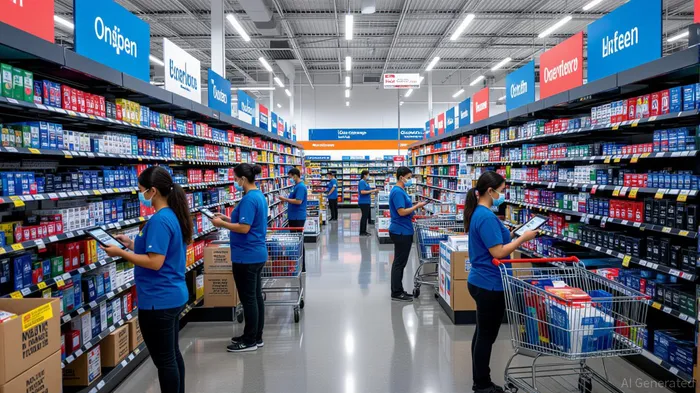 Simultaneously, Walmart's temporary full-chain shutdowns-such as the 24-hour store closures on Thanksgiving Day-highlight a strategic shift toward employee-centric policies. By granting staff time off during peak shopping periods, Walmart aims to reduce burnout and improve service quality, a move that aligns with consumer expectations. These operational adjustments are not isolated but part of a larger trend: Walmart's "Investing in America" initiative, which prioritizes store modernization and digital fulfillment capabilities.
Regional Grocery Stores: Navigating Inflation and Early-Season Demand
Regional grocery chains are also adapting to the 2025 holiday season by rethinking inventory management, staffing, and fulfillment strategies. With two-thirds of consumers starting holiday shopping , retailers are extending operational hours and optimizing inventory to meet demand. For example, many stores have shifted staffing and inventory planning to September and October, front-loading resources to avoid the traditional November peak.
The rise of omnichannel services, such as Buy Online, Pickup In-Store (BOPIS), has further reshaped operations. during the post-Cyber Monday peak, . To support this, retailers are equipping staff with mobile tools for inventory lookups and price matching, enhancing seamless integration of online and in-store experiences.
Broader Retail Trends: Value-Driven Spending and Gen Z's Influence
The 2025 holiday season is defined by a heightened emphasis on value. Consumers are prioritizing essential goods over discretionary purchases, a trend amplified by inflation and tariffs. Gift cards, for instance, have emerged as a top holiday purchase, according to consumer data. This shift reflects a broader move toward flexibility and affordability, particularly among budget-conscious shoppers.
, a demographic reshaping , is driving further innovation. occurs through omnichannel platforms, blending online convenience with in-store engagement. This generation also favors sustainability, opting for resale or upcycled products. Retailers that integrate eco-friendly practices and personalized promotions-leveraging AI to analyze consumer data-are better positioned to capture this segment according to industry analysis.
Investment Implications: Adaptability as a Competitive Edge
For investors, the retail sector's resilience lies in its capacity to innovate. Walmart's strategic store closures and employee-focused policies demonstrate a willingness to pivot in response to market signals, while regional grocers' emphasis on omnichannel and inventory optimization highlights the importance of operational agility. These trends suggest that retailers investing in technology, workforce well-being, and consumer-centric strategies will outperform peers in a landscape defined by cautious spending and shifting preferences.
Moreover, the sector's response to macroeconomic challenges-such as tariffs and inflation-underscores the value of diversified supply chains and localized inventory strategies. Companies that can balance cost efficiency with customer experience, as seen in Walmart's "Investing in America" plan and regional grocers' BOPIS adoption, are likely to see sustained growth.
Conclusion
The 2025 holiday season is a microcosm of the retail sector's broader transformation. By aligning operational changes with evolving consumer behavior-whether through strategic store closures, omnichannel integration, or sustainability initiatives-retailers are not only surviving but thriving in a complex economic environment. For investors, the key takeaway is clear: adaptability, innovation, and a deep understanding of consumer priorities will define the next era of retail success.

Delivering real-time insights and analysis on emerging financial trends and market movements.
Latest Articles
Stay ahead of the market.
Get curated U.S. market news, insights and key dates delivered to your inbox.
AInvest
PRO
AInvest
PRO



Comments
No comments yet