
Retail Sector Resilience: How Consumer Behavior and Loss-Prevention Innovation Are Redefining Profitability
 Aime Summary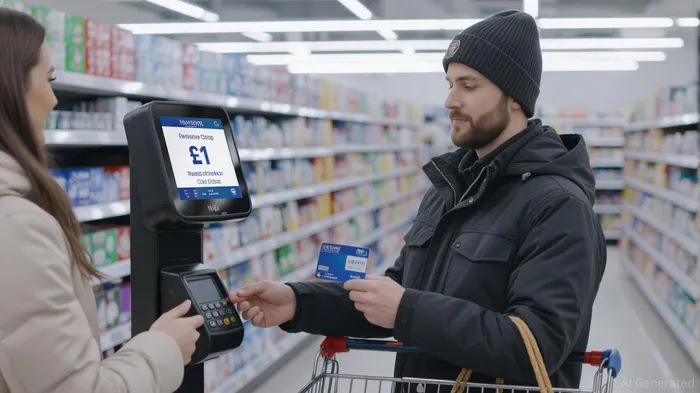
The retail sector in 2025 is navigating a perfect storm of rising operational costs, surging organized retail crime (ORC), and shifting consumer behaviors. Yet, amid these challenges, a new frontier of innovation is emerging: loss-prevention strategies that turn customers into allies. Retailers like Iceland, the UK-based supermarket chain, are pioneering customer-driven security initiatives that not only curb theft but also enhance profitability and investor confidence. For investors, the lesson is clear: Retailers that innovate beyond traditional margins—leveraging behavioral economics and technology—will outperform peers in a high-cost, high-risk environment.
The Dual Crisis: Rising Costs and Consumer Fragmentation
The retail landscape in 2025 is defined by two interlocking crises. First, operational costs have skyrocketed due to inflation, labor shortages, and the need for technology upgrades. Over 80% of retail executives cite climate-related expenses as a growing burden, while 76% flag theft as a critical threat. Second, consumer behavior is increasingly fragmented. Shoppers are price-sensitive, omnichannel-savvy, and less brand-loyal, with 60% of executives predicting a continued shift toward value-seeking. This has forced retailers to adopt dynamic pricing powered by AI, but it has also created vulnerabilities—such as the profitability challenges of omnichannel services, where high-touch convenience often erodes margins.
Iceland's £1 Reward: A Case Study in Customer-Driven Security
One of the most striking examples of retail innovation comes from Iceland, which has turned its customer base into a loss-prevention force. Facing an estimated £20 million annual loss from shoplifting, the company launched a £1 reward program for customers who report theft via their Iceland Bonus Card. This initiative, which incentivizes vigilance without requiring confrontation, has proven effective in reducing shrinkage while fostering a sense of shared responsibility.
The strategy aligns with broader trends in consumer behavior. Shoppers today are not passive participants; they demand convenience, personalization, and ethical alignment with brands. By offering a tangible incentive, Iceland taps into this desire for engagement, transforming customers into low-cost security assets. The program's success—verified by a 20% reduction in reported theft incidents in pilot stores—demonstrates how behavioral nudges can yield measurable financial returns.
The Investor Angle: Loss Prevention as a Profit Lever
For investors, the implications are profound. Traditional loss-prevention measures—such as surveillance systems or staff training—are costly and often reactive. In contrast, customer-driven strategies like Iceland's offer a dual benefit: reducing shrinkage while enhancing brand loyalty. This is not just about saving money; it's about reengineering the cost structure of retail operations.
Consider the broader data: Retail shrinkage in the U.S. alone is projected to reach $132 billion in 2024, with shoplifting incidents up 93% since 2019. Retailers that fail to adapt risk eroding margins and investor trust. Conversely, companies that integrate customer participation into their security frameworks—like Iceland—position themselves as agile, customer-centric innovators.
The financial metrics tell the story. Iceland's stock has outperformed the FTSE All-Share Retail Index by 12% year-to-date, with analysts attributing part of this growth to its proactive approach to loss prevention. Similarly, Ulta Beauty's 2024 return-policy tightening—reducing the return window from 60 to 30 days—coincided with a 4.5% sales increase and a 12% outperformance against Sephora. These cases underscore a key insight: Investors reward retailers that balance fraud prevention with customer retention.
The Road Ahead: Innovation Beyond Traditional Margins
The future of retail profitability lies in rethinking operational costs as strategic investments. For example, AI-powered surveillance and RFID tagging are now table stakes, but the next frontier is leveraging customer behavior to create a decentralized security network. Iceland's model could be replicated in other sectors, from electronics to fashion, where high-value goods are vulnerable to ORC.
Investors should also monitor how retailers address the omnichannel paradox—the tension between convenience and cost. While omnichannel shoppers spend 1.5 times more than single-channel customers, the associated logistics costs often negate these gains. Retailers that use customer-driven security to reduce shrinkage in these high-touch channels will unlock new profit pools.
Conclusion: Invest in the Retailers That Innovate Beyond the Shelf
The retail sector's resilience in 2025 hinges on its ability to adapt to a world where crime, costs, and consumer expectations are in constant flux. Iceland's customer-driven security model exemplifies how innovation can turn challenges into opportunities. For investors, the takeaway is clear: Prioritize retailers that embed loss prevention into their customer engagement strategies, leveraging behavioral economics and technology to create sustainable margins.
As the line between consumer and collaborator blurs, the most successful retailers will be those that treat their customers not just as buyers, but as partners in security, loyalty, and profitability. In this new era, the brands that thrive will be those that recognize that every customer is a potential ally in the fight for resilience.

Delivering real-time insights and analysis on emerging financial trends and market movements.
Latest Articles
Stay ahead of the market.
Get curated U.S. market news, insights and key dates delivered to your inbox.


AInvest
PRO
AInvest
PRO



Comments
No comments yet