
U.S. Retail Sales Ex Gas/Autos Miss Forecasts, Highlighting Sector Divergence and Strategic Positioning
 Aime Summary
The U.S. retail landscape in July 2025 revealed a striking duality: while core retail sales (excluding gas, autos, . This divergence underscores the importance of strategic sector rotation for investors navigating a fragmented retail environment shaped by inflation, , and evolving demand patterns.
The Winners: Tariff-Driven Pull-Forward and Value-Driven Demand
The strongest performers in July were driven by two forces: anticipatory buying ahead of tariff hikes and a shift toward value-conscious consumption. Digital products (books, , while sporting goods, hobby, . General merchandise and clothing retailers also thrived, , respectively. These categories benefited from summer sales promotions and consumers front-loading purchases to avoid anticipated price increases.
Online retailers, in particular, capitalized on this trend. , with back-to-school shopping and tariff-driven urgency driving traffic. The rise of off-price chains like Ollie's Bargain OutletOLLI-- and HomeGoods further illustrates the shift toward affordability, as consumers prioritize quality at lower price points.
The Losers: Tariff-Exposed and Inflation-Sensitive Sectors
In stark contrast, , the only category to report a decline. Electronics and appliance stores also faced headwinds, . These sectors are particularly vulnerable to inflationary pressures and supply chain disruptions, as tariffs on imported goods erode margins and consumer budgets.
Furniture and home furnishings, another soft spot, . This reflects broader caution in the housing market and hesitancy around large-ticket purchases. The underperformance of these sectors highlights the fragility of demand in non-essential and durable goods categories.
Macro Drivers: Tariffs, Inflation, and
The divergence in retail performance is not random but a direct response to macroeconomic forces. on Chinese imports, which began phasing in mid-2024, have created a "pull-forward" effect, with consumers and businesses accelerating purchases to avoid higher prices. This dynamic has disproportionately benefited sectors with shorter lead times (e.g., digital goods) while penalizing those reliant on imported components (e.g., building materials).
Inflation remains a secondary but persistent headwind. While has outpaced inflation in 2025, consumers are increasingly prioritizing essentials and value-driven options. , which offer affordable alternatives to full-service dining.
Strategic Positioning for Investors
For investors, the key lies in identifying sectors poised to benefit from these trends while avoiding those at risk of structural decline. Here's how to approach the current landscape:
- Overweight Value-Driven and Digital Retailers
- Online Retailers: Companies like AmazonAMZN-- and Walmart's e-commerce division are well-positioned to capture tariff-driven pull-forward demand.
- : Ollie's Bargain Outlet (OLLI) and HomeGoods parent TJXTJX-- (TJX) have seen consistent traffic growth, reflecting consumer preference for affordability.
.
Underweight Tariff-Exposed Sectors
- Building Materials: Home Depot (HD) and Lowe's (LOW) face margin compression as tariffs raise input costs.
Electronics: Best Buy (BBY) and other appliance retailers may struggle with inventory management as demand softens.
Monitor Macroeconomic Catalysts
- : Track the implementation schedule of new tariffs to anticipate pull-forward effects.
- Inflation Data: A slowdown in core CPI could signal a shift in consumer spending toward discretionary goods.
Conclusion: Navigating a Fragmented Retail Cycle
The July 2025 retail data paints a picture of a sector in transition. While headline figures suggest resilience, the underlying story is one of divergence: consumers are reallocating budgets toward value, convenience, and essentials while shunning inflation-sensitive and tariff-exposed categories. For investors, this means moving beyond broad retail indices and focusing on sub-sector dynamics.
The coming months will test the durability of these trends. If inflation moderates and tariffs are delayed, discretionary spending could rebound. However, in the near term, strategic positioning in value-driven and digital-first retailers offers the best path to . As always, vigilance in monitoring macroeconomic signals will be critical to adapting to a rapidly shifting landscape.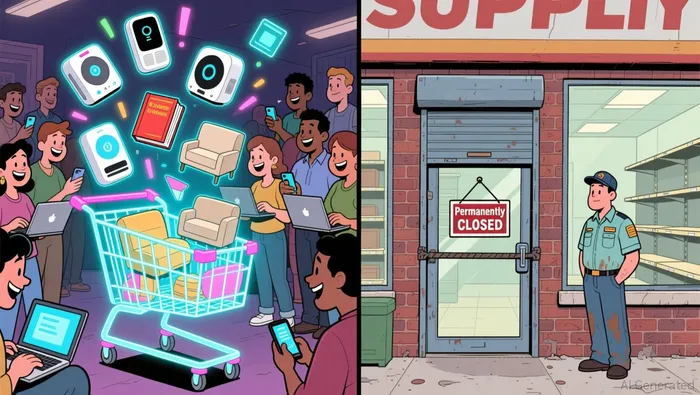

Stay ahead of the market.
Get curated U.S. market news, insights and key dates delivered to your inbox.
AInvest
PRO
AInvest
PRO



Comments
No comments yet