
The Retail Revival: How Legacy Store Closures Are Fueling Undervalued Real Estate & Logistics Goldmines
The U.S. retail landscape is undergoing a seismic shift. After a 334% surge in closures early in 2025—driven by e-commerce giants like Shein and Temu—legacy retailers like Party City, Big Lots, and Joann are collapsing at record rates. But amid the wreckage lies a golden opportunity: adaptive reuse of vacant retail space and logistics infrastructure for e-commerce. Investors who ignore this transition risk missing the next wave of real estate and consumer tech winners.
The Crisis in Legacy Retail: Numbers That Demand Action
The scale of the collapse is staggering:
- 15,000 closures expected in 2025—double 2024's total.
- 5,800 new store openings in 2025, down 2.8% from 2024, signaling a permanent contraction.
- Discount retailers are hardest hit: Party City's bankruptcy and Big Lots' 2025 closures exemplify the struggle against ultra-cheap online alternatives.
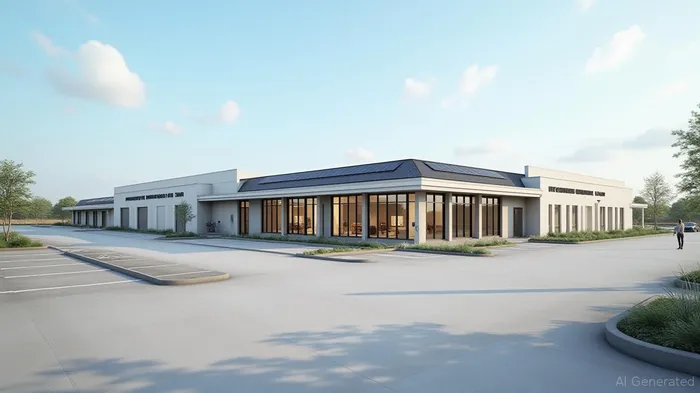
Adaptive Reuse: Turning Wasted Space into Gold
The death of traditional retail is creating a blank canvas for innovation. Key sectors to watch:
1. Self-Storage: The Silent Profit Machine
Self-storage is the fastest-growing real estate niche, with demand soaring as urban housing costs and remote work disrupt living patterns.
- Midwest & Northeast dominance: Chicago leads with 7.3M sq ft repurposed into self-storage (48% of inventory), while St. Louis converts 74% of its storage space from old buildings.
- Profit margins: Self-storage REITs like CUBE (CUBE) and Extra Space (EXR) average 80% occupancy and 5–7% annual rent growth.
2. Healthcare & Education: Filling Community Gaps
Closed malls are being reborn as hospitals and schools.
- Louisiana's Alexandria Mall: A former Macy'sM-- hosts a regional medical center.
- Cleveland's Belle Oaks Marketplace: A shuttered mall now houses a school, apartments, and small businesses.
3. Affordable Housing: Solving Urban Crises
Cities like Austin are tackling housing shortages by converting dead malls into apartment complexes.
- Dead Mall Apartments: Austin's project repurposes a 200,000 sq ft mall into 300+ affordable units with green spaces.
E-Commerce Logistics: The New Real Estate Frontier
While traditional retail declines, e-commerce logistics is booming. Investors should focus on three pillars:
1. Warehouse & Fulfillment Centers
- Prologis (PLD) and AMERICAN TOWER (AMT) dominate industrial real estate, but smaller players like UDR (UDR) (shifting to logistics-focused portfolios) are emerging.
- Walmart's hybrid model: 150+ stores by 2025 will double as fulfillment hubs.
2. Last-Mile Delivery Infrastructure
- Urban micro-fulfillment centers: Companies like DoorDash (DASH) and Instacart are leasing small warehouses near population hubs.
- Tech-enabled spaces: AI-driven warehouses (e.g., Robotic Materials Handling) cut costs by 20–30%.
3. Rural Logistics Hubs
- Sun Belt cities: Phoenix and Dallas are attracting AmazonAMZN-- (AMZN) and FedExFDX-- (FDX) distribution centers due to low labor costs and tech talent.
Investment Playbook: Where to Bet Now
- Self-storage REITs: CUBE and EXR offer steady dividends and inflation protection.
- Logistics Real Estate: PrologisPLD-- and AMT's global scale gives them an edge, but watch for regional plays in Phoenix and Austin.
- Tech-Adapted Retailers: CostcoCOST-- (COST) and Five BelowFIVE-- (FIVE) dominate through hybrid models and experiential retail.
Risks to Avoid
- Overvalued mall REITs: Companies like Simon PropertySPG-- (SPG) are relics; their assets lack adaptability.
- Greenfield logistics projects: Overbuilding in secondary markets could lead to oversupply.
Final Take: The Retail Apocalypse Isn't Over—It's Just Evolving
Legacy retail's collapse isn't an end—it's a catalyst. Investors who pivot to adaptive reuse and logistics infrastructure will capitalize on a $45B+ annual opportunity through 2030. The winners will be those who see vacant stores not as failures, but as blank slates for the future.
Invest wisely, and let the rubble pave the way.
Data as of June 2025. Past performance ≠ future results. Consult a financial advisor before making investments.

Stay ahead of the market.
Get curated U.S. market news, insights and key dates delivered to your inbox.
AInvest
PRO
AInvest
PRO



Comments
No comments yet