
The Retail Renaissance: How Strategic Restructuring is Reviving Undervalued Retailers
The retail sector in 2025 is at a crossroads. Physical stores face headwinds from e-commerce dominance, shifting consumer preferences, and the lingering impact of inflation. Yet amid this turbulence, a counter-narrative is emerging: strategic consolidation and niche specialization are breathing new life into undervalued retailers. Nowhere is this clearer than in the sporting goods sector, where deals like Big 5's $112.7 million lifeline acquisition signal a paradigm shift toward leaner, data-driven models. For investors, these moves present a compelling opportunity to capitalize on overlooked stocks poised for resurgence.
The Lifeline Deal: Big 5's Turnaround Play
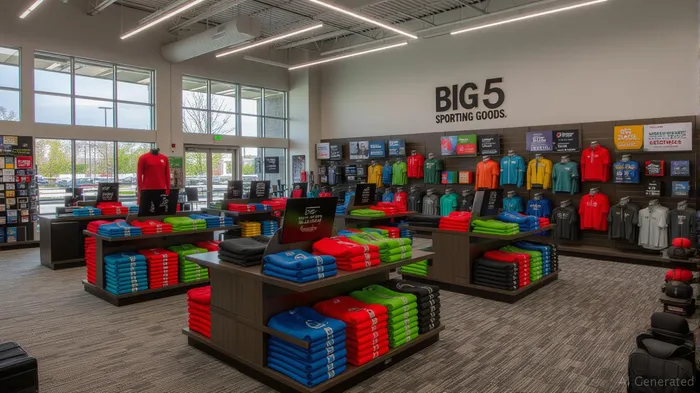
Big 5 Sporting Goods' recent merger with a partnership between Worldwide Golf and Capitol Hill Group exemplifies how strategic restructuring can transform struggling retailers into growth engines. The deal, which offers a 36% premium over Big 5's 60-day volume-weighted average stock price, reflects investor confidence in its 414 store network across the western U.S.—a geographic niche underserved by national competitors.
The transaction not only stabilizes Big 5's finances—its 2024 net loss of $69.1 million on $795.5 million in sales— but positions it to leverage Capitol Hill's capital and Worldwide Golf's retail expertise. Post-acquisition, Big 5 will remain independent, allowing it to focus on its core strengths: athletic footwear, outdoor gear, and sports apparel. This specialization avoids direct competition with Amazon's vast inventory while targeting customers seeking curated, local offerings.
Niche Play: DICK'S Sporting Goods' Community-Centric Strategy
While Big 5 consolidates, DICK'S Sporting GoodsDKS-- (DKS) is expanding its identity-driven marketing and community ties. Its multiyear WNBA partnership—extending through 2028—and youth-focused initiatives like the Jr. WNBA and GameChanger's digital tools highlight a data-driven, omnichannel approach. These efforts aren't just goodwill gestures; they're revenue accelerants.
The company's It's Her Shot program, which has engaged 3,000+ young athletes, underscores how niche specialization can tap into underserved markets. DICK'S now holds 22% of the U.S. sporting goods market, up from 18% in 2020, proving that localized, experiential retail can thrive.
Broader Trends: Experiential Retail and the Data Edge
The McKinsey Report highlights two critical shifts:
1. Physical inactivity as a $67 trillion global market opportunity by 2030, driven by demand for fitness gear and wellness solutions.
2. Niche brands like LululemonLULU-- and Outdoor Voices are siphoning market share by leveraging direct-to-consumer (D2C) models and data analytics to personalize offerings.
This is where omnichannel strategies shine. Consider Academy Sports + Outdoors (ASO), which has opened 20+ stores in new markets like Pennsylvania and Maryland this year. Its myAcademy rewards program, coupled with free services like grill assembly, creates sticky customer relationships.
Risks and Considerations
Not all bets are safe. Retailers without a clear specialization strategy or those overexposed to mall closures—like Foot LockerFL--, which plans to shutter 400 stores—face headwinds. Investors must prioritize firms with:
- Strong balance sheets (e.g., DICK'S' $1.2 billion in cash vs. Big 5's post-deal stability).
- Niche market dominance (e.g., Academy's 21-state footprint in outdoor gear).
- Digital integration (e.g., DICK'S' in-store tech partnerships).
Investment Implications: Target the Turnarounds
The key is to buy undervalued stocks with strategic moats.
- Big 5 (BGFV): Post-merger, its stock trades at a P/E ratio of 8.2, far below the sector average. Its niche western U.S. presence and $1.45/share cash offer gives it a safety net.
- DICK'S (DKS): With a PEG ratio of 1.5 and 15% annual revenue growth, its focus on women's sports and youth engagement positions it for long-term gains.
- Academy Sports (ASO): Its expansion into underpenetrated markets and 20–25 new stores in 2025 warrant a closer look, especially with its P/S ratio of 0.6.
Conclusion: The Future Belongs to the Nimble
The retailers thriving in 2025 are those that blend strategic consolidation with niche specialization. By focusing on underserved markets, leveraging data to personalize experiences, and avoiding commodity competition, they're turning undervalued stocks into growth engines. For investors, this isn't just about surviving the retail slowdown—it's about betting on the brands that are rewriting the rules.
The lifeline deals and partnerships of 2025 aren't just survival tactics—they're blueprints for dominance. For now, the best plays are in the retailers willing to pivot, specialize, and embrace the data edge.

Stay ahead of the market.
Get curated U.S. market news, insights and key dates delivered to your inbox.




Comments
No comments yet