
The Retail Reckoning: Strategic Risk Assessment in a Post-Pandemic Era


 Aime Summary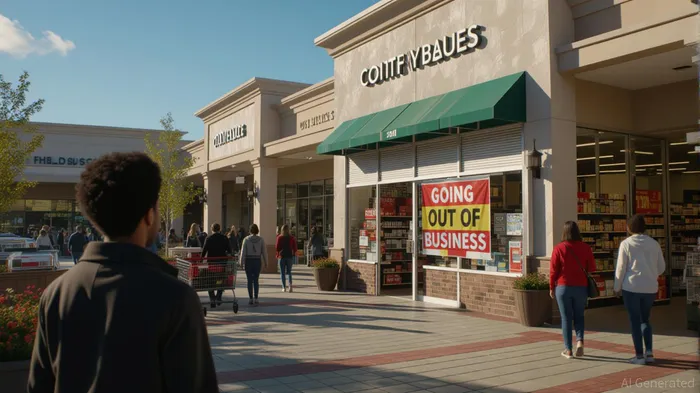
The U.S. retail sector is undergoing a seismic transformation. By mid-2025, Coresight Research projects 15,000 store closures—a figure that dwards the 10,000 closures of 2020. This wave is not merely a cyclical downturn but a structural realignment driven by inflation, interest rates, and the relentless rise of e-commerce. For investors, the challenge lies in distinguishing between resilient businesses and those teetering on the brink of collapse.
The Root Causes of the Retail Crisis
The collapse of Bed Bath & Beyond, Party City, and Forever 21 in 2024-2025 is emblematic of a broader trend. These retailers failed to adapt to shifting consumer behavior, clinging to outdated inventory models and underperforming physical footprints. Key drivers of their decline include:
1. Economic Pressures: Inflation and the Federal Reserve's aggressive rate hikes have eroded consumer discretionary spending. Retailers with high debt loads, such as Rite Aid (projected to close 489 stores), have been particularly vulnerable.
2. E-Commerce Dominance: Platforms like Shein and Temu, which generated $100 billion in revenue in 2024, have disrupted traditional retail by offering hyper-competitive pricing and rapid delivery.
3. Poor Strategic Decisions: Overexpansion, failure to integrate omnichannel capabilities, and reliance on unsustainable landlord concessions during the pandemic have left many retailers with bloated cost structures.
Identifying Resilient Retailers: A Framework for Investors
Resilient retailers in 2024-2025 share common traits that investors should prioritize:
1. Omnichannel Integration: Retailers like Nordstrom and Target have invested heavily in AI-driven personalization and seamless online-offline experiences. For example, Target's AI-powered gift finder and Nordstrom's virtual trend reports have boosted customer retention.
2. Experiential Retail: Grocery-anchored open-air centers, such as those managed by Blackstone's ROIC, have thrived by offering services (e.g., medical clinics, coffee shops) that e-commerce cannot replicate.
3. Cost Efficiency and Supply Chain Resilience: Walmart and Costco have leveraged nearshoring and logistics optimization to maintain margins despite inflation.
4. Prime Real Estate Ownership: Luxury brands like Prada and Kering have shifted from leasing to owning flagship properties in high-traffic areas, securing long-term stability amid rising rents.
Strategic Risk Assessment for Brick-and-Mortar Investments
Investors must adopt a granular approach to risk assessment:
- Location Analysis: Focus on properties in mixed-use developments or necessity-driven sectors (e.g., grocery stores). Avoid malls with weak anchor tenants.
- Tenant Mix Evaluation: Retailers with diversified tenant portfolios (e.g., Simon Property Group) are better positioned to weather closures than those reliant on a single anchor.
- Operational Flexibility: Prioritize businesses that use AI and AR to reduce returns and enhance in-store experiences.
- Debt Management: Avoid retailers with high leverage, such as Forever 21 and Big Lots, which filed for bankruptcy in 2024.
The Investor's Dilemma: Adapt or Exit
The retail landscape is no longer a binary choice between physical and digital retail. Instead, it demands a nuanced understanding of how brands can blend physical experiences with digital convenience. For example, 7-Eleven's decision to close 444 stores while expanding its delivery and app-based services reflects this duality.
However, not all retailers can pivot successfully. Macy's and Kohl's have closed hundreds of stores, signaling a retreat from underperforming markets. Investors should monitor these moves closely, as they often precede broader sector shifts.
Conclusion: Navigating the Retail Reckoning
The 2024-2025 retail closures are a wake-up call for investors. While the sector faces headwinds, opportunities exist for those who can identify businesses that prioritize agility, technology, and customer-centric innovation. By focusing on resilient models—such as experiential retail, omnichannel integration, and strategic real estate ownership—investors can mitigate risk and capitalize on the next phase of retail evolution.
For those who fail to adapt, the fate of Bed Bath & Beyond and Rite Aid serves as a stark reminder: in an era of relentless disruption, survival hinges on the ability to rethink the very definition of retail.

Stay ahead of the market.
Get curated U.S. market news, insights and key dates delivered to your inbox.
AInvest
PRO
AInvest
PRO



Comments
No comments yet