
The Retail Real Estate Tsunami: Navigating Risks and Opportunities in a Store Closure Era
 Aime Summary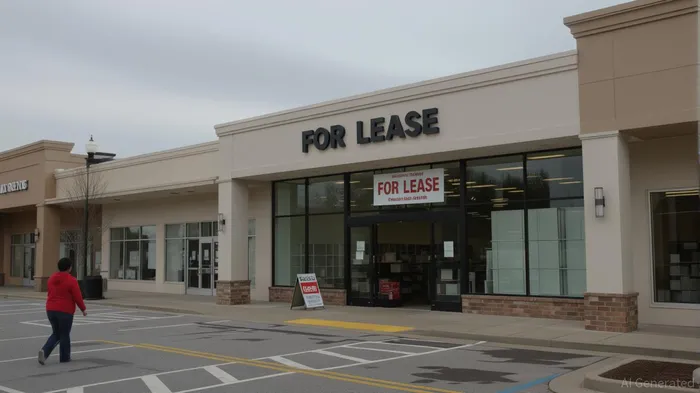
The retail sector is in the throes of a historic collapse. By 2025, U.S. retailers are projected to close 15,000 stores—a 334% surge compared to pre-pandemic levels—driven by weak consumer demand, inflation, and the rise of e-commerce platforms like Shein and Temu. Major chains, from Joann Fabrics to 99 Cents Only Stores, have either liquidated or downsized, while private equity firms have accelerated the crisis by abandoning underperforming investments. This seismic shift is not just reshaping retail but triggering a cascading effect on commercial real estate (CRE), creating both existential risks and lucrative opportunities for investors.
The Retail Sector's Perfect Storm
The retail sector's distress is multifaceted. Consumer behavior has shifted irreversibly toward online shopping, with e-commerce sales hitting $1.27 trillion in 2025 (8.5% growth YoY). Meanwhile, operational costs—labor, logistics, and supply chain disruptions—have squeezed margins. Retailers like Macy'sM--, Kohl'sKSS--, and WalmartWMT-- are closing underperforming stores, while private equity-backed firms like Liberated Brands have filed for Chapter 11, leaving behind a trail of vacant properties.
The fallout is stark: 7,325 closures in 2024 and 201,953 job losses in the retail sector. These closures are concentrated in Sun Belt markets (e.g., Phoenix, Dallas, Tampa), where population growth has historically driven demand but now faces oversupply. The ripple effect is evident in CRE markets, where vacancy rates and asset values are being recalibrated.
Commercial Real Estate Fallout: Risks and Resilience
The CRE sector is grappling with the fallout from retail's collapse. As of Q2 2025, retail vacancy rates stand at 4.9%, with obsolete retail space reaching 1.4% of total square footage. While this appears low, the quality of available space is deteriorating. Essential retail centers (anchored by grocery stores and pharmacies) maintain lower vacancy rates than open-air malls, which are seeing a 30-basis-point increase in vacancies due to reduced foot traffic.
The multifamily sector is also feeling the strain. With 8.1% vacancy rates and new completions down 9% YoY, investors are reassessing long-term rent growth. Sun Belt markets like Austin and Miami face oversupply, while Midwest cities like South Bend are outperforming. Office markets, meanwhile, are bifurcated: prime assets in Midtown Manhattan (6.8% vacancy) and Dallas' Preston Center (3.9% vacancy) thrive, while non-prime properties languish.
Institutional investors are watching closely. Hedge funds like Neuberger BermanNBXG-- and T. Rowe Price have slashed holdings in FTI ConsultingFCN-- (FCN), a retail advisory firm, signaling caution. Yet, some firms, including Jacobs Levy Equity Management, are doubling down, betting on CRE's potential for reinvention.
Opportunities in the Rubble
The collapse of traditional retail is not a death knell for CRE but a catalyst for reinvention. Repurposed retail spaces are emerging as a goldmine for investors. Developers are converting shuttered stores into multifamily housing, mixed-use hubs, and experiential retail formats (e.g., pop-up stores, co-working spaces). For example, a 100,000-square-foot former Target site in Phoenix is being redeveloped into a mixed-use complex with apartments, a fitness center, and a micro-market.
Key investment opportunities include:
1. Essential Retail Anchors: Grocery-anchored centers with stable cash flows and low e-commerce vulnerability.
2. Logistics-Adjacent Retail: Properties near major distribution hubs (e.g., Atlanta's Hartsfield-Jackson Airport) benefit from e-commerce-driven demand.
3. Experiential Retail: Adaptive reuse projects that blend physical and digital experiences (e.g., AR-enabled stores, pop-up galleries).
Navigating the Risks
Investors must tread carefully. Macro risks include rising interest rates, which could dampen CRE valuations, and potential tariffs that might disrupt supply chains. Local risks vary: coastal markets face higher exposure to trade policy shifts, while Sun Belt cities must contend with oversupply.
A data-driven approach is critical. For instance, tracking cap rate spreads between prime and non-prime assets can highlight undervalued opportunities. In Q2 2025, prime retail cap rates in Dallas (4.8%) lagged behind those in Phoenix (5.2%), suggesting better growth potential in the latter.
The Path Forward
The retail real estate landscape is at a crossroads. For investors, the challenge lies in balancing short-term risks with long-term opportunities. Strategic acquisitions of high-quality assets in resilient markets, combined with adaptive reuse strategies, can yield outsized returns.
Consider the example of WeWork, which has pivoted from office leasing to repurposing retail spaces into co-working hubs. Similarly, Amazon's acquisition of Whole Foods has driven demand for grocery-anchored retail, with cap rates in these sectors outperforming the broader market.
Conclusion
The retail sector's collapse is a wake-up call for CRE investors. While the risks are undeniable—vacant storefronts, asset devaluation, and labor market upheaval—the opportunities are equally profound. By focusing on essential retail, logistics adjacency, and experiential reuse, investors can transform the fallout into a new era of value creation.
As the retail tsunami recedes, the survivors will be those who adapt. The question is not whether the market will recover but who will lead the reinvention. For savvy investors, the answer lies in the spaces left behind.

Stay ahead of the market.
Get curated U.S. market news, insights and key dates delivered to your inbox.




Comments
No comments yet