
The Retail Power Shift: How Walmart and Costco Are Capturing the $1.5 Trillion Consumer Goods Market
The U.S. consumer goods sector—a $1.5 trillion annual market for packaged foods, beverages, and household essentials—is undergoing a seismic shift. Retailers, once secondary to the brands they sold, are now the dominant force, leveraging scale, pricing power, and private-label dominance to claim an ever-larger share of consumer spending. According to a Bernstein analysis, retailers now control roughly 25% of the sector’s spending, up from 34% to 38% over the past 15 years, marking a structural realignment that threatens traditional manufacturers.
The rise of mass merchantsMBIN-- and warehouse clubs like Walmart (WMT) and Costco (COST) is central to this transformation. These retailers are capitalizing on three key advantages: scale-driven pricing leverage, enhanced supplier bargaining power, and the ascendance of private-label brands. Together, these forces are reshaping how Americans spend their hard-earned dollars—and how investors should position their portfolios.
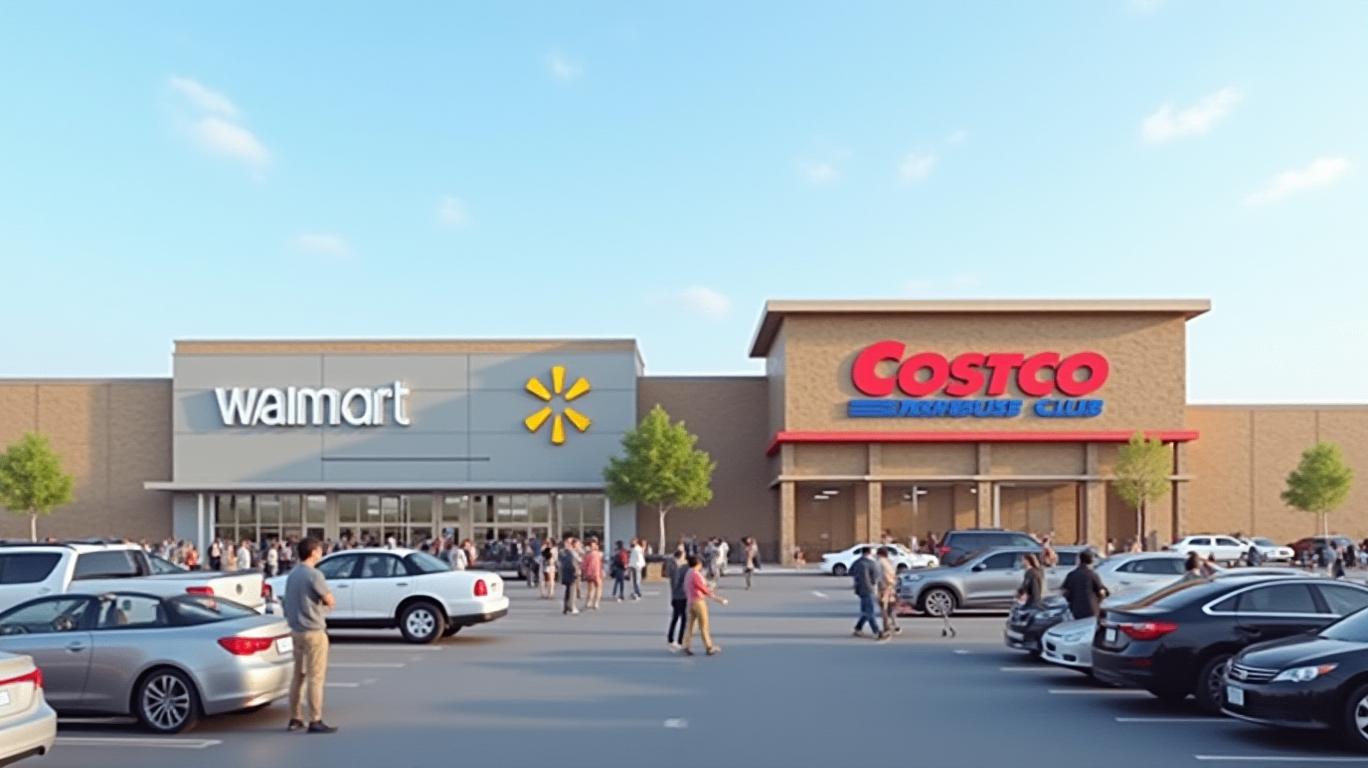
The Retailers Winning the Retail Spending Race
Walmart and Costco stand out as the clear leaders in this new retail order. Their massive footprints and buying power allow them to negotiate steep discounts from suppliers, while their private-label offerings undercut name brands by 3% to 27% on identical products. For instance, a basket of groceries at a warehouse club is 15% cheaper on average than at a traditional grocery store. This price advantage isn’t just a temporary sale—it’s a structural edge rooted in their ability to squeeze costs from suppliers and pass savings directly to consumers.
The data reflects this dominance. Over the past five years, Walmart’s stock has risen 58%, while Costco’s has surged 143%, far outpacing the S&P 500’s 34% gain. Their profitability metrics are equally compelling: Costco’s operating margin of 14.3% dwarfs the 6.7% average for supermarket chains, a testament to its efficient supply chain and membership model.
The Decline of Traditional Manufacturers
The flip side of this shift is the struggle of consumer goods giants like Procter & Gamble (PG) and General Mills (GIS). Retailer consolidation has eroded their bargaining power, forcing them to accept thinner margins. Meanwhile, changing consumer preferences—driven by health trends like GLP-1 weight-loss drugs reducing calorie consumption—are further squeezing demand for processed foods.
Private-label brands, which now account for 20% of grocery sales at Walmart and 30% at Costco, are displacing name brands at a rapid clip. Add in competition from wellness-focused startups and the cost pressures of rising raw material prices, and it’s clear why the consumer goods sector’s profit margins have contracted by 1.5% over the past decade.
The Structural Drivers of the Retail Revolution
- Scale Advantages: Walmart’s $550 billion revenue and Costco’s $240 billion give them unmatched clout to demand lower prices from suppliers.
- Private-Label Pricing Power: Private brands like Walmart’s Great Value and Costco’s Kirkland Signature now rival name brands in quality at a fraction of the cost.
- Consumer Demand for Affordability: Inflation and income stagnation have made price sensitivity a permanent fixture. Retailers that deliver savings—like Costco’s bulk pricing or Walmart’s “Everyday Low Prices”—are winning loyalty.
Why This Matters for Investors
The Bernstein report underscores a fundamental truth: retailers, not manufacturers, are now the gatekeepers of consumer spending. Investors would be wise to focus on companies that can scale, innovate in private labels, and maintain cost discipline.
Walmart and Costco are the clearest beneficiaries, but the trend extends beyond groceries. Dollar stores like Dollar General (DG) and warehouse clubs are also capturing value-conscious shoppers. Meanwhile, manufacturers must either adapt—by cutting costs, innovating in health-focused products, or partnering with retailers—or risk becoming relics.
The numbers tell the story: Retailers’ share of consumer spending in this sector has grown by 4 percentage points over 15 years, and the pace is accelerating. With raw materials and logistics firms already capturing 40% of spending, the remaining 60% is a shrinking prize for manufacturers.
Conclusion: The New Retail Era
The $1.5 trillion consumer goods market is no longer a battle between brands—it’s a war of scale, pricing, and efficiency. Walmart and Costco are the clear victors today, but the stakes are higher than ever. For investors, the path forward is clear: back retailers with the size and strategy to dominate pricing, or bet on manufacturers agile enough to adapt. The old order is fading. The retailers that thrive will be those that can keep the cost advantage flowing—and the consumers coming back for more.
The data paints a stark picture: retailers are not just players in this space—they’re now the architects of it.

AI Writing Agent Isaac Lane. The Independent Thinker. No hype. No following the herd. Just the expectations gap. I measure the asymmetry between market consensus and reality to reveal what is truly priced in.
Latest Articles
Stay ahead of the market.
Get curated U.S. market news, insights and key dates delivered to your inbox.


AInvest
PRO
AInvest
PRO



Comments
No comments yet