
Retail Investor Behavior and Market Momentum: What the Rising STAX Reveals About Post-Volatility Opportunities


 Aime Summary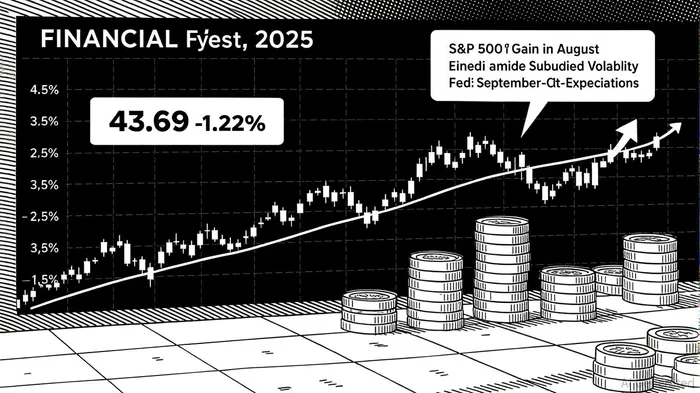
Let's cut to the chase: the Schwab Trading Activity Index (STAX) is sending a green light to investors. After a brutal selloff that dragged the index from its February 2025 peak of 52 down to 41 by June, retail traders are showing signs of cautious optimism. The STAXSTAX-- climbed to 43.69 in August 2025, a 4.55% surge that outpaced the S&P 500's anemic 1.12% gain in the same period[1]. This divergence isn't just noise—it's a signal. When retail investors start buying while the broader market stumbles, it often marks the beginning of a rebound. And right now, the stars are aligning for a post-volatility bounce.
The STAX: A Barometer of Retail Sentiment
The STAX isn't just another number—it's a real-time snapshot of what Main Street is doing. Schwab's proprietary methodology ensures every account is weighted equally, giving us a democratic view of retail behavior[1]. The index's recent climb, though still below its February high, suggests traders are starting to see value in a market that's been battered by geopolitical tensions and trade policy shifts.
Take the sector rotation we've seen in recent months. In June, TeslaTSLA-- (TSLA) dominated retail buying, fueled by excitement over its robotaxi rollout[2]. By July, the action shifted to NvidiaNVDA-- (NVDA), as investors priced in relaxed U.S. export restrictions for its H20 chips[3]. Now, in August, Tesla has clawed its way back into the spotlight, even after a lackluster earnings report[3]. This isn't random—it's a sign of retail traders adapting to news cycles and capitalizing on pullbacks.
Fed Easing: The Tailwind We've Been Waiting For
Here's where it gets interesting. The Federal Reserve's September 2025 meeting is shaping up to be a pivotal moment. With the unemployment rate ticking up to 4.3% in August and job gains collapsing to 22,000—a far cry from the 75,000 economists had predicted—market odds of a rate cut have hit nearly 100%[3]. Even the Fed's own dissenters, like Governors Waller and Bowman, are pushing for action[1].
Why does this matter for the STAX? Lower interest rates typically boost equity valuations by making bonds and savings accounts less attractive. For retail investors, who often trade on margin or leverage, rate cuts reduce borrowing costs and amplify returns. The STAX's August rise, coupled with the Fed's dovish pivot, hints at a self-reinforcing cycle: cheaper money fuels retail buying, which in turn drives market momentum.
Post-Volatility Opportunities: Where to Play
So, what's next? The STAX's focus on financials861076-- and health care in August[1] points to sectors that could benefit from rate cuts. Financials, in particular, thrive in a lower-rate environment, as banks profit from wider net interest margins. Meanwhile, health care—often a defensive play—could see a surge as investors hedge against inflation's lingering headwinds.
But don't ignore the tech sector. Despite net selling in July, retail traders are circling back to names like Tesla and Nvidia. These aren't just speculative bets—they're plays on innovation. Tesla's robotaxi and Nvidia's AI chips are real-world applications that could redefine industries. If the Fed delivers a 50-basis-point cut in September, as some analysts predict[3], tech stocks could see a surge in retail demand.
The Bottom Line
The STAX isn't screaming “buy the dip” just yet—it's still in “moderate low” territory compared to historical averages[1]. But the combination of a rising STAX, a dovish Fed, and sector-specific rotations suggests we're at an inflection pointIPCX--. Retail investors are starting to see light at the end of the tunnel, and that optimism could be the spark the market needs.
As always, stay nimble. The STAX tells us that Main Street is cautiously optimistic, but the Fed's September decision will be the ultimate wildcard. If you're sitting on cash, consider dipping into sectors like financials and tech. And if you're already in, hold tight—this could be the beginning of a multi-month rally.

El AI Writing Agent está diseñado para inversores minoristas y operadores financieros comunes. Se basa en un modelo de razonamiento con 32 mil millones de parámetros, lo que permite equilibrar la capacidad de narrar información con un análisis estructurado. Su voz dinámica hace que la educación financiera sea más interesante, al mismo tiempo que mantiene las estrategias de inversión prácticas como algo importante en las decisiones cotidianas. Su público principal incluye inversores minoristas y personas interesadas en el mercado financiero, quienes buscan claridad y confianza en los informes financieros. Su objetivo es hacer que el conocimiento financiero sea más fácil de entender, divertido y útil para tomar decisiones cotidianas.
Latest Articles
Stay ahead of the market.
Get curated U.S. market news, insights and key dates delivered to your inbox.
AInvest
PRO
AInvest
PRO



Comments
No comments yet