
U.S. Retail Inventories Ex Auto Signal Weak Consumer Demand and Sector Divergence: Strategic Sector Rotation in a Tightening Inventory Environment
 Aime Summary
The U.S. retail landscape in August 2025 reveals a fragile equilibrium. The latest Retail Inventories Ex Auto data—a 0.3% monthly increase—reflects a modest uptick in inventory levels, but the broader picture tells a story of divergent sector performance and weakening consumer demand. With inventories rising at a pace just above the long-term average of 0.29%, the data underscores a tightening environment where supply and demand are increasingly misaligned. For investors, this divergence presents both risks and opportunities, demanding a nuanced approach to sector rotation.
The Inventory-to-Sales Dilemma
The retail inventory-to-sales ratio, a critical barometer of economic health, has hovered near 1.4 since 2020—a level historically associated with economic transitions. In July 2025, the ratio for total business inventories fell to 1.37, signaling improved efficiency in some sectors. However, this aggregate masks stark contrasts. Apparel and Distributors, for instance, face a perfect storm of overstocking and declining sales. Tariff-driven volatility, reshoring delays, and a 0.4% sales drop in April-May 2025 have left these sectors vulnerable. Meanwhile, Building Materials and Food Services are bucking the trend, with the latter seeing a 1.2% sales increase in the same period, driven by AI-driven personalization and delivery networks.
The Building Materials sector, supported by infrastructure spending and commercial construction, is a prime example of structural resilience. Companies like Home DepotHD-- and Lowe'sLOW-- have benefited from a 71% projected increase in recycled aluminum usage by 2050, aligning with sustainability trends and cost efficiency. Investors should monitor these firms for signs of sustained demand amid a broader economic slowdown.
Macroeconomic Headwinds and Strategic Reallocation
The Federal Reserve's 5.25% federal funds rate continues to suppress discretionary spending, with households prioritizing essentials over luxury goods. Tariff announcements in May 2025 further exacerbated this trend, triggering a 32% drop in consumer sentiment and amplifying pressure on sectors like Apparel and Electronics. Yet, within this environment, innovation is a differentiator. Electronics firms leveraging AI-driven demand forecasting—such as Apple (AAPL) and Amazon (AMZN)—are mitigating inventory risks, as shown by their .
For investors, the key lies in underweighting overstocked discretionary sectors while overweighting structural growth areas. Distributors tied to residential construction, for example, face a 14% annual decline in single-family home starts (to 940,000 in Q2 2025), making them high-risk allocations. Conversely, Food Services and Building Materials offer defensive appeal, with the former's digital innovation creating a moat against broader retail headwinds.
Navigating the Divergence
The path forward requires a granular approach to sector allocation. Here's a strategic framework:
1. Underweight Overstocked Sectors: Apparel and Electronics face persistent inventory misalignment. Investors should avoid these unless positioned in firms with strong AI-driven inventory optimization.
2. Overweight Resilient Sectors: Building Materials and Food Services are structural beneficiaries of infrastructure spending and digital innovation.
3. Cautious Exposure to Consumer Finance: Firms offering flexible payment solutions (e.g., Affirm (AFRM)) can capitalize on shifting consumer priorities.
The data is clear: a one-size-fits-all strategy is obsolete. As the Federal Reserve's policy tightens and tariffs reshape global supply chains, agility in sector rotation will define portfolio performance. The August 2025 inventory data is not just a snapshot—it's a signal to reallocate capital toward sectors with durable demand and technological adaptability.
In this fragmented market, the winners will be those who recognize that inventory trends are not just about numbers but about the evolving psychology of consumers. The time to act is now.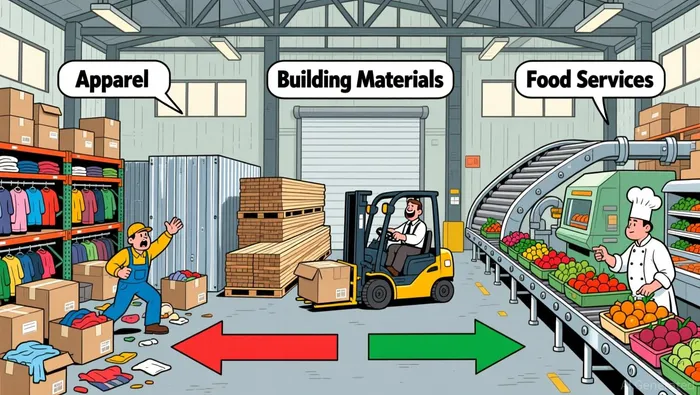

Stay ahead of the market.
Get curated U.S. market news, insights and key dates delivered to your inbox.
AInvest
PRO
AInvest
PRO



Comments
No comments yet