
Retail Food Safety Crises: Impact on Investor Confidence in Grocery Retailers


 Aime Summary
Investor Confidence and the Cost of Reputational Damage
Food safety recalls exact a dual toll: immediate operational costs and enduring reputational harm. According to a report by PwC, 66% of business leaders identify brand reputation as the top risk stemming from supply chain disruptions. The 2025 cheese recall, while not yet linked to reported illnesses, has already triggered consumer frustration and media scrutiny, compounding the challenges faced by retailers reliant on private-label partnerships. For instance, Walmart's Great Value, Target's Good & Gather, and Aldi's Happy Farms brands-all implicated in the recall-now face the risk of eroded customer loyalty, a concern amplified by a GS1 US survey showing 93% of consumers are anxious about recall frequency.
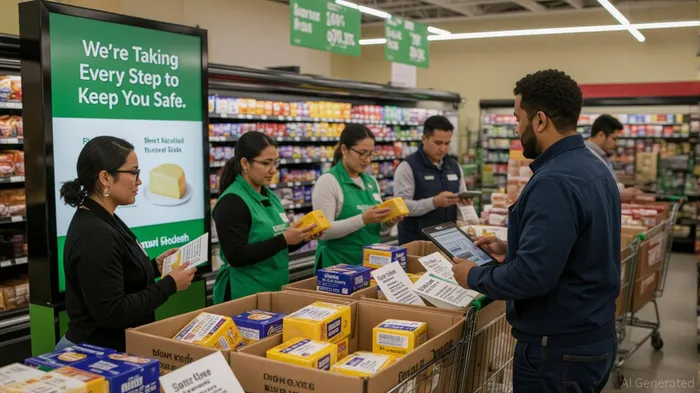 Investors are particularly wary of the cascading financial impacts. A 2024 Bloomberg analysis noted that food safety crises often lead to short-term sales declines, with the 2023 listeria-tainted deli meat outbreak causing a 10% drop in sales for affected brands. While no direct stock price data is available for the 2025 recall, historical precedents suggest volatility is likely, especially for Great Lakes Cheese Co., whose reputation as a major supplier to big-box retailers now hangs in the balance.
Supply Chain Transparency: A Double-Edged Sword
The recall has also spotlighted the growing investor demand for supply chain visibility. Oritain's 2024 study revealed that 60% of U.S. investors have canceled deals based on ESG findings tied to supply chains, a trend mirrored in the grocery sector. The FDA's Food Safety Modernization Act, particularly Rule 204's 24-hour traceability mandate, has raised expectations for real-time risk identification. However, the 2025 incident exposes gaps in current systems: despite advanced traceability tools, contamination from a supplier's raw materials slipped through, raising questions about the adequacy of third-party oversight.
Retailers' responses to the crisis will be pivotal. Walmart, for example, has emphasized its "Supplier Code of Conduct" and "Food Safety Management System" in past crises, while TargetTGT-- has invested in blockchain-based tracking for high-risk products according to a strategy analysis. Aldi, meanwhile, has faced criticism for its opaque private-label sourcing strategies. For investors, the ability to demonstrate robust supplier audits and rapid recall execution-such as Walmart's use of AI-driven traceability-will determine whether trust can be restored.
Crisis Management: From Containment to Recovery
Effective crisis response frameworks are increasingly seen as a competitive advantage. The CPG sector's playbook-rooted in preparedness, rapid containment, and post-crisis learning-offers a blueprint. For example, the FDA's post-outbreak protocols stress root cause analysis and preventive measures, a process Great Lakes Cheese Co. must now navigate. Retailers like Kroger and Albertsons, which weathered similar recalls in 2023, have shown that transparent communication and swift refunds can mitigate reputational fallout according to crisis management case studies.
However, the 2025 recall tests the limits of these frameworks. With the crisis originating at a supplier rather than the retailer, liability and response coordination become murkier. Investors are watching closely to see if Walmart, Target, and Aldi will absorb costs or shift blame to Great Lakes Cheese Co., a dynamic that could influence shareholder confidence.
Long-Term Implications for Equity Performance
While the immediate financial impact of the 2025 recall remains unclear, long-term equity performance will hinge on three factors:
1. Speed of Recall Execution: Companies that swiftly remove products and communicate proactively-such as Target's real-time updates via its app-tend to recover faster according to a crisis management analysis.
2. Investor Perception of Governance: The EU's Corporate Sustainability Due Diligence Directive (CSDDD) and U.S. regulatory pressures will intensify scrutiny of supply chain practices, favoring firms with verifiable transparency.
3. Consumer Retention Efforts: Post-crisis loyalty campaigns, such as Walmart's "Safe & Trusted" marketing push after its 2023 egg recall, can offset trust erosion according to marketing case studies.
Conclusion
The 2025 shredded cheese recall serves as a case study in the vulnerabilities of modern food retail. For investors, the crisis underscores the necessity of prioritizing companies with agile supply chains, transparent governance, and crisis-ready protocols. While the immediate stock market reaction may be muted, the long-term winners will be those that treat food safety not as a compliance checkbox but as a strategic imperative. As the FDA's FSMA rules tighten and consumer expectations evolve, the ability to turn recalls into opportunities for trust-building will define the resilience of grocery retailers in an increasingly risk-averse market.

Delivering real-time insights and analysis on emerging financial trends and market movements.
Latest Articles
Stay ahead of the market.
Get curated U.S. market news, insights and key dates delivered to your inbox.
AInvest
PRO
AInvest
PRO



Comments
No comments yet