
The Resurgence of XRP: Why Ripple's Strategic Alliances Signal a New Era for Utility Tokens


 Aime Summary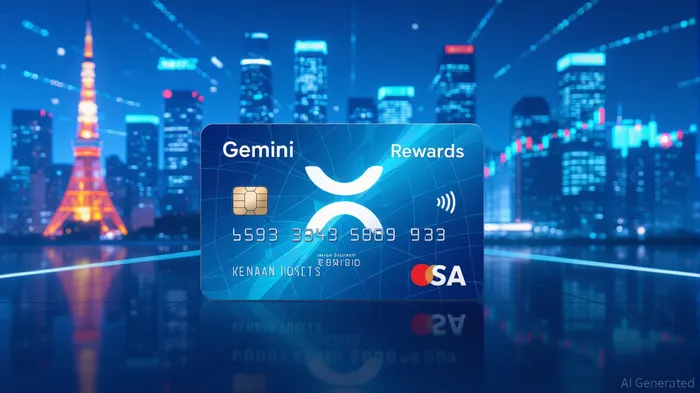
In the ever-evolving landscape of digital assets, XRPXRP-- has emerged from the shadows of speculative hype to carve out a distinct identity as a utility token. This transformation is not accidental but the result of a meticulously executed strategy by Ripple, underpinned by institutional partnerships, real-world adoption, and a fee-based network model that challenges legacy financial systems. For investors, the question is no longer whether XRP has value, but how deeply it is embedded in the infrastructure of global finance.
Strategic Alliances: The Bedrock of XRP's Utility
Ripple's 2025 expansion of over 300 institutional partnerships—spanning SantanderSAN--, Standard Chartered, SBI Holdings, and Onafriq—has turned XRP into a linchpin for cross-border payments. These collaborations are not mere endorsements; they are operational integrations. For instance, SBI Remit's use of XRP to enable real-time transactions between Japan and Southeast Asia slashes costs by 40-60% compared to SWIFT, while Onafriq's 27-country African network reduces remittance fees in high-cost corridors. Ripple's On-Demand Liquidity (ODL) service, which processed $15 billion in 2024, now accounts for 56% of its volume in the Asia-Pacific region, where Japan, the Philippines, and South Korea lead adoption.
The significance of these partnerships lies in their scalability. Unlike speculative tokens, XRP's value is derived from its role as a liquidity bridge, enabling institutions to bypass pre-funded nostro accounts and settle transactions in seconds. This utility is further amplified by Ripple's foray into Central Bank Digital Currencies (CBDCs). Pilots in Bhutan and Palau, using the XRP Ledger (XRPL) as a programmable and interoperable platform, position XRP as a foundational layer for the next generation of digital money.
The Gemini XRP Mastercard: A Retail and Institutional Catalyst
The launch of the Gemini XRP MastercardMA-- in 2025, in collaboration with Ripple and WebBank, marks a pivotal moment in XRP's journey. This card is more than a payment tool; it is a bridge between retail users and institutional-grade infrastructure. With no annual fees, zero foreign transaction costs, and a tiered rewards system offering up to 4% cashback in XRP for gas, EV charging, and rideshares, the card incentivizes everyday adoption.
Adoption metrics are telling. The Gemini app surged to 16th in the U.S. AppleAAPL-- App Store's finance category, surpassing CoinbaseCOIN--, and attracted 90,000 downloads in its first 72 hours. Users who held XRP rewards for a year saw a 453% return, transforming the token from a speculative asset into a revenue-generating one. For institutional investors, the card's success is compounded by Ripple's $75 million credit facility (expandable to $150 million) and the integration of RLUSD, a U.S. Treasury-backed stablecoin, which streamlines cross-border settlements and enhances XRP's appeal.
Fee-Based Network Economics: A Sustainable Model
XRP's value proposition is anchored in its ability to generate recurring revenue through fee-based network economics. The XRP Ledger's energy efficiency (0.0079 kWh per transaction) and the March 2024 implementation of a native automated market maker (AMM) via the XLS-30 amendment have deepened liquidity and reduced reliance on centralized intermediaries. This innovation allows liquidity providers to earn yield while enabling traders to swap assets seamlessly, creating a self-sustaining ecosystem.
Ripple's institutional infrastructure further strengthens this model. The acquisition of Hidden Road, a major custody and liquidity provider, and the launch of RLUSD, backed by BNY Mellon, have positioned XRP as a regulated, dollar-pegged asset. These developments are critical for institutional adoption, as they align with the risk management frameworks of traditional finance.
Regulatory Clarity and Institutional Confidence
The August 2025 SEC ruling, which declassified XRP as a security in secondary markets, has been a game-changer. This regulatory clarity has spurred $1 billion in institutional XRP purchases and catalyzed 11 ETF applications, with approvals expected by October 2025. If approved, these ETFs could unlock $5–8 billion in institutional capital, mirroring the inflows seen in BitcoinBTC-- and EthereumETH-- ETFs.
Moreover, XRP's derivatives market has surged, with CME Group's XRP futures open interest exceeding $1 billion, 78% of which is driven by institutional investors. This liquidity, combined with a 142% year-over-year increase in derivatives trading volume, underscores growing confidence in XRP as a strategic asset.
Investment Thesis: A Utility-Driven Future
For investors, XRP's long-term value lies in its dual role as a utility token and a revenue-generating asset. The convergence of real-world adoption (via cross-border payments and CBDCs), institutional partnerships (with 71% of XRP supply controlled by the top 1% of wallets), and regulatory tailwinds creates a compelling case. The Gemini XRP Mastercard exemplifies this, transforming XRP into a functional currency that generates returns through everyday use.
Conclusion: A New Era for Digital Finance
XRP's resurgence is not a flash in the pan but a structural shift in how value is transferred globally. Ripple's strategic alliances, the Gemini Mastercard's retail adoption, and the token's integration into institutional infrastructure signal a new era for utility tokens. For investors, the message is clear: XRP is no longer a speculative bet but a foundational asset in the evolution of digital finance. As the world moves toward tokenized assets and cross-border efficiency, XRP's role as a bridge between traditional and decentralized systems will only grow.
The time to act is now—not as a gamble, but as a calculated investment in the infrastructure of tomorrow.

Delivering real-time insights and analysis on emerging financial trends and market movements.
Latest Articles
Stay ahead of the market.
Get curated U.S. market news, insights and key dates delivered to your inbox.
AInvest
PRO
AInvest
PRO



Comments
No comments yet