
The Resurgence of Urban Core Real Estate: Analyzing San Francisco's Skyline Revival
 Aime Summary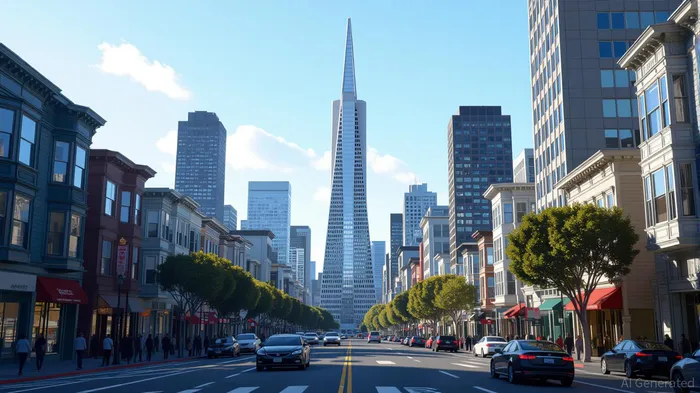
The post-pandemic real estate landscape is witnessing a seismic shift, with urban cores reclaiming their status as engines of value creation. San Francisco, long a bellwether for innovation and risk, is at the forefront of this transformation. The city's ambitious redevelopment of its downtown skyline—anchored by projects like the 77 Beale Street tower and the 10 South Van Ness Avenue complex—signals a broader reimagining of urban investment logic. For investors, this represents not just a geographic pivot but a strategic recalibration toward high-potential city centers poised for long-term growth.
The 77 Beale Street Project: A Bold Bet on Vertical Revival
The proposed 1,225-foot-tall 77 Beale Street tower, spearheaded by Hines and the South Korean National Pension Service, is emblematic of this shift. If approved, it would become the tallest building in California and the United States outside of New York and Chicago. The project's scale—1.92 million square feet of office space, 250,000 square feet of retail, and a mixed-use podium—reflects a confidence in San Francisco's ability to adapt to post-pandemic realities. While critics question the viability of such a large office-centric development in a market with a 36% vacancy rate, the project's proponents argue that it addresses a critical gap: modern, high-quality Class A office space.
Hines, a global real estate developer with a track record of high-profile projects, has positioned itself as a key player in this revival. Investors should monitor Hines' stock performance and its ability to secure financing for 77 Beale Street, as the project's success could validate a broader trend of urban office repositioning. The company's recent stock trajectory, shown above, indicates resilience amid market volatility, suggesting investor confidence in its long-term strategy.
Policy-Driven Urban Reinvention: The Role of Government Incentives
San Francisco's urban reinvention is not solely driven by private ambition. Mayor Daniel Lurie's Family Zoning Plan and the Downtown Revitalization and Economic Recovery Financing District are reshaping the city's regulatory landscape. These initiatives, which include tax incentives for office-to-residential conversions and streamlined permitting processes, are designed to catalyze development in underutilized downtown areas. The financing district, modeled after New York's successful Lower Manhattan program, aims to convert 50 properties into 4,400 residential units by 2032.
For investors, this policy tailwind reduces regulatory risk and accelerates project timelines. The PermitSF program, which cuts bureaucratic red tape, and the Vacant to Vibrant initiative, which attracts retail pop-ups to underused spaces, further enhance the appeal of San Francisco's urban core. These measures align with a national trend of cities leveraging tax relief to incentivize conversions, as seen in Boston and Chicago.
The 10 South Van Ness Avenue Project: A Model for Sustainable Urbanism
While 77 Beale Street represents a high-stakes gamble, the 10 South Van Ness Avenue project offers a more measured approach. This mixed-use development, part of the Market & Octavia Area Plan, prioritizes affordability, sustainability, and public space. With 980+ housing units, 30,000 square feet of retail, and a pedestrian-friendly design, it aligns with the city's goal of creating a 24/7 downtown. The project's pursuit of Environmental Leadership Development Project (ELDP) certification—aiming for net-zero emissions—also positions it as a benchmark for green urbanism.
Investors should note the project's alignment with state mandates like Senate Bill 423, which streamlines approvals for affordable housing. The success of such projects could drive demand for real estate investment trusts (REITs) focused on sustainable development, such as Digital Realty Trust (DLR) or Prologis (PLD), which are increasingly prioritizing ESG metrics.
Navigating Risks and Opportunities
The path to urban reinvention is not without challenges. San Francisco's high office vacancy rate and economic uncertainty raise questions about the feasibility of large-scale projects. However, the city's strategic focus on residential conversion, transit-oriented development, and public-private partnerships mitigates these risks. The Roadmap to San Francisco's Future, which aims to attract 30,000 new residents to downtown by 2030, underscores a long-term vision that transcends short-term market fluctuations.
For investors, the key is to balance optimism with pragmatism. Exposure to San Francisco's urban core should be diversified across asset classes—residential, commercial, and infrastructure—and timed with policy milestones. The Downtown Revitalization Financing District Board, set to oversee tax increment financing, will be a critical indicator of progress.
Conclusion: Reclaiming the Urban Core
San Francisco's skyline revival is more than a local story—it is a microcosm of a global shift toward urban reinvention. As cities adapt to remote work, housing shortages, and climate resilience, the value of well-planned urban cores will only grow. For investors, the time to rethink exposure to high-potential city centers is now. By aligning with projects that combine ambition with sustainability, and policy with pragmatism, the next generation of urban real estate can deliver both financial returns and societal impact.
The data above highlights San Francisco's unique position in the post-pandemic office market. While vacancy rates remain high, the city's proactive policies and innovative projects suggest a trajectory toward recovery. Investors who act decisively today may find themselves at the forefront of a renaissance that redefines urban value creation for decades to come.

Delivering real-time insights and analysis on emerging financial trends and market movements.
Latest Articles
Stay ahead of the market.
Get curated U.S. market news, insights and key dates delivered to your inbox.


AInvest
PRO
AInvest
PRO



Comments
No comments yet