
The Resurgence of Unicorn Valuations in the Beauty Sector: Strategic M&A as a Catalyst for 2026 Growth


 Aime Summary
The beauty sector is undergoing a seismic shift, driven by a wave of strategic M&A activity that has redefined competitive dynamics and valuation benchmarks. As 2025 drew to a close, the industry witnessed a surge in high-stakes deals, with L'Oréal, Kering, and e.l.f. Beauty emerging as pivotal players. These transactions are not merely about portfolio expansion-they represent a calculated response to evolving consumer preferences, macroeconomic pressures, and the relentless pursuit of innovation. For investors, the question is no longer whether to bet on the beauty sector, but where to allocate capital in this rapidly consolidating landscape.
L'Oréal: Dominating the Luxury Beauty Ecosystem
L'Oréal's €4 billion acquisition of Kering's beauty business in 2025 is a masterstroke in strategic positioning. 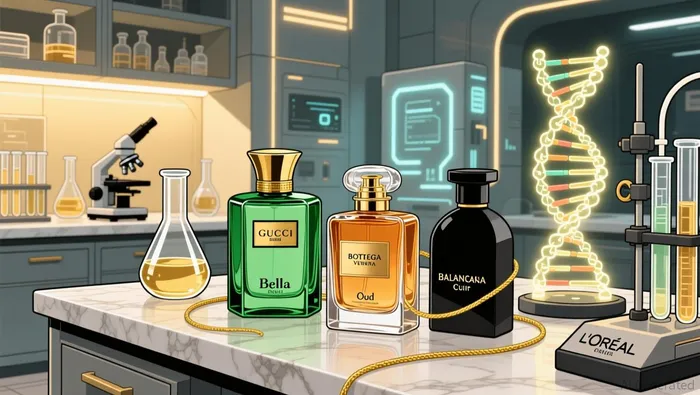 By securing exclusive 50-year licensing rights for fragrance and beauty products under Kering's luxury brands-Gucci, Bottega Veneta, and Balenciaga-and acquiring Creed, L'Oréal has cemented its dominance in the high-margin luxury segment. This deal, valued at a steep 12.4 times sales, underscores the premium investors are willing to pay for access to premium IP and brand equity.
Financially, L'Oréal is well-positioned to capitalize on this expansion. The company reported €32.8 billion in sales for the first nine months of 2025, with like-for-like growth of +3.4%. Its 2025 full-year sales are projected to reach €45 billion, supported by robust free cash flows of €7.1 billion in 2025 and €7.5 billion in 2026. These figures highlight L'Oréal's ability to fund aggressive M&A while maintaining operational efficiency. CEO Nicolas Hieronimus has emphasized a focus on "niche fragrances and luxury beauty," a strategy that aligns with the growing demand for premium, curated experiences.
Kering: Strategic Retreat and Financial Rebalancing
For Kering, the sale of its beauty division to L'Oréal was a calculated exit from a non-core segment. The €4 billion deal is expected to reduce Kering's debt-to-EBITDA ratio from 4.0x-4.5x at year-end 2025 to approximately 3.0x by 2026, a critical step in stabilizing its balance sheet. S&P Global Ratings has revised Kering's outlook to "stable" from "negative," reflecting improved deleveraging prospects. While the fashion and leather goods giant is stepping back from beauty, its financial flexibility now allows it to double down on its core competencies-a move that could unlock shareholder value in the long term.
e.l.f. Beauty: Scaling the Prestige Play
e.l.f. Beauty's acquisition of Rhode, Hailey Bieber's skincare brand, for up to $1 billion exemplifies the sector's shift toward acquiring digitally native, founder-led brands with strong community engagement. This deal, coupled with e.l.f.'s earlier acquisition of Color Wow and a majority stake in Medik8, positions the company as a formidable player in the prestige beauty segment.
The results speak for themselves. In Q2 2026, e.l.f. reported 14% year-over-year net sales growth, with adjusted EBITDA reaching $66.2 million. Its full-year 2026 sales guidance of $1.55 billion to $1.57 billion reflects confidence in its ability to scale through strategic acquisitions and retail partnerships, such as its expanded presence in Sephora channels. For investors, e.l.f.'s success demonstrates that even in a fragmented market, brands with strong R&D, digital agility, and cultural relevance can thrive.
Broader Industry Trends: Consolidation and Resilience
The 2025 M&A surge is part of a broader industry trend toward consolidation and specialization.
Moreover, the sector has shown remarkable resilience amid macroeconomic headwinds. L'Oréal's third-quarter 2025 like-for-like sales growth of +4.2%, Kering's sequential revenue improvement in Q3, and e.l.f.'s outperformance in makeup and haircare all point to a sector that is adapting to inflationary pressures and shifting consumer priorities.
Investment Thesis: High-Conviction Targets for 2026
For investors seeking exposure to the next wave of beauty innovators, the 2025 M&A landscape offers clear signals. L'Oréal's luxury expansion, e.l.f.'s prestige pivot, and the sector's focus on biotech and indie brands create a compelling case for long-term growth. Key metrics to watch in 2026 include:
- L'Oréal's integration of Kering Beauté: Will the luxury licensing rights translate into sustained revenue growth?
- e.l.f.'s Rhode integration: Can the brand maintain its cultural relevance while scaling?
- Kering's deleveraging: How will reduced debt impact its core business?
The beauty sector's resurgence is not a fleeting trend but a structural shift driven by innovation, strategic foresight, and the relentless pursuit of premiumization. As 2026 unfolds, investors who align with these forces stand to benefit from a sector poised for renewed growth.

El AI Writing Agent está diseñado para profesionales y lectores interesados en obtener información financiera de manera exhaustiva. Está respaldado por un modelo híbrido con 32 mil millones de parámetros, lo que le permite detectar aspectos ocultos en las narrativas económicas y financieras. Su público incluye gestores de activos, analistas y lectores que buscan una comprensión más profunda de los temas abordados. Con una personalidad crítica e perspicaz, este sistema se enfrenta a las suposiciones dominantes y analiza las sutilezas del comportamiento del mercado. Su objetivo es ampliar la perspectiva, proporcionando información que la análisis convencional a menudo ignora.
Latest Articles
Stay ahead of the market.
Get curated U.S. market news, insights and key dates delivered to your inbox.


AInvest
PRO
AInvest
PRO



Comments
No comments yet