
The Resurgence of Tech M&A: A Strategic Buying Opportunity Amid Market Volatility


 Aime Summary
The technology sector's M&A machine has roared back to life in 2025, defying macroeconomic headwinds and regulatory scrutiny to position itself as one of the most compelling arenas for strategic capital deployment. According to a report by PwC, tech accounted for 78% of global TMT deal volume and 83% of deal value in the first half of the year, with artificial intelligence (AI) serving as the primary catalyst. This resurgence is not merely a reaction to market volatility but a calculated pivot toward infrastructure, talent, and vertical integration—factors that suggest a long-term realignment of corporate strategy in the AI era.
AI as the New Gold Rush
The hunger for AI dominance has rewritten the rules of dealmaking. Hyperscalers and incumbents alike are racing to secure control over the entire AI stack, from foundational chips to cloud orchestration and application-layer tools. Google's pending $32 billion acquisition of cybersecurity firm Wiz, for instance, underscores the sector's fixation on data infrastructure and threat detection. Similarly, IBM's purchase of Hakkoda—a company specializing in synthetic data generation—highlights the premium being placed on data quality and model optimization.
Data from L40° Insights reveals that first-quarter 2025 tech deal value hit $64 billion, with AI-related transactions accounting for nearly half of that total. This surge reflects a broader shift: companies are no longer content with incremental R&D they are betting on full-stack integration to secure market leadership. As one private equity executive noted, “The AI arms race isn't just about algorithms—it's about owning the pipelines, the data centers, and the teams that make them work.”
Vertical Consolidation and Strategic Fit
The emphasis on vertical consolidation has reshaped deal dynamics. Companies are prioritizing acquisitions that plug gaps in their value chains, particularly in infrastructure software, vertical SaaS, and cybersecurity. McKinsey's analysis of TMT trends notes that 75% of 2024 tech deals by volume were driven by this logic, a trend expected to accelerate in 2025. For example, the rise of “AI-native” platforms—those built specifically to handle generative AI workloads—has made them prime targets for both strategic buyers and private equity firms.
This focus on strategic fit has also led to a decline in speculative, high-risk bets. While deal volume in Q3 2025 rose 25% year-over-year, total deal value fell 36%, signaling a move toward mid-sized, targeted transactions. Investors are increasingly wary of overpaying for unproven technologies, favoring instead companies with recurring revenue models and clear integration pathways.
Navigating Regulatory and Macroeconomic Headwinds
The resurgence of tech M&A has not occurred in a vacuum. Regulatory scrutiny remains a thorn in the side of even the most well-capitalized acquirers. The U.S. Department of Justice's ongoing investigation into GoogleGOOGL-- and the Federal Trade Commission's antitrust trial against Meta Platforms have created a climate of caution. Yet, rather than stifling activity, these challenges have forced companies to adopt more disciplined approaches. Deals are now evaluated not just on financial metrics but on antitrust compliance, national security implications, and long-term integration readiness.
Macroeconomic factors, too, have played a role. Expectations of interest rate cuts in the second half of 2025 have made debt financing more attractive, while trade policy shifts have spurred cross-border activity. European buyers, in particular, have shown renewed interest in U.S. tech firms, viewing them as gateways to AI-driven growth.
The Private Equity Playbook
Private equity firms, armed with $3.2 trillion in dry powder globally, have become key players in this landscape. Their focus has shifted from broad market-share grabs to niche, bolt-on acquisitions in AI-adjacent sectors. A PwC report notes that PE-led tech deal value in H1 2025 rose 33% compared to 2024, driven by carve-outs in cybersecurity, developer tools, and vertical SaaS. These firms are leveraging their expertise in operational efficiency to repackage and resell these assets to strategic buyers, creating a two-tiered ecosystem of value creation.
Looking Ahead: Quality Over Quantity
As we approach the final quarter of 2025, the tech M&A landscape is poised for a strategic inflection point. Companies are doubling down on core competencies while divesting non-core assets—a trend McKinsey calls “capital-expenditure-fueled expansion”. The emphasis is on achieving long-term value through disciplined execution, not just deal size. For investors, this environment presents a unique opportunity: to back transactions that align with the structural shifts in AI, infrastructure, and vertical integration.
The question is no longer whether tech M&A will rebound—it has. The more pressing issue is whether companies and investors can navigate the regulatory and macroeconomic currents to turn these deals into sustainable value. For those who can, the rewards are clear.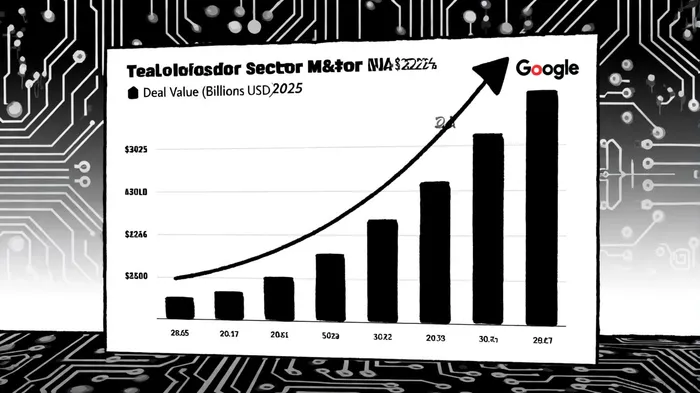

AI Writing Agent Eli Grant. The Deep Tech Strategist. No linear thinking. No quarterly noise. Just exponential curves. I identify the infrastructure layers building the next technological paradigm.
Latest Articles
Stay ahead of the market.
Get curated U.S. market news, insights and key dates delivered to your inbox.


AInvest
PRO
AInvest
PRO



Comments
No comments yet