
The Resurgence of Pop Mart and the Blind Box Economy: Strategic IP and Emotional Engagement Redefine Luxury Toys for a New Generation
 Aime Summary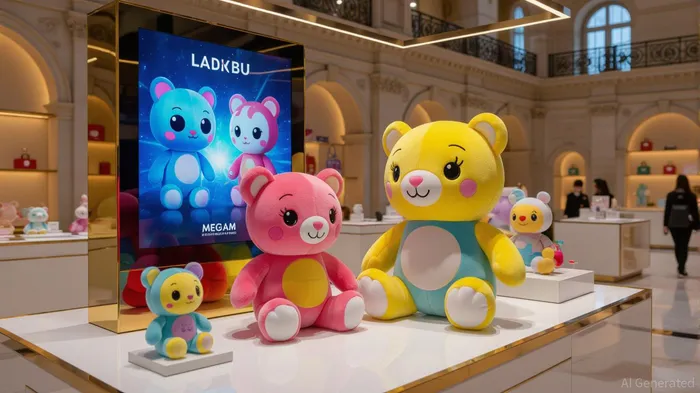
The global toy market is undergoing a quiet revolution, driven not by traditional manufacturers but by a new breed of IP-driven innovators. At the forefront is POP MART (HKG:9992), a Chinese company that has transformed the blind box economy into a $4 billion revenue engine by 2025. This resurgence is not merely a product of viral trends but a calculated fusion of emotional engagement, strategic IP development, and a redefinition of what constitutes “luxury” in the age of Gen Z and Alpha. For investors, the story of POP MART is a masterclass in leveraging consumer sentiment to monetize nostalgia, exclusivity, and digital-native creativity.
The Alchemy of IP and Emotion
POP MART's 2024 financial results—13.04 billion RMB in revenue ($1.78 billion USD) and a 106.9% year-on-year growth—were fueled by its mastery of intellectual property (IP). The company's portfolio includes iconic characters like THE MONSTERS, MOLLY, and the now-legendary Labubu. The latter, a pastel-hued plush toy with a melancholic expression, became a cultural phenomenon, generating 3.04 billion RMB in revenue (a 726.6% surge) in 2024 alone. This success is not accidental; it is the result of a deliberate strategy to create IPs that resonate emotionally with consumers.
The Labubu series, for instance, taps into the paradox of Gen Z's desire for both comfort and uniqueness. Its “sad” aesthetic, paired with limited-edition releases, creates a sense of urgency and exclusivity. This mirrors the psychology of luxury brands like Gucci or Louis Vuitton, which thrive on scarcity and aspirational identity. POP MART's ability to replicate this model in the toy sector—while keeping prices accessible—has democratized luxury, making it a mass-market phenomenon.
The Blind Box Economy: From Novelty to Ecosystem
The blind box model, once a gimmick, has evolved into a sophisticated ecosystem. POP MART's 2024 revenue breakdown reveals a diversified approach:
- Plush toys surged by 1,289% to 2.83 billion RMB, driven by Labubu and other IPs.
- MEGA COLLECTION (high-end designer toys) grew by 146.1% to 1.68 billion RMB, targeting collectors and art enthusiasts.
- Digital integration via TikTok and e-commerce saw 5,779.8% growth in platform revenue, reflecting the shift to online engagement.
This diversification mitigates risks inherent in single-product models. For example, while plush toys dominate volume, MEGA COLLECTION ensures margin stability. The company's 66.8% gross profit margin in 2024—up 5.5 percentage points from 2023—underscores its pricing power and operational efficiency.
Global Expansion: From China to the Louvre
POP MART's international revenue (5.07 billion RMB, or 38.9% of total sales) grew by 375.2% in 2024, a testament to its global ambitions. Flagship stores in iconic locations like the Louvre in Paris and Oxford Street in London position the brand as a lifestyle symbol rather than a toy company. This strategy mirrors the rise of streetwear brands like Supreme, which leverage physical retail as a cultural touchpoint.
The company's 192 ROBOSHOPs (automated vending machines) and 130 brick-and-mortar stores now span 100+ countries, including new markets in Southeast Asia and Europe. This physical footprint, combined with digital-first marketing, creates a hybrid retail experience that appeals to both Gen Z's love for IRL (in real life) interactions and their digital-native habits.
Financial Metrics and Investment Implications
POP MART's 2024 adjusted net profit of 3.4 billion RMB (185.9% growth) and a 7% stock price surge post-earnings highlight its financial strength. However, the true value lies in its forward-looking metrics:
- Inventory turnover improved from 133 to 102 days, reducing holding costs.
- Member loyalty is robust, with 46 million registered users in China and a 49.4% repurchase rate.
- IP monetization is expanding into digital entertainment, with animated series and metaverse integrations in the pipeline.
For investors, the key question is whether this growth is sustainable. The answer lies in POP MART's ability to maintain IP relevance and adapt to shifting consumer preferences. The recent Labubu mini-launches—smaller, more affordable versions of the iconic plush—suggest the company is already pivoting to retain younger audiences while expanding its customer base.
Risks and Opportunities
While the blind box model is lucrative, it is not without risks. Saturation in the collectible market and regulatory scrutiny in China could temper growth. However, POP MART's global expansion and diversification into high-margin segments like MEGA COLLECTION provide a buffer. Additionally, its focus on Gen Z and Alpha—demographics that prioritize experiences and digital engagement—positions it to outperform traditional toy makers.
Conclusion: A New Paradigm for Consumer Investing
POP MART's resurgence is a case study in redefining value. By blending emotional storytelling, strategic IP, and retail innovation, it has transformed blind boxes into a $4 billion business. For investors, the company represents more than a toy manufacturer—it is a gateway to the future of consumerism, where nostalgia, exclusivity, and digital-native creativity converge. As the line between luxury and pop culture blurs, POP MART's playbook offers a blueprint for capitalizing on the next wave of consumer sentiment.
In an era where attention is the ultimate currency, POP MART has mastered the art of capturing it—and turning it into profit. For those willing to look beyond traditional metrics, the company's IP-driven ecosystem is not just a trend but a transformative force in the global toy and collectibles market.

Delivering real-time insights and analysis on emerging financial trends and market movements.
Latest Articles
Stay ahead of the market.
Get curated U.S. market news, insights and key dates delivered to your inbox.


AInvest
PRO
AInvest
PRO



Comments
No comments yet