
The Resurgence of Pop Mart and the Blind Box Economy: A New Era of Consumer-Driven Growth
 Aime Summary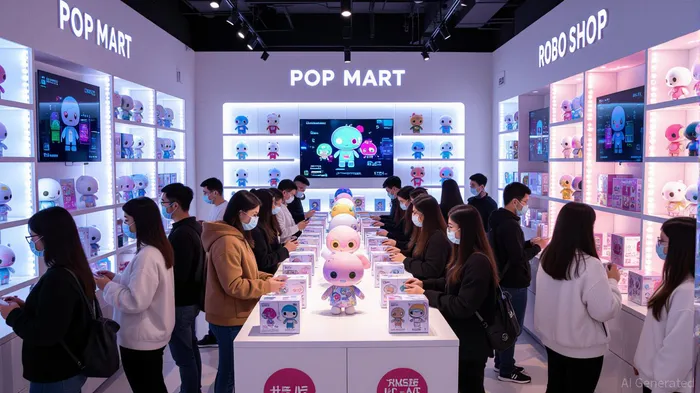
In the post-pandemic retail landscape, China's consumer market has emerged as a battleground for brands that can master the delicate art of emotional engagement. At the forefront of this evolution is Pop Mart (9992.HK), a company that has transformed the humble blind box into a global phenomenon. With its Labubu IP driving record-breaking revenue and a CEO who confidently predicts annual sales of RMB 30 billion, Pop Mart is not just surviving—it's redefining the rules of brand loyalty and retail value. For investors, the question is no longer if to act, but how to capitalize on this seismic shift.
The Blind Box Economy: A Masterclass in Consumer Psychology
Pop Mart's success hinges on a simple yet powerful insight: scarcity and surprise drive demand. The blind box model, which wraps collectible toys in opaque packaging, taps into the same psychological triggers as slot machines or limited-edition sneakers. By 2025, this strategy has paid off handsomely. The company's first-half revenue surged 204% year-on-year to RMB 13.88 billion, with Labubu alone contributing RMB 3 billion in 2024—a 726.6% growth.
But Pop Mart's genius lies in its ability to evolve. While blind boxes remain central, the company has expanded into animation, jewelry, and themed experiences, creating a multi-layered IP ecosystem. Collaborations with global giants like Coca-ColaKO-- and Uniqlo further amplify Labubu's cultural footprint. The result? A brand that transcends demographics, appealing to Gen Z's love for virality and older consumers' nostalgia.
CEO-Driven Strategy: From Expansion to Optimization
Wang Ning, Pop Mart's founder and CEO, has shifted focus from rapid store proliferation to operational efficiency. In 2025, the company will limit mainland China store growth to 10% to ensure higher per-store performance—a move that signals maturity over recklessness. Meanwhile, international expansion is accelerating: overseas revenue jumped 440% to RMB 5.6 billion, with 130 stores globally (up from 200 by year-end).
Wang's confidence is justified. The U.S. market, for example, has seen Labubu sales grow 5,000% year-on-year, fueled by celebrity endorsements from Kim Kardashian and BLACKPINK's Lisa. These partnerships aren't just marketing wins—they're cultural bridges, turning Labubu into a global lifestyle symbol.
Why Now? The Post-Pandemic Consumer Shift
The pandemic reshaped consumer behavior in ways that favor Pop Mart's model. With physical retail constrained, brands that could offer digital-first experiences thrived. Pop Mart's 2,500+ Robo Shops—automated kiosks that blend convenience with exclusivity—became lifelines for collectors. Meanwhile, the rise of “guochao” (国潮), or China's embrace of homegrown cultural trends, has turned Labubu into a symbol of national pride, competing with Western icons like Supreme.
Investors should also note the demographic shift. Young urban women, particularly Gen Z and Millennials, now dominate the collectible market. These consumers treat Labubu not as toys but as status symbols, spending hours curating collections and sharing them on Xiaohongshu and TikTok. For Pop Mart, this means a loyal, high-spending base that values emotional connection over utility.
Risks and Rewards: A Calculated Bet
No investment is without risk. Regulatory scrutiny of blind boxes' “gambling-like” mechanics and potential consumer fatigue are real concerns. However, Pop Mart's diversification into physical stores, digital platforms, and cross-industry collaborations mitigates these risks. The company's RMB 4.6 billion net income in H1 2025—up 397%—proves its ability to adapt.
For long-term investors, the key is to view Pop Mart not as a toy company but as a cultural engine. Its Labubu IP has already entered the secondary market, with rare dolls reselling for hundreds of dollars. This creates a flywheel effect: the more exclusive the product, the higher the demand; the higher the demand, the greater the brand equity.
The Investment Case: Timing Is Everything
With the global collectible toy market projected to exceed RMB 150 billion by 2025 and China's share expected to surpass RMB 110 billion by 2026, the window for growth is wide open. Pop Mart's aggressive international expansion, IP diversification, and CEO-driven pragmatism position it to dominate this space.
For those seeking exposure to China's evolving consumer-driven economy, Pop Mart offers a compelling blend of high-growth potential and cultural relevance. While short-term volatility is possible, the company's ability to monetize emotional engagement—both domestically and globally—makes it a standout play in a market where nostalgia meets innovation.
Final Verdict: Now is the time to invest in Pop Mart. The blind box economy isn't just a trend—it's a blueprint for the future of retail.

Delivering real-time insights and analysis on emerging financial trends and market movements.
Latest Articles
Stay ahead of the market.
Get curated U.S. market news, insights and key dates delivered to your inbox.


AInvest
PRO
AInvest
PRO



Comments
No comments yet