
The Resurgence of Onshoring: Why U.S. Manufacturing is Poised for Growth in 2026
 Aime Summary
The Drivers of Onshoring: Technology and Resilience
The 2026 manufacturing landscape is defined by a strategic pivot toward smart technologies and automation. According to a Deloitte report, 80% of manufacturing executives plan to allocate 20% or more of their improvement budgets to smart manufacturing initiatives, with automation hardware, data analytics, and cloud computing as focal points. Agentic AI, in particular, is reshaping operations by enabling autonomous decision-making-such as identifying alternative suppliers, optimizing production processes, and capturing institutional knowledge according to Deloitte. These advancements are not just improving productivity but also addressing supply chain complexities, a critical factor in the post-pandemic era.
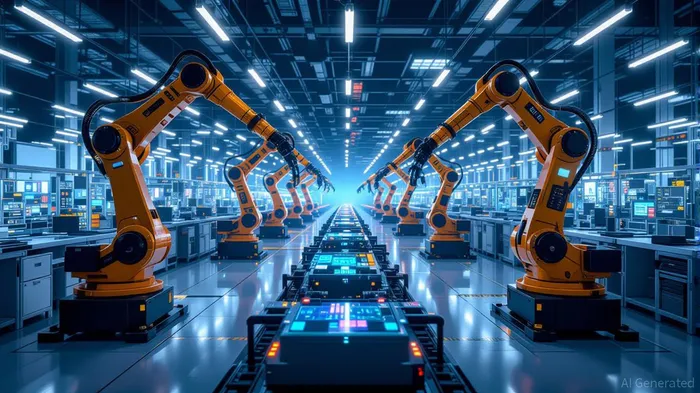
The integration of AI-native factories and software-defined automation is further amplifying efficiency gains. For instance, AI-driven systems are projected to boost productivity by up to three times while reducing energy consumption by 30%. Such metrics underscore the sector's shift toward technology-driven resilience, a key driver of onshoring as companies seek to mitigate risks associated with global trade uncertainties.
Workforce Retraining and STEM Investment: Bridging the Skill Gap
A critical enabler of this onshoring resurgence is the focus on workforce retraining and STEM education. The U.S. manufacturing sector faces a looming labor shortage, with 1.9 million jobs projected to go unfilled by 2030. To address this, manufacturers are adopting adaptive workforce planning frameworks that blend hands-on craftsmanship with digital expertise. Tech-enabled training programs are now prioritizing hybrid roles that bridge production, IT, and maintenance, reflecting the sector's evolving needs according to industry analysis.
Simultaneously, K–12–industry partnerships are gaining traction, particularly in rural America. A McKinsey analysis reveals that 63% of $1 trillion in announced advanced-manufacturing projects will be located within 15 miles of rural communities, creating opportunities for localized workforce development. These partnerships emphasize career-connected learning, equipping students with literacy, math, and critical thinking skills alongside vocational training tailored to manufacturing demands according to McKinsey. For investors, this trend highlights the growing importance of education-focused tech firms that provide scalable training solutions and digital platforms to bridge the skills gap.
Industrial Tech Tailwinds: Automation, Electrification, and Energy Transition
The industrial engineering and advanced manufacturing sectors are also benefiting from structural tailwinds. Automation and electrification are accelerating, driven by both cost efficiencies and ESG mandates. For example, modular construction techniques and AI-driven automation are enabling manufacturers to expand capacity while reducing downtime. Meanwhile, energy transition adjacent assets-such as clean energy infrastructure and low-carbon manufacturing-are attracting significant capital inflows according to industry insights.
Deal activity in the sector further reinforces this momentum. According to PwC, industrial manufacturing M&A accelerated in Q3 2025, with megadeals (transactions exceeding $5 billion) accounting for 52% of deal value. Sectors like aerospace and defense technology, building materials, and energy infrastructure are emerging as focal points for growth, supported by reshoring and localization trends according to Deloitte.
Strategic Sector Rotation: Opportunities for Investors
For investors, the onshoring narrative presents a compelling case for strategic sector rotation. Industrial engineering firms specializing in AI-native factories and automation hardware are well-positioned to capitalize on the 80% of manufacturing executives prioritizing smart manufacturing according to Deloitte. Similarly, advanced manufacturing companies leveraging electrification and energy transition technologies stand to benefit from ESG-driven demand and policy support.
Education-focused tech firms, meanwhile, are gaining traction as workforce retraining becomes a strategic imperative. Platforms that offer immersive STEM training, AI-powered skill assessments, and partnerships with K–12 institutions are likely to see strong growth, particularly in rural markets according to McKinsey.
However, investors must remain mindful of near-term headwinds. Global industrial output is projected to slow to 1.9% in 2026, and the October 2025 Manufacturing PMI dipped to 48.7%, signaling ongoing contraction. Yet, these challenges are viewed as temporary, with a projected 8.2% rebound in the machine tool sector by 2027 according to McKinsey. The passage of the One Big Beautiful Bill Act and revised trade deals with the UK and Vietnam are also expected to reduce policy uncertainty, further encouraging investment according to Deloitte.
Conclusion
The U.S. manufacturing resurgence in 2026 is not a fleeting trend but a structural shift driven by technological innovation, workforce adaptation, and policy alignment. As industrial engineering, advanced manufacturing, and education-focused tech firms continue to reshape the sector, investors who align with these tailwinds stand to benefit from a durable onshoring cycle. The key lies in identifying companies that are not only addressing current challenges but also future-proofing the industry against global uncertainties.

Blending traditional trading wisdom with cutting-edge cryptocurrency insights.
Latest Articles
Stay ahead of the market.
Get curated U.S. market news, insights and key dates delivered to your inbox.


AInvest
PRO
AInvest
PRO



Comments
No comments yet