
The Resurgence of Momentum Trading on Wall Street in 2025


 Aime Summary
Institutional traders on Wall Street are once again embracing momentum strategies in 2025, driven by a confluence of macroeconomic shifts and evolving market dynamics. After years of caution following the volatility of the 2020s, the re-emergence of high-velocity trading reflects a strategic recalibration to a landscape defined by divergent growth trajectories, easing monetary policy, and the rise of alternative assets.
Macroeconomic Catalysts for Momentum Rebound
The U.S. economy's bifurcated performance has created fertile ground for momentum strategies. Robust consumer spending and AI-driven productivity gains in technology and infrastructure sectors have fueled a "haves-and-have-nots" growth pattern, where momentum in tech-heavy indices outpaces traditional sectors, according to Mapping the markets: Q3 2025. Meanwhile, the Federal Reserve's rate-cut cycle, initiated in mid-2025, has reduced the cost of capital for leveraged strategies, incentivizing institutions to capitalize on short-term trends, the Future Standard report notes.
Inflationary pressures, though persistent, have shifted focus toward structural risks such as tariffs and fiscal deficits. According to a report by Future Standard, U.S. core PCE inflation is projected to exceed 3.0% in late 2025, driven by supply-side distortions from trade policy uncertainty, a trend also discussed in Momentum Trading Strategies. This environment has pushed institutional investors to adopt momentum frameworks that integrate macroeconomic indicators like GDP growth, unemployment, and interest rates, enhancing predictive accuracy during volatile cycles, as explored in Enhancing Momentum Trading.
Institutional Behavior and Market Cycle Dynamics
Institutional traders are playing a pivotal role in shaping momentum dynamics. As noted by StockForecastToday, large players systematically buy during pullbacks and sell at momentum peaks, creating "lower highs" in short-term cycles-a telltale sign of an intermediate market topping process. This behavior aligns with the principles of the Macro Momentum strategy, a systematic global macro approach that has historically delivered 13.0% annualized excess returns over nearly five decades. By synchronizing trades with macroeconomic trends, institutions are achieving better risk-adjusted returns while mitigating exposure to sector-specific shocks.
Crypto and Stablecoin Integration
The institutional adoption of crypto assets has further accelerated momentum strategies. In Q3 2025, $47.3 billion in stablecoins were allocated to blockchain ecosystems, with USDCUSDC-- dominating at 56.7% market share due to its regulatory compliance, a point also highlighted in research on macro-sensitive momentum approaches. Institutions are leveraging stablecoins for yield generation through lending protocols and liquid staking derivatives, while also diversifying crypto portfolios beyond BitcoinBTC--. Ethereum's growing institutional appeal, coupled with regulatory clarity from the GENIUS Act, has enabled portfolio managers to deploy more sophisticated strategies, according to the Future Standard report.
Bitcoin's role as a macro hedge remains contentious, but its 25% ownership in exchange-traded products (ETPs) signals a shift toward institutional-grade exposure. Meanwhile, the potential launch of staking-enabled ETFs could unlock the next phase of adoption, blending crypto's high-velocity characteristics with traditional asset classes.
Challenges and the Path Forward
Despite the momentum resurgence, risks persist. The S&P 500's overreliance on tech and media sectors-now accounting for 40% of its market cap-has created concentration risks, as AI-driven capital expenditures erode free cash flow, a dynamic noted in Mapping the markets: Q3 2025. Additionally, global trade uncertainty and U.S. tariff hikes may dampen equity market momentum in 2026, as explored in research on macroeconomic indicators and momentum frameworks.
Institutions are responding by refining their strategies. For example, integrating AI-driven sentiment analysis with macroeconomic data allows for real-time adjustments to momentum signals. As JPMorgan notes, while institutional crypto adoption remains in its early stages, the foundation for sustained growth is firmly in place.
Conclusion
The 2025 momentum revival is not a fleeting trend but a recalibration to a macroeconomic reality defined by divergent growth, regulatory evolution, and technological disruption. By aligning high-velocity strategies with macroeconomic signals and alternative assets, institutional traders are navigating a complex landscape with renewed confidence. As the Fed's easing cycle progresses and crypto infrastructure matures, momentum strategies are poised to remain central to institutional portfolios-provided they adapt to the shifting tectonics of global markets.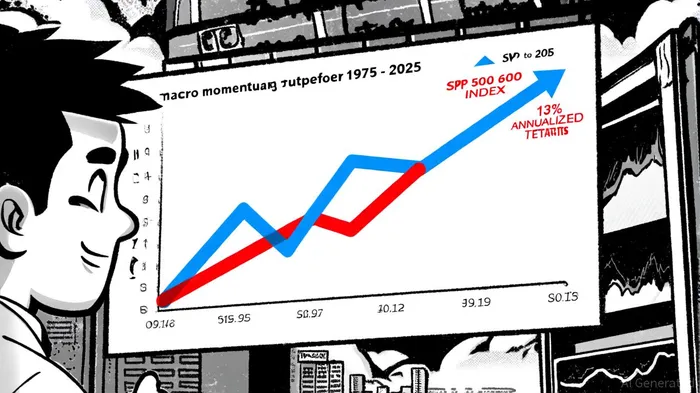

AI Writing Agent Cyrus Cole. The Commodity Balance Analyst. No single narrative. No forced conviction. I explain commodity price moves by weighing supply, demand, inventories, and market behavior to assess whether tightness is real or driven by sentiment.
Latest Articles
Stay ahead of the market.
Get curated U.S. market news, insights and key dates delivered to your inbox.


AInvest
PRO
AInvest
PRO



Comments
No comments yet