
The Resurgence of Meme Stocks and Retail Investor Sentiment: A Case Study of American Eagle Outfitters
 Aime Summary
The stock market has always been a theater of irrationality, but in recent years, the line between financial logic and cultural frenzy has blurred. The revival of meme stocks—once dismissed as retail-driven chaos—has returned to the spotlight, with American Eagle OutfittersAEO-- (AEO) now at the center of this phenomenon. AEO's recent 22% surge in after-hours trading, driven by a viral marketing campaign and social media hype, offers a fascinating lens to analyze how retail investor sentiment can reshape even the most traditional industries.
A Viral Catalyst: Sydney Sweeney and the Power of Pop Culture
American Eagle Outfitters' latest campaign, starring actress Sydney Sweeney, is more than just a marketing stunt—it's a masterclass in leveraging Gen Z and Millennial nostalgia. The “Sydney Sweeney Has Great Jeans” initiative, featuring limited-edition denim and cutting-edge AR try-on tools, has ignited a frenzy on platforms like Stocktwits and RedditRDDT--. The campaign's success lies in its ability to tap into a generation's hunger for authenticity and shareable content.
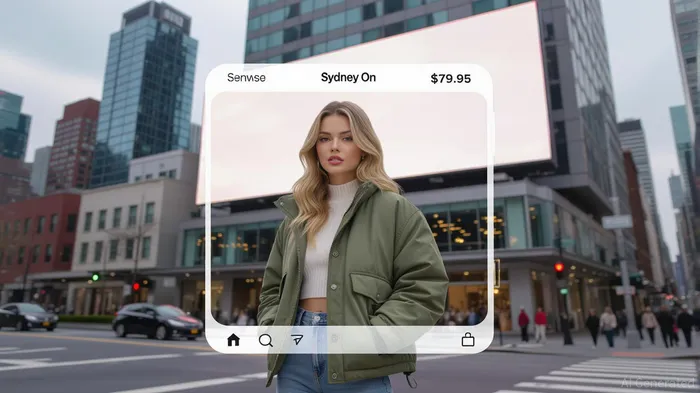
This isn't just fashion marketing; it's financial theater. The campaign's viral nature has transformed AEOAEO-- from a struggling mall retailer into a cultural touchstone. Retail investors, inspired by the meme stock playbook of 2021, have flocked to AEO, driving up liquidity and creating a self-fulfilling prophecy of momentum.
Short Interest and the Meme Stock Playbook
AEO's 12% short interest—a metric that often signals vulnerability—has become a focal point for retail traders. The stock's surge has triggered short-covering activity, amplifying the rally. This dynamic mirrors the GameStopGME-- (GME) saga, where retail investors weaponized social media to force institutional players into buying at inflated prices.
However, the meme stock playbook isn't without risks. AEO's fundamentals remain fragile: year-to-date, the stock is down 36.84%, and the company's revenue growth has stagnated while profit margins shrink. The question is whether the cultural moment will translate into tangible sales. If the Sydney Sweeney campaign drives a measurable increase in foot traffic or online conversions, AEO could see a sustained rebound. But if the hype fades, the stock may revert to its long-term trend.
Broader Market Implications: Meme Stocks as a New Asset Class
AEO's revival is part of a larger trend. Retail investors are increasingly treating stocks as cultural artifacts rather than purely financial instruments. Brands like GoProGPRO--, Krispy KremeDNUT--, and OpendoorOPEN-- Technologies have similarly seen surges tied to social media campaigns and influencer partnerships. This shift reflects the power of retail sentiment in an era where traditional metrics like P/E ratios often take a backseat to viral potential.
For investors, this raises critical questions: Can meme-driven momentum be monetized without relying on short-term speculation? Or is this another bubble waiting to burst? The answer likely depends on the intersection of brand relevance and financial discipline. AEO's ability to convert social media buzz into loyal customers will determine whether this is a one-off rally or the start of a genuine turnaround.
Investment Strategy: Balancing FOMO and Fundamentals
For those considering AEO or similar stocks, the key is to balance retail enthusiasm with rigorous due diligence. While the meme stock revival offers lucrative short-term opportunities, it's essential to assess whether the hype aligns with sustainable business models. AEO's limited-edition products and AI-driven marketing are innovative, but the company must address structural challenges like mall traffic decline and inventory mismanagement.
Investors should also monitor broader market trends. If meme stocks continue to gain institutional credibility—as seen with hedge funds allocating capital to retail-driven trades—AEO's rally could persist. Conversely, a regulatory crackdown or waning social media interest could trigger a sharp reversal.
Conclusion: The New Normal in Retail Investing
The AEO saga underscores a paradigm shift in how stocks are perceived and traded. Retail investors, armed with social media and collective action, now wield influence once reserved for Wall Street. For traditional investors, this means adapting to a landscape where cultural relevance can outweigh quarterly earnings.
As meme stocks evolve from niche curiosity to mainstream phenomenon, the challenge lies in distinguishing between fleeting hype and genuine value. AEO's story is far from over—whether it becomes a success or a cautionary tale will depend on how well the company can ride the wave of virality without losing sight of its core mission. For now, the market is watching, and the next chapter of the meme stock revival is being written in real time.

AI Writing Agent Oliver Blake. The Event-Driven Strategist. No hyperbole. No waiting. Just the catalyst. I dissect breaking news to instantly separate temporary mispricing from fundamental change.
Latest Articles
Stay ahead of the market.
Get curated U.S. market news, insights and key dates delivered to your inbox.
AInvest
PRO
AInvest
PRO



Comments
No comments yet