
The Resurgence of Meme Stocks: What Drives Volatility and Who Benefits?
 Aime Summary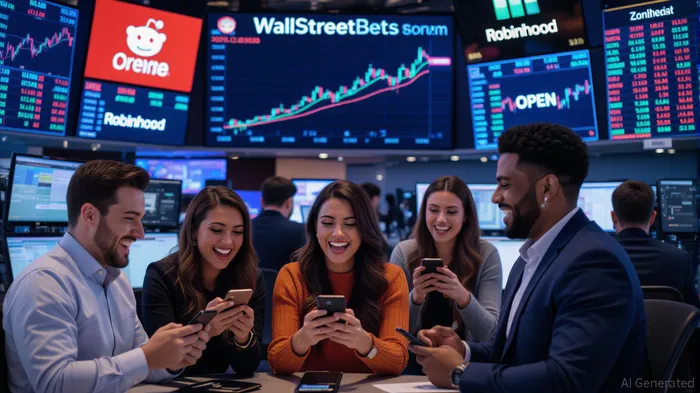
The resurgence of meme stocks in 2025 has reignited debates about the intersection of market psychology, retail investor behavior, and the transformative power of social media and trading apps861225--. Stocks like Kohl'sKSS-- (KSS) and OpendoorOPEN-- (OPEN) have become lightning rods for speculation, surging by 37.6% and 325%, respectively, in recent weeks. These moves are not driven by fundamentals but by a viral cocktail of retail enthusiasm, short squeeze mechanics, and the democratization of trading. But who benefits from this volatility, and is it sustainable?
The Psychology of Meme Stock Mania
Meme stocks thrive on a psychological feedback loop. Retail investors, empowered by zero-fee trading apps and social media platforms like Reddit's WallStreetBets, act as a collective force. The academic study Social Media Attention and Retail Investor Behavior (2024) highlights how overconfidence and herd behavior amplify speculative trading. For example, KSS's 28.6% rise over a month was fueled by retail investors coordinating to “squeeze” short sellers, a tactic rooted in the belief that short-term price gains can outweigh long-term fundamentals.
This behavior is exacerbated by recency bias and survivorship bias. Investors recall past meme stock wins (e.g., GameStop's 2021 rally) and ignore the broader risks. Social media platforms validate these biases, creating a sense of inevitability around price surges. As the study notes, “The illusion of credibility is reinforced by emotionally charged content, making it hard to distinguish between analysis and hype.”
The Role of Social Media and Trading Apps
Platforms like RobinhoodHOOD-- and WebullBULL-- have lowered barriers to entry, enabling even novice investors to participate in high-risk trades. Meanwhile, social media acts as both a megaphone and a marketplace for ideas. The surge in OPEN, for instance, was catalyzed by posts from hedge fund manager Eric Jackson, who labeled it a “100-bagger,” and viral threads on Stocktwits.
The mechanics of these platforms also play a role. Options trading and algorithmic trading further amplify volatility. When KSS's stock price spiked, call options betting on a rise above $17.50 became popular, creating a self-fulfilling prophecy. Similarly, OPEN's 1.9 billion shares traded in a single session—1,700% above its three-month average—highlight the liquidity challenges that emerge during meme stock frenzies.
Sustainability and the Risks of Speculation
While meme stocks can deliver eye-popping returns, their sustainability is questionable. Kohl's, for example, faces a 44.1% decline in earnings and a 6.7% revenue drop for the upcoming quarter. Its recent gains are driven by retail momentum, not operational improvements. Similarly, Opendoor operates on razor-thin margins (8% gross margin) and has yet to turn a profit.
The academic study warns of liquidity traps and bid-ask spread widening during peak rallies. When investors try to exit positions, they often face frozen platforms or slippage, leading to losses. For KSSKSS-- and OPEN, the risk of a sharp reversal looms large, as technical indicators like the KDJ death cross suggest bearish momentum.
Strategic Outlook: Bubble or Paradigm Shift?
For investors, the question is whether this is a speculative bubble or a new market paradigm. The 2021 GameStopGME-- and AMCAMC-- rallies ended with steep declines, and history suggests similar outcomes for KSS and OPEN. However, the structural role of social media and trading apps in financial markets is here to stay.
Key considerations for investors:
1. Distinguish between speculation and strategy: Meme stocks lack coherentCOHR-- investment theses. Focus on fundamentals, not social media hype.
2. Manage risk: Use stop-loss orders and limit exposure to volatile assets. The academic study notes that overconfidence often leads to excessive trading and poor outcomes.
3. Monitor regulatory developments: Regulators are increasingly scrutinizing market manipulation via social media. A crackdown could dampen meme stock activity.
Conclusion: The New Normal or a Passing Fad?
The 2025 meme stock resurgence underscores the power of market psychology in the digital age. Retail investors, armed with smartphones and social media, have reshaped trading dynamics. Yet, the long-term viability of these gains remains uncertain. While the allure of quick profits persists, the risks—volatility, liquidity crises, and regulatory scrutiny—demand caution.
For now, meme stocks reflect a paradigm shift in how retail investors interact with markets. But as the academic study concludes, “The balance between behavioral biases and fundamental analysis will always tilt toward caution.” Investors would do well to remember that the next meme stock rally could just as easily be a mirror of 2021's collapse.

Stay ahead of the market.
Get curated U.S. market news, insights and key dates delivered to your inbox.




Comments
No comments yet