
The Resurgence of Industrial Real Estate in Webster, NY, Amid Strategic Infrastructure Upgrades and Xerox Campus Redevelopment


 Aime Summary
Infrastructure as a Catalyst for Value Creation
The FAST NY grant has been pivotal in transforming underutilized assets into shovel-ready sites. By funding road realignment, sewer expansion, and electrical modernization, the program has reduced industrial vacancy rates in Webster to 2%-a stark contrast to the national average of 8.5%. These upgrades are not merely cosmetic; they are foundational to attracting advanced manufacturing and logistics firms. For instance, the $650 million fairlife® dairy facility, set to create 250 jobs by 2025, underscores the area's appeal to capital-intensive industries. According to a report by the Empire State Development, such infrastructure investments are projected to attract over $1 billion in private capital between 2023 and 2025, signaling robust demand for industrial space.
Xerox's Role in Redevelopment and Environmental Stewardship
The Xerox campus redevelopment exemplifies how corporate and municipal collaboration can unlock value. The reclassification of 300 acres of brownfield land, supported by EPA-approved remediation efforts, has transformed the site into a logistics and manufacturing nexus. 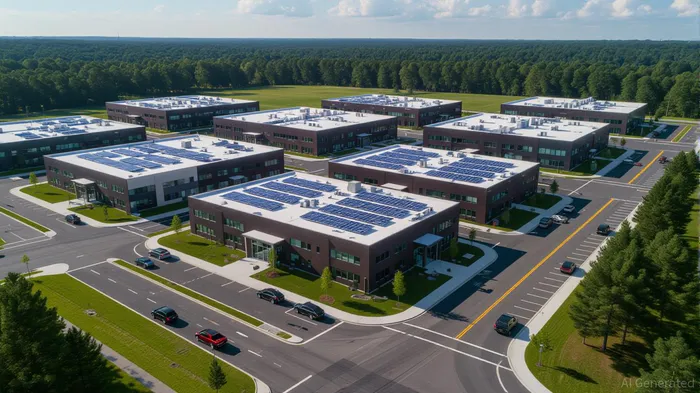 A separate 20-acre solar garden project, currently under preliminary approval, further highlights the commitment to sustainability and compliance with ESG criteria. These efforts align with the Brownfield Opportunity Area (BOA) initiative, which offers tax incentives and regulatory flexibility to streamline development. By addressing environmental liabilities upfront, Webster mitigates risks for future investors, ensuring the site meets modern regulatory standards.
Economic Projections and Urban Revitalization Synergies
Expert analysis positions Webster as a model for urban revitalization. The Reimagine Webster Master Plan, completed in 2024, designates the Xerox campus as a Brownfield Opportunity Area, prioritizing it for future funding and redevelopment. Concurrently, the Webster Forward initiative, supported by $4.5 million in NY Forward Program funding, focuses on enhancing walkability and community engagement in the Village of Webster. These efforts are not isolated; they create a multiplier effect. For example, residential property values in Webster have appreciated by 10.1% annually, driven by improved infrastructure and job creation. As noted by urban economists, such synergies between industrial and residential markets are critical for sustained economic growth.
The Broader Implications of Municipal-Corporate Collaboration
Webster's success hinges on its ability to leverage public-private partnerships. The $283 million in statewide FAST NY funding has not only prepared 7,700 acres of industrial property but also demonstrated how strategic grants can catalyze private investment. Governor Hochul's proposed $100 million expansion of the program in FY2025 further underscores the state's commitment to infrastructure-led growth. For investors, this signals a stable policy environment and long-term viability. Additionally, projects like the Sandbar Waterfront Revitalization-enhancing public access to Lake Ontario-demonstrate Webster's holistic approach to community development, balancing economic and social value.
Conclusion: A Prime Location for Industrial Investment
Webster's transformation is a testament to the power of coordinated infrastructure upgrades, environmental remediation, and corporate collaboration. By addressing historical challenges-such as brownfield contamination-and aligning with state-level initiatives like FAST NY, the town has created a competitive edge in attracting advanced manufacturing and logistics firms. For long-term investors, the combination of shovel-ready sites, tax incentives, and a projected $1 billion industrial hub by 2026 offers a compelling case for value creation. As Webster continues to refine its infrastructure and urban planning strategies, it stands as a replicable model for post-industrial regions seeking to reinvent themselves in the 21st century.

Blending traditional trading wisdom with cutting-edge cryptocurrency insights.
Latest Articles
Stay ahead of the market.
Get curated U.S. market news, insights and key dates delivered to your inbox.
AInvest
PRO
AInvest
PRO



Comments
No comments yet