
The Resurgence of U.S. Industrial Demand: Sector-Specific Investment Strategies in a Shifting Economic Landscape
 Aime Summary
The U.S. non-defense capital goods orders excluding aircraft (MoM) data for July 2025 revealed a striking 1.10% increase, reversing a -0.70% decline in June. This rebound, the largest in over two years, underscores a critical inflection point in industrial demand. While the broader durable goods sector faltered due to a 2.8% drop in aircraft orders, the core capital goods segment—excluding defense and aircraft—showed resilience. For investors, this divergence highlights the need to dissect sector-specific trends to identify opportunities amid macroeconomic volatility.
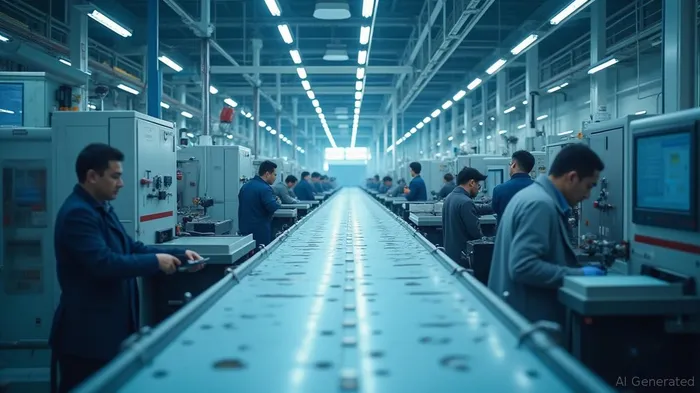
Machinery: The Engine of Capital Expenditure
Machinery orders surged by 1.8% in July, driven by robust demand for industrial and manufacturing equipment. This growth reflects a broader trend of companies accelerating capital expenditures to meet long-term production needs. The sector's strength is further amplified by the global shift toward automation and AI-driven operations. However, rising input costs from Trump-era tariffs on steel and aluminum have squeezed margins, forcing firms to prioritize efficiency.
Investors should focus on machinery firms with strong digital transformation strategies. For example, companies integrating AI for predictive maintenance or optimizing supply chains through localized production are better positioned to navigate cost pressures. A on machinery sector ETFs like the Industrial Select Sector SPDR Fund (XLI) could reveal performance trends aligned with this demand surge.
Electrical Equipment: Powering the Digital Economy
Electrical equipment orders rose by 2.0% in July, fueled by investments in data centers and grid infrastructure. The demand for high-capacity computing and renewable energy integration is creating a tailwind for this sector. However, the sector faces challenges from rising material costs and supply chain bottlenecks.
Investors may want to consider firms specializing in energy-efficient solutions or grid modernization. A on Tesla's stock price changes over the past three years could illustrate how companies leveraging innovation in electrical infrastructure are capitalizing on this trend. Additionally, firms like Schneider Electric or ABB, which offer smart grid technologies, present compelling long-term opportunities.
Primary Metals: Navigating Tariff-Driven Uncertainty
Primary metals orders increased by 1.5% in July, driven by surging demand for raw materials in manufacturing. Yet, the sector remains under pressure from tariffs on steel and aluminum, which have raised production costs and disrupted global supply chains. Firms are increasingly adopting hedging strategies and localized production to mitigate these risks.
For investors, the key is to identify companies with strong balance sheets and cost-control measures. A on Nucor Corporation's stock performance in relation to primary metals demand could highlight how firms with vertical integration or diversified sourcing are outperforming peers. Additionally, companies investing in recycling technologies or alternative materials may gain a competitive edge.
Strategic Considerations for Investors
The acceleration in non-defense capital goods orders excluding aircraft signals a shift in industrial demand toward sectors that underpin long-term productivity. However, the lingering effects of protectionist policies and global supply chain fragility require a nuanced approach.
- Sector Diversification: While machinery and electrical equipment are showing strength, investors should balance exposure with defensive plays in sectors less sensitive to tariffs.
- Focus on Innovation: Prioritize companies leveraging automation, AI, and digital tools to offset rising costs.
- Hedging Against Policy Risk: In metals and manufacturing, firms with hedging strategies or diversified supply chains are better positioned to weather policy-driven volatility.
Conclusion
The July 2025 data on non-defense capital goods orders excluding aircraft paints a picture of a U.S. industrial sector recalibrating to a new economic reality. While tariffs and global uncertainties persist, the surge in machinery, electrical equipment, and primary metals orders highlights opportunities for investors who can navigate sector-specific dynamics. By aligning portfolios with companies that prioritize innovation and resilience, investors can capitalize on the industrial renaissance unfolding in the American economy.

Stay ahead of the market.
Get curated U.S. market news, insights and key dates delivered to your inbox.


AInvest
PRO
AInvest
PRO



Comments
No comments yet