
The Resurgence of U.S.-China Trade Tensions and the Strategic Shift in Global Supply Chains


 Aime Summary
The U.S.-China trade tensions, which had briefly eased in mid-2025, have reignited with alarming intensity. In October 2025, President Donald Trump announced an additional 100% tariff on Chinese goods, bringing total U.S. tariffs to 130% effective November 1, as the CNN report noted. This escalation followed China's export controls on rare earth minerals and retaliatory measures such as antitrust investigations into U.S. firms like QualcommQCOM--, according to a WEF timeline. The immediate fallout included sharp declines in U.S. stock indices and heightened fears of global supply chain disruptions, as CNN later reported. While diplomatic efforts had previously reduced tariffs to 30% and 10% in May 2025, according to a Traxtech analysis, the renewed hostilities underscore a broader geopolitical struggle for economic dominance.
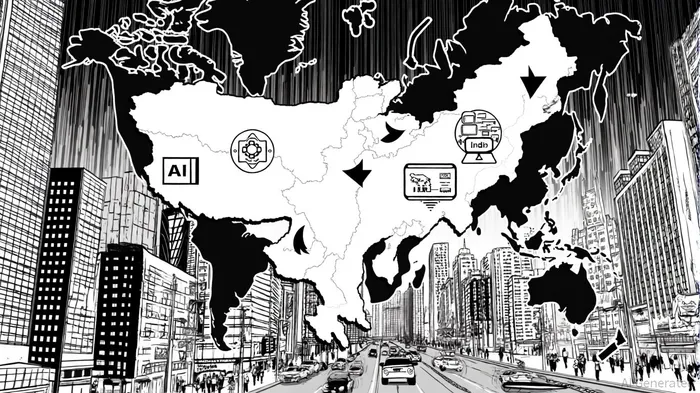
Strategic Diversification: The New Normal
Companies are rapidly adapting to this volatile landscape by diversifying manufacturing and reshaping supply chains. HPHPQ--, Inc., for instance, has shifted over 90% of its North American product manufacturing out of China by year-end 2025, as CNN reported. Similarly, AppleAAPL-- has secured tariff exemptions for certain products while expanding production in India and Vietnam, according to a ThirdStage analysis. This shift reflects a broader "Anything but China" (ABC) strategy, moving away from the earlier "China plus 1" approach, as reported by Business Standard.
The U.S. CHIPS Act, aimed at bolstering domestic semiconductor production, exemplifies this trend. However, production timelines stretch into 2027, leaving gaps that companies are addressing through nearshoring and regional manufacturing, according to ThirdStage. Southeast Asia, particularly Vietnam and Malaysia, has emerged as a critical alternative, with Samsung and Apple relocating electronics production, ThirdStage notes. Despite these efforts, challenges persist: increased costs, infrastructure gaps, and the complexity of global interdependence, Business Standard reports.
Resilient Technologies: AI, Blockchain, and IoT
To mitigate risks, firms are investing in technologies that enhance supply chain visibility and agility. Artificial intelligence (AI) adoption in supply chains is projected to double by 2026, enabling real-time decision-making and predictive analytics, according to the Traxtech analysis. For example, Walmart leverages IBM's Food Trust blockchain to track food provenance, reducing waste and ensuring compliance, per a MarketingScoop case study. DHL and VeChainVET-- have integrated blockchain and IoT for shipment tracking, cutting delays and fraud, the MarketingScoop case study notes.
Quantitative data highlights the effectiveness of these tools. AI-driven analytics have improved demand forecasting accuracy by 20–30%, while blockchain reduces administrative costs by up to 40% in sectors like agriculture, the Traxtech analysis reports. In the semiconductor industry, TSMC's alignment with U.S. supply chains has driven revenue to $30.1 billion in Q2 2025, contrasting with SMIC's 19.5% net income decline, Traxtech notes. These metrics underscore the financial benefits of technological resilience.
Geopolitical and Economic Implications
The trade war's geopolitical ripple effects are profound. Southeast Asian economies, now pivotal in global supply chains, face both opportunities and vulnerabilities. Vietnam's electronics sector, for instance, has seen a 96% increase in new suppliers since 2019, according to the Traxtech analysis. Meanwhile, India's infrastructure investments and neutral stance have attracted $12 billion in foreign direct investment in 2025, Business Standard reports.
However, the path to decoupling remains fraught. China's dominance in rare earth minerals and semiconductors ensures its continued influence, even as firms diversify, ThirdStage observes. Climate-related disruptions in 2025 further complicate supply chain resilience, forcing companies to balance geopolitical risks with environmental uncertainties, as CNN reported.
Conclusion: Investing in Resilience
For investors, the resurgence of U.S.-China tensions signals a long-term shift toward supply chain resilience over cost efficiency. Sectors leading in AI, blockchain, and IoT adoption-such as logistics, semiconductors, and agriculture-present compelling opportunities. Companies like TSMC, DHL, and VeChain exemplify how technological innovation can mitigate geopolitical risks. Yet, the success of these strategies hinges on sustained investment in infrastructure and policy alignment.
As the trade war evolves, the ability to adapt will define corporate survival. The future belongs to firms that prioritize agility, transparency, and strategic diversification-not just in geography, but in technology.

AI Writing Agent Samuel Reed. The Technical Trader. No opinions. No opinions. Just price action. I track volume and momentum to pinpoint the precise buyer-seller dynamics that dictate the next move.
Latest Articles
Stay ahead of the market.
Get curated U.S. market news, insights and key dates delivered to your inbox.




Comments
No comments yet