
How REsurety's CleanTrade Platform is Reshaping Clean Energy Transactions and Attracting Institutional Capital


 Aime Summary
A Liquidity Catalyst: The Role of the CleanTrade SEF
At the heart of CleanTrade's success is its groundbreaking SEF, the first of its kind in the clean energy sector. This facility enables standardized trading of virtual power purchase agreements (VPPAs), physical PPAs, and project-specific renewable energy credits (RECs), creating a centralized hub for buyers and sellers. According to a report by REsurety, the platform achieved $16 billion in notional value within just two months of its launch, a testament to the pent-up demand for structured, low-risk clean energy investments. This rapid adoption underscores the platform's ability to bridge the gap between clean energy assets and institutional investors, who have historically been wary of the sector's illiquidity and complexity.
Mitigating Risks to Enable Scalable Investment
Clean energy transactions are inherently complex, with risks ranging from price volatility to supply chain disruptions. CleanTrade addresses these challenges through a suite of tools designed to simplify risk management. For instance, the platform integrates advanced analytics for carbon risk and grid congestion, enabling more accurate asset valuation and accelerating project financing. By providing transparency into these variables, CleanTrade allows buyers to hedge their portfolios more effectively and achieve budget certainty-a critical factor for corporations and institutional investors seeking long-term energy solutions according to REsurety.
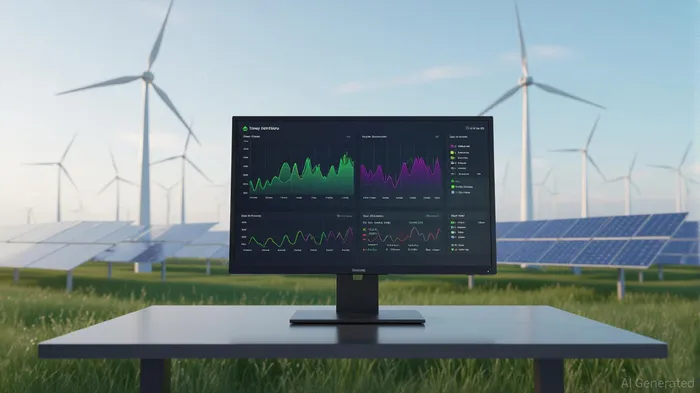 . Moreover, the platform's ability to streamline transactions reduces counterparty risk, a persistent concern in over-the-counter (OTC) markets. By standardizing contracts and automating execution, CleanTrade minimizes the friction that has traditionally limited participation from large institutional players. As noted in a recent analysis, this innovation is "revolutionizing how clean energy assets are evaluated, traded, and financed" according to REsurety, thereby positioning the sector for exponential growth.
Attracting Institutional Capital: A New Paradigm
The influx of institutional capital into clean energy has been historically constrained by a lack of liquid, scalable investment vehicles. CleanTrade's SEF model directly tackles this issue by creating a market structure akin to traditional energy trading. Data from REsurety highlights that the platform's rapid $16 billion milestone was driven by demand from pension funds, endowments, and other institutional investors seeking diversified, low-carbon portfolios. These investors are increasingly prioritizing environmental, social, and governance (ESG) criteria, and CleanTrade's transparent, standardized framework aligns with their requirements for accountability and performance tracking.
Furthermore, the platform's ability to de-risk clean energy projects through advanced analytics reduces the perceived volatility of returns. This is particularly appealing in a post-pandemic world where investors are balancing ESG goals with financial prudence. By offering tools to quantify and mitigate grid-related risks, CleanTrade enhances the bankability of renewable projects, making them more attractive to capital allocators according to Bitget.
Implications for the Broader Market
The success of CleanTrade signals a broader shift in the clean energy landscape. As liquidity improves, the cost of capital for renewable projects is likely to decline, accelerating the deployment of wind, solar, and storage assets. This, in turn, could drive down the levelized cost of clean energy, making it more competitive with fossil fuels. For institutional investors, the platform represents a scalable entry point into a sector poised for decades of growth.
However, challenges remain. Regulatory frameworks must evolve to keep pace with innovation, and market participants must ensure that the benefits of increased liquidity are equitably distributed. Nonetheless, CleanTrade's early success demonstrates that the right infrastructure can unlock trillions in capital for the energy transition.
Conclusion
REsurety's CleanTrade Platform is more than a technological innovation-it is a paradigm shift in how clean energy markets operate. By addressing liquidity constraints, mitigating risks, and attracting institutional capital, the platform is laying the groundwork for a more efficient, transparent, and scalable clean energy economy. As the world races to meet net-zero targets, tools like CleanTrade will be indispensable in aligning financial markets with the urgent demands of climate action.

Blending traditional trading wisdom with cutting-edge cryptocurrency insights.
Latest Articles
Stay ahead of the market.
Get curated U.S. market news, insights and key dates delivered to your inbox.


AInvest
PRO
AInvest
PRO



Comments
No comments yet