
How REsurety's CleanTrade Platform Is Reshaping Clean Energy Market Liquidity


 Aime Summary
A Structured Market for a Fragmented Sector
Clean energy has traditionally been a "dark pool" of transactions. Power Purchase Agreements (PPAs), Virtual PPAs (VPPAs), and Renewable Energy Certificates (RECs) were traded in a manual, opaque manner, with limited price discovery and high counterparty risk. According to a report by REsurety, the CleanTrade Platform streamlines the entire workflow-from sourcing deals to post-transaction compliance-while providing real-time pricing visibility and granular project-specific data, including financial performance and environmental metrics. 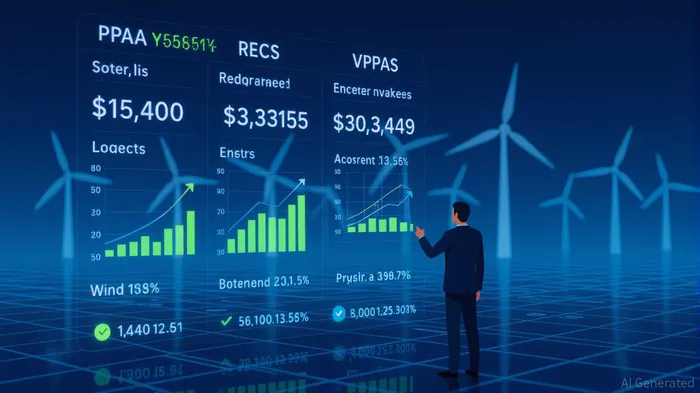 This transparency is critical for institutional investors, who require standardized tools to hedge against price volatility and optimize their clean energy strategies.
The platform's impact is already measurable. Within two months of its 2025 launch, CleanTrade reached $16 billion in notional value, ready to transact, a milestone that underscores the pent-up demand for a regulated, structured marketplace. By transforming PPAs, VPPAs, and RECs into institutional-grade commodities, CleanTrade is addressing historical gaps in liquidity and standardization. For example, the platform enables buyers and sellers to hedge against renewable energy price swings, a feature that has historically been absent in this sector.
Investor Sentiment and the Rise of ESG-Driven Capital
The rapid adoption of CleanTrade reflects a broader shift in investor priorities. As global yields remain depressed, institutional capital is increasingly seeking returns in assets that align with environmental, social, and governance (ESG) goals. Data from REsurety indicates that 84% of institutional investors are growing their demand for decarbonization-focused assets. CleanTrade caters to this demand by offering tools that integrate ESG metrics into investment decisions. Investors can now quantify the environmental impact of their holdings-such as carbon offsets or renewable energy generation-while managing financial risks.
This dual focus on financial and environmental outcomes is reshaping the renewable energy market. As stated by a Bitget analysis, CleanTrade has turned clean energy derivatives into a compelling asset class in a low-yield environment. By reducing counterparty risk and providing liquidity, the platform is enabling investors to treat renewable commodities as tradable instruments rather than long-term, illiquid contracts. This shift is particularly significant for pension funds, endowments, and sovereign wealth funds, which require diversified, liquid portfolios to meet their fiduciary obligations.
Broader Implications for the Energy Transition
The implications of CleanTrade extend beyond financial markets. By creating a liquid, transparent marketplace, the platform is accelerating the global transition to renewable energy. For corporations seeking to meet net-zero targets, CleanTrade offers a reliable mechanism to secure clean energy at predictable prices. For developers, it reduces the risk of long-term revenue uncertainty, making it easier to secure financing for new projects. According to REsurety, the platform's success highlights the role of regulatory frameworks in fostering innovation. The CFTC's approval of CleanTrade signals a growing recognition of clean energy as a legitimate commodity class. This regulatory clarity is essential for attracting institutional capital, which often requires the safeguards of a regulated environment. As noted in a Bitget analysis, this regulatory clarity is critical for market development.
Conclusion
REsurety's CleanTrade Platform is more than a technological innovation-it is a catalyst for systemic change. By addressing the liquidity and transparency challenges that have long hindered the renewable energy sector, CleanTrade is unlocking new opportunities for investors and developers alike. As institutional capital flows into this space, the platform is not only reshaping investment dynamics but also accelerating the transition to a decarbonized economy. For investors, the message is clear: clean energy is no longer a niche market. It is a sophisticated, liquid asset class-and the future of finance is being rewritten in real time.

Blending traditional trading wisdom with cutting-edge cryptocurrency insights.
Latest Articles
Stay ahead of the market.
Get curated U.S. market news, insights and key dates delivered to your inbox.


AInvest
PRO
AInvest
PRO



Comments
No comments yet