
U.S. Resumes Student Visas Requiring Social Media Access
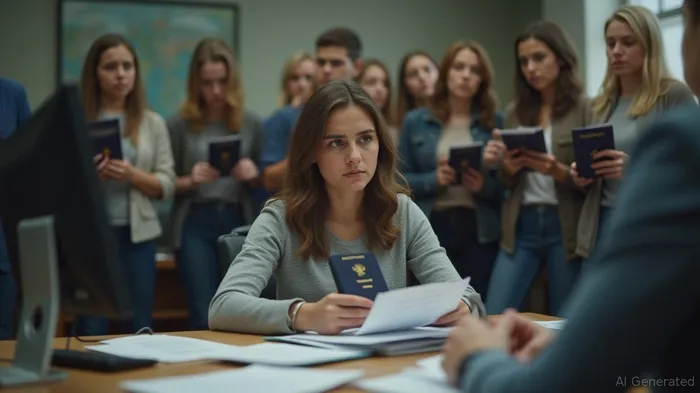
The U.S. State Department has announced the resumption of the student visaV-- application process for foreign students, but with a significant new requirement. All applicants will now be required to unlock their social media accounts for government review. This move comes as part of an enhanced screening process aimed at identifying any posts or messages that could be deemed hostile to the United States, its government, culture, institutions, or founding principles.
In a notice released on Wednesday, the department clarified that new applicants who refuse to set their social media accounts to “public” and allow them to be reviewed may face rejection. This refusal could be interpreted as an attempt to evade the requirement or hide online activity. The Trump administration had previously halted the scheduling of new visa interviews for foreign students in May, citing the need to expand the screening of their social media activity.
Students worldwide have been eagerly awaiting the reopening of U.S. consulates for visa interviews, as the window for booking travel and making housing arrangements narrows ahead of the start of the school year. A 27-year-old Ph.D. student in Toronto, who is a Chinese national, was able to secure an appointment for a visa interview next week. The student, identified only by his surname, Chen, expressed relief at being able to proceed with his plans for a research internship in the U.S. starting in late July.
Students from various countries, including China, India, Mexico, and the Philippines, have been closely monitoring visa booking websites and press briefings from the State Department for any updates on when appointment scheduling might resume. The State Department has also instructed consulates to prioritize students hoping to enroll at colleges where foreigners make up less than 15% of the student body. This criterion affects a significant number of universities, both private and public, across the U.S.
International students in the U.S. have faced increased scrutiny in recent months. In the spring, the Trump administration revoked permission to study in the U.S. for thousands of students, including those involved in minor offenses, before reversing the decision. The government has also expanded the grounds on which foreign students can have their legal status terminated. As part of a pressure campaign targeting Harvard University, the Trump administration has moved to block foreign students from attending the Ivy League school, which relies heavily on international students for tuition dollars and enrollment.
The latest move to vet students’ social media accounts is part of a broader effort to ensure proper screening of all individuals attempting to visit the U.S. The State Department has instructed consular officers to look for any indications of hostility toward the U.S. and its principles. Critics, such as Jameel Jaffer, executive director at the Knight First Amendment Institute at Columbia University, have compared this policy to the ideological vetting of the Cold War era, where prominent artists and intellectuals were excluded from the U.S. Jaffer expressed concern that this policy could chill legitimate political speech both inside and outside the U.S.
The Trump administration has also called for 36 countries to commit to improving vetting of travelers or face potential consequences. A diplomatic cable sent by the State Department gives these countries 60 days to address U.S. concerns or risk being added to a travel ban that currently includes 12 nations. This move underscores the administration's focus on enhancing security measures and vetting processes for foreign visitors to the U.S.

Stay ahead of the market.
Get curated U.S. market news, insights and key dates delivered to your inbox.






Comments
No comments yet