
Restaurant Industry Resilience Amid Sudden Chain Collapse: Navigating Supply Chain Vulnerabilities and Consumer Behavior Shifts in Q4 2025


 Aime Summary
The K&W Cafeteria Closure: A Cautionary Tale
K&W Cafeteria's 88-year legacy ended abruptly in December 2025, with the chain announcing the permanent closure of all 11 remaining locations. This collapse followed a decade of financial strain, including a Chapter 11 bankruptcy filing in 2020 and a failed restructuring plan that initially aimed to keep 14 locations open. By 2022, , a decline accelerated by pandemic-era challenges .
The shutdown of K&W reflects a broader trend: , yet many legacy operators failed to adapt. K&W's reliance on traditional supply chains-vulnerable to rising ingredient costs and tariffs-left it ill-equipped to compete with tech-driven rivals. Its closure signals a warning for other legacy brands: without modernization, even iconic regional chains risk obsolescence.
Supply Chain Vulnerabilities and Tech-Driven Solutions
The restaurant industry's supply chain challenges in Q4 2025 are multifaceted. Rising ingredient costs, exacerbated by inflation and geopolitical tensions, have forced operators to rethink procurement strategies. For example, fast-food chains like Juici Patties and Domino's have adopted AI-powered demand forecasting to optimize inventory and prevent stockouts. These systems analyze historical sales data, weather patterns, and local events to predict ingredient needs, .
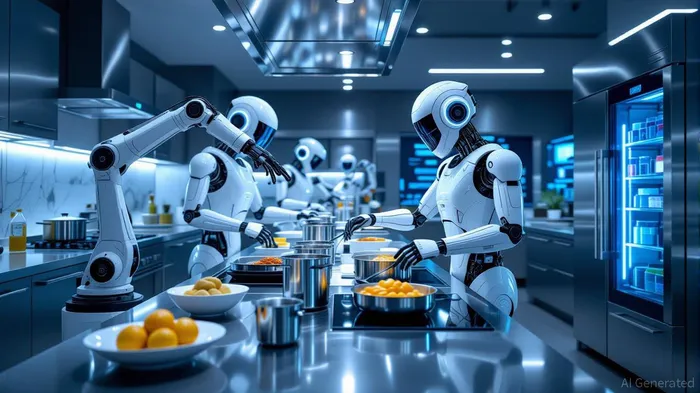
Tech-integrated solutions are also transforming logistics. like Folio3 FoodTech enable real-time inventory tracking, while enhances traceability in food cold chains. For instance, (SAP IBP) supports global enterprises in optimizing multi-echelon inventory and supplier collaboration. These tools are critical for mitigating disruptions, such as those caused by climate-driven supply shocks or port delays.
Consumer Behavior Shifts and Market Adaptation
Consumer behavior in Q4 2025 has shifted dramatically, . Even high-income diners have curtailed spending, reflecting broader economic uncertainty. This trend has forced operators to innovate. For example, strategy ensures radical transparency, aligning with its "Food with Integrity" promise. Similarly, personalize guest interactions, using data analytics to tailor promotions.
The rise of first-party ordering platforms is another adaptation. Restaurants are bypassing third-party delivery fees by offering QR code menus and mobile apps, improving table turnover and customer satisfaction. These innovations are part of a broader shift toward digital-first operations, .
Investment Opportunities in Agile, Tech-Integrated Alternatives
For investors, the collapse of legacy chains like K&W highlights the need to focus on agile, tech-integrated alternatives. Startups such as GrubMarket and Sharebite are attracting significant capital. Publicly traded companies like Chipotle are also leading the charge, with an AI strategy encompassing and supply chain optimization.
like IoT-enabled sensors and 3D AI scanners are further reshaping the industry. reduces food waste, while automate inventory management and spoilage detection. These solutions are particularly valuable for multi-unit operators seeking real-time data analytics across locations.
Investors should also consider B2B foodtech platforms. Kaso, which digitizes food-supply ordering in the Middle East, and Club Feast, a subscription-based delivery service, exemplify the potential of vertical SaaS solutions. Meanwhile, , addressing industry-wide efficiency gaps.
Conclusion
The K&W Cafeteria closure is a microcosm of the restaurant industry's broader struggles with supply chain fragility and shifting consumer preferences. However, it also illuminates a path forward: tech-integrated solutions are not just a competitive advantage but a survival imperative. For investors, the key lies in identifying companies that leverage AI, IoT, and digital platforms to enhance resilience, reduce waste, and meet evolving demand. As the industry evolves, those who adapt will thrive-while those who cling to legacy models risk joining K&W in the annals of history.

Delivering real-time insights and analysis on emerging financial trends and market movements.
Latest Articles
Stay ahead of the market.
Get curated U.S. market news, insights and key dates delivered to your inbox.


AInvest
PRO
AInvest
PRO



Comments
No comments yet