
Restaurant Industry Resilience and Retail Real Estate Impact: Lessons from the Closure of K&W Cafeteria


 Aime Summary
The K&W Cafeteria Closure: A Microcosm of Industry Struggles
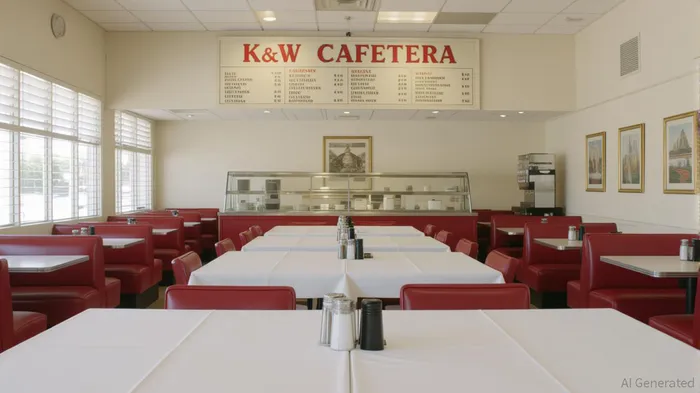
K&W Cafeteria's permanent shutdown followed a decade of financial strain, . Despite its loyal customer base and regional prominence, the chain could not adapt to the bifurcation of consumer preferences observed in 2025: a growing emphasis on either extreme value or premium experiences. This trend has left mid-tier casual dining chains like K&W particularly vulnerable, as consumers increasingly opt for budget-friendly fast-casual options or high-end dining.
. For investors, this event highlights the fragility of legacy brands in an era of shifting consumer priorities and the need for strategic reinvention.
Industry-Wide Trends: Retail Real Estate and Consumer Behavior
The restaurant industry's struggles are not isolated to K&W. By 2025, , driven by mismatches between property sizes and conversion costs. This has led to a surplus of underutilized commercial real estate, particularly in larger properties that are difficult for fast-casual chains to repurpose. Meanwhile, prime retail locations remain in demand, while lower-tier assets face rising vacancies.
Consumer behavior has further accelerated these dynamics. A report by notes that 2025 saw a "perfect storm" of economic caution and preference polarization, . Brands like Chili's have thrived by emphasizing value-driven promotions, while quick-service chains face competition from grocery stores and convenience outlets offering affordable meal options. These shifts have created a fragmented market where only the most agile operators can survive.
Retail Real Estate Implications: Vacancies and Repurposing
The closure of K&W Cafeteria has contributed to a broader trend of retail real estate reconfiguration. by mid-2025, . While U.S. retail vacancy rates remain historically low , localized impacts are evident. For instance, in Q1 2025, reflecting structural challenges.
In North Carolina and Virginia, the repurposing of former K&W locations has gained traction. High Point's acquisition of a K&W site demonstrate how commercial properties are being repositioned for new uses. These transactions highlight the potential for adaptive reuse to mitigate vacancy risks, though the broader impact on property values remains uneven.
Strategic Considerations for Investors
For investors, the K&W Cafeteria case underscores three key lessons:
1. Consumer Behavior as a Catalyst: The bifurcation of dining preferences necessitates investments in brands that cater to either extreme value or premium experiences. Mid-tier operators must innovate or risk obsolescence.
2. Retail Real Estate Flexibility: Properties in prime locations with adaptable layouts will remain resilient, while larger, inflexible assets face higher conversion costs and lower demand.
3. Adaptive Reuse Opportunities: Markets like North Carolina demonstrate the viability of repurposing commercial spaces for mixed-use or community-driven projects, offering a path to stabilize asset values.
Conclusion
The closure of K&W Cafeteria is not merely a local tragedy but a harbinger of systemic changes in the restaurant industry and retail real estate. As consumer behavior continues to polarize and commercial properties face reclassification, investors must prioritize agility and innovation. The lessons from K&W's 88-year journey-from its heyday as a community staple to its abrupt shutdown-serve as a cautionary tale and a roadmap for navigating the challenges ahead.

Delivering real-time insights and analysis on emerging financial trends and market movements.
Latest Articles
Stay ahead of the market.
Get curated U.S. market news, insights and key dates delivered to your inbox.


AInvest
PRO
AInvest
PRO



Comments
No comments yet