
Restaurant Industry Financial Distress and Real Estate Implications: Immediate Risk Signals for Investors and Lenders


 Aime Summary
The Scale of the Crisis: Bankruptcies and Closures
From 2023 to 2025, the U.S. restaurant sector has seen a wave of closures, with full-service chains bearing the brunt. TGI Fridays and Red Lobster alone shuttered 134 and 131 locations, respectively, in 2024, while Hooters added 30 more closures in 2025 after filing for bankruptcy in March 2025, according to a Restaurant Business Online report. These bankruptcies are symptomatic of broader challenges: food and labor costs have risen by over 20% since 2019, while consumer traffic has shifted irreversibly toward off-premise dining, as noted in a The Daily Meal analysis.
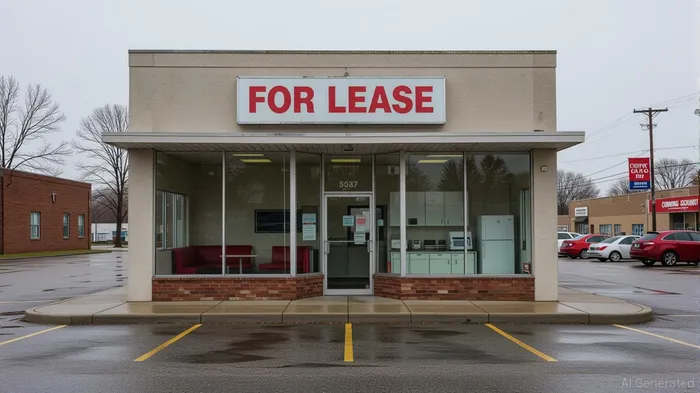
The implications for commercial real estate are profound. A typical Red Lobster location (7,600 square feet) is ill-suited for retrofitting into smaller fast-casual concepts like Chipotle (2,400 square feet), creating a mismatch that deters potential buyers. As a result, the property sale success rate for casual dining real estate has plummeted from 72% in 2021 to 37% in 2024, according to a Yahoo Finance report. Landlords are increasingly converting these spaces into smaller units or selling to non-restaurant tenants, such as car dealerships, to mitigate losses, as reported in a GuruFocus article.
Lender Vulnerabilities: Ares Commercial Real EstateACRE-- and the CRE Market
The financial health of commercial real estate lenders is under scrutiny. Ares Commercial Real Estate Corporation (ACRE), a key player in the sector, has seen its office loan portfolio shrink by 26% year-over-year in 2025, now valued at $495 million, according to a Seeking Alpha report. While ACREACRE-- has restructured loans-such as extending a Manhattan office loan's maturity by two years-its financial metrics are alarming. A net margin of -371.37%, a debt-to-equity ratio of 1.7, and an Altman Z-Score of 0 signal severe distress, as reported in the Seeking Alpha article. These indicators suggest that lenders may face elevated risks of default, particularly as restaurant operators struggle to meet lease obligations.
Immediate Risk Signals for Investors
- Lease Default Rates: While granular Q4 2025 data on restaurant lease defaults remains scarce, the broader trend is clear. GEN Restaurant Group, for instance, reported a 9.9% decline in same-store sales in Q3 2025, underscoring the fragility of even diversified operators, according to the Seeking Alpha report. Investors should monitor chains with high fixed costs and limited off-premise revenue streams.
- Property Liquidity: The declining sale success rate for restaurant properties means investors may face prolonged holding periods and forced discounts. For example, a 7,600-square-foot property that once commanded $2 million could now fetch less than $1 million after retrofitting costs, as noted in the Yahoo Finance report.
- Lender Exposure: ACRE's struggles highlight systemic risks. If lenders like ACRE face insolvency, borrowers could lose recourse for loan restructuring, exacerbating defaults, as the Seeking Alpha report notes.
A Glimmer of Resilience-With Caveats
Not all is bleak. Chains like Chili's and Olive Garden have bucked the trend, with same-store sales outperforming industry averages by leveraging value-driven menus and cost-cutting measures, as reported in the The Daily Meal analysis. However, this resilience is localized and temporary. Broader recovery hinges on reducing labor costs (which account for 30% of operational expenses) and adapting to off-premise dining trends-a transition many full-service chains lack the agility to execute, as the The Daily Meal analysis notes.
Conclusion: Mitigating the Risks
For real estate investors and franchise lenders, the path forward demands caution. Prioritize properties in high-traffic, mixed-use developments where repurposing is feasible. Diversify lender portfolios to avoid overexposure to CRE firms like ACRE, and conduct rigorous due diligence on tenants' off-premise revenue potential. The restaurant industry's pain is far from over, but for those who act strategically, it may yet yield opportunities in the long term.

Delivering real-time insights and analysis on emerging financial trends and market movements.
Latest Articles
Stay ahead of the market.
Get curated U.S. market news, insights and key dates delivered to your inbox.
AInvest
PRO
AInvest
PRO



Comments
No comments yet