
Restaurant Industry Consolidation Amid Consumer Spending Shifts: Navigating Risks and Opportunities in Fast Food


 Aime Summary
Industry Consolidation: A Strategic Imperative
The restaurant sector's 2024–2025 trends reveal a stark divide between thriving and struggling brands. Casual Dining has outperformed other segments, , while Upscale Casual and Fine Dining falter, according to Black Box Intelligence. This divergence underscores a broader industry-wide consolidation, as underperforming locations are shuttered to reallocate resources. Wendy's has embraced this trend, announcing the closure of 200–350 U.S. locations between 2024 and 2026 as part of its "Project Fresh" turnaround plan, according to YTC Ventures. Interim CEO Ken Cook emphasized that these closures target "consistently underperforming" sites, aiming to redirect capital to high-performing units and boost profitability, as noted in Yahoo Finance.
This strategy mirrors moves by peers like McDonald'sMCD-- and Burger King, which have also announced workforce and store closures to streamline operations, as reported by YTC Ventures. Analysts describe the trend as "pruning for growth," with closures projected to increase sales and profitability at surviving locations by 5–7%, according to YTC Ventures. However, the financial risks of such a strategy are significant. Wendy's Q3 2025 results, for instance, , attributed to reduced franchise royalty revenue and operational costs, as Yahoo Finance reports.
Consumer Behavior: Dining Out, Sustainability, and Digital Shifts
U.S. consumer behavior in 2024–2025 has further complicated the equation. Dining out has surged in popularity, , according to . This shift reflects a reassertion of the social value of dining, particularly among younger generations. However, it also means fast-food chains must balance the demand for casual, affordable meals with rising menu prices driven by inflation.
Sustainability has emerged as another critical factor. , according to QSRE, pushing brands to adopt eco-friendly packaging and transparent sourcing practices. Wendy's has responded with initiatives like plant-based menu options and reduced plastic use, but competitors like McDonald's have a head start in this arena.
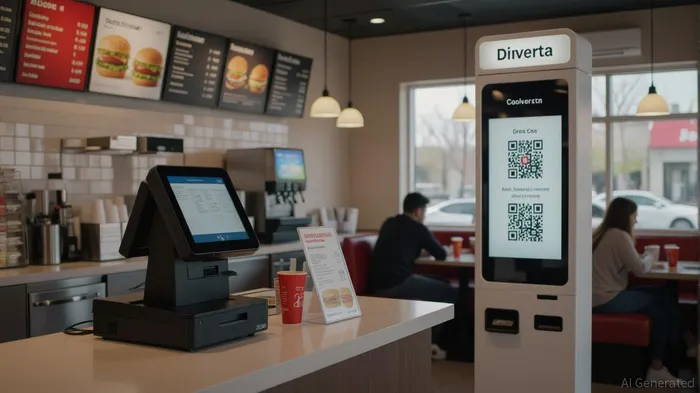
Digital transformation remains a double-edged sword. , as YTC Ventures notes, the industry as a whole is struggling with the costs of maintaining omnichannel operations. Off-premises dining (takeout and delivery) now accounts for a significant portion of sales, requiring fast-food chains to optimize packaging and logistics.
Financial Projections and Investment Considerations
Wendy's financial outlook hinges on the success of its restructuring. Despite a challenging Q3 2025, , , according to YTC Ventures. International markets, particularly Asia and Europe, , offsetting domestic closures, as YTC Ventures reports. By 2028, , , as YTC Ventures notes.
However, risks loom large. Wendy's carries $467 million in cash but faces debt maturities in 2026, , as reported by YTC Ventures. Investors must also weigh the uncertainty of new product launches, such as the "Tendys" chicken tenders, which have shown initial success but remain unproven in sustaining customer loyalty, as Yahoo Finance notes.
Peer Comparisons and Market Position
Wendy's faces stiff competition from McDonald's and Burger King, both of which are also restructuring. McDonald's, for example, has invested heavily in automation and digital menus, while Burger King has focused on value-driven promotions. Wendy's differentiator lies in its aggressive pruning of underperforming locations and early adoption of AI-driven personalization, according to YTC Ventures. Yet, , as Yahoo Finance reports, signaling execution risks.
Conclusion: A Calculated Bet
For investors, Wendy's represents a high-conviction opportunity in a fragmented industry. The company's strategic closures and digital investments align with long-term trends in consumer behavior, but its financial health depends on successful execution. Those willing to tolerate short-term volatility may benefit from Wendy's projected international growth and EBITDA expansion. However, the broader sector's challenges-rising labor costs, inflationary pressures, and shifting consumer priorities-mean that even well-managed brands face an uncertain path forward.
As the fast-food sector consolidates, the winners will be those that balance operational efficiency with innovation. Wendy's has taken bold steps, but whether they translate into sustained profitability remains to be seen.

Delivering real-time insights and analysis on emerging financial trends and market movements.
Latest Articles
Stay ahead of the market.
Get curated U.S. market news, insights and key dates delivered to your inbox.
AInvest
PRO
AInvest
PRO



Comments
No comments yet